

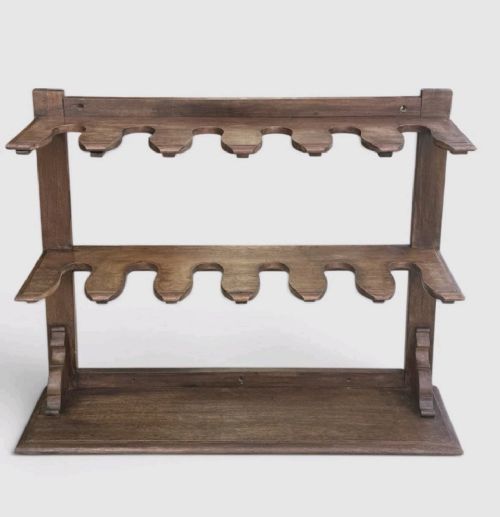
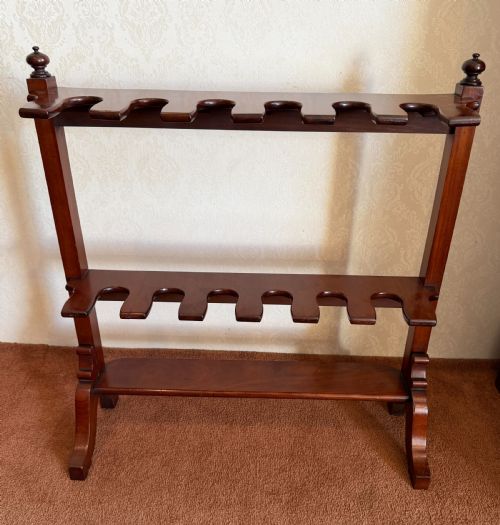


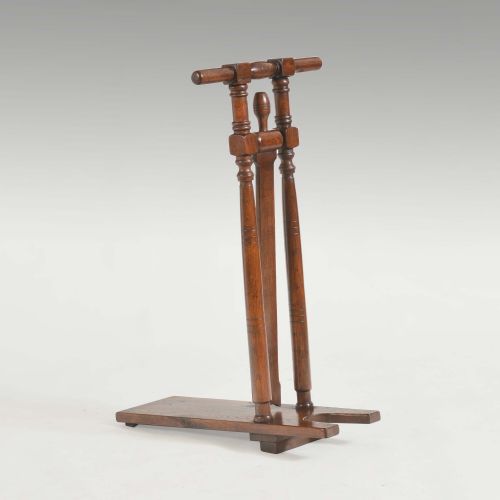
Brown Wooden Boot Stand
These brown wooden boot stand pieces organise muddy footwear and riding gear with utilitarian grace.
Brown Wooden Boot Stand
A brown wooden boot stand serves the entrance hall or country house corridor by holding footwear upright after a ride or walk. You meet these primarily as boot racks, folding boot jacks, and combined whip stands dating from the Georgian, Victorian, and Edwardian eras.
The form spans simple oak and ash country house bootjacks to polished mahogany hall stands and fitted luggage racks by makers such as Waring & Gillow. Each piece is designed to handle heavy leather boots, utilising specialised shapes to pull and store footwear without damaging the heel.
Makers constructed these functional items in sturdy timbers to withstand damp hallways and daily domestic use. The selection combines practical boot jacks with elaborate mahogany racks and cheval mirrors intended for dressing rooms and boot rooms alike.
Materials and construction
Craftsmen shaped these items from dense hardwoods including mahogany, oak, walnut, and ash, selecting timber for strength and grain pattern. Oak and ash form the heavier country house bootjacks, while polished mahogany and walnut appear in more refined hallway pieces.
Metal components play a crucial role in the construction, incorporating brass mountings for hinges, folding mechanisms, and boot pull fixtures. These brass additions provide structural reinforcement to areas subjected to heavy leverage and daily wear.
Brown Wooden Boot Stand Retail Price Guide 2026
Typical asking prices for brown wooden boot stand among the pieces listed under this phrase on Sellingantiques today, from the lower quarter to the upper quarter. They describe what is for sale here now, not the wider market.
Listings feature items spanning the Georgian, Victorian, and Edwardian periods, constructed in mahogany, oak, walnut, and ash.
Judging quality and craftsmanship
Quality rests in the selection of timber and the tightness of the joinery, distinguishing utilitarian items from bespoke cabinetwork. Pieces featuring well-figured mahogany or richly grained walnut display a superior finish compared to plain utility items.
The sophistication of the mechanism separates standard examples from finer pieces, particularly in folding designs and brass mountings. Maker attribution, such as work bearing the stamp of Waring & Gillow, elevates the standing of an oak luggage rack.
Waring & Gillow
The Brown Wooden Boot Stand Glossary
- Boot jack
- A V-shaped device designed to grip the heel of a boot so the wearer can pull their foot out without using their hands. These appear in fixed wooden formats and folding portable variants.
- Luggage rack
- A low timber stand with horizontal slats used for holding trunks or bags in a bedroom or hallway. Edwardian examples often include folding frames and slatted timber construction.
- Cheval mirror
- A freestanding full-length mirror mounted on a pivoting frame within supporting uprights. Early Victorian examples served dressing rooms alongside boot and shoe storage.
- Hall stand
- A piece of entrance furniture combining coat hooks, umbrella storage, and shoe racks. These utilise dense timbers like mahogany and oak for stability.
Brown Wooden Boot Stand: Frequently Asked Questions
How do you use a wooden boot jack?
A wooden boot jack is placed flat on the floor with the V-shaped notch facing away from you. You place the heel of your boot into the notch and step on the base with your other foot.
As you pull your foot upward, the wood grips the heel, allowing the boot to slide off easily. Folding variants allow this mechanism to pack flat when not in use.
Where should I place a boot rack?
These pieces suit entrance halls, boot rooms, and corridors where outdoor footwear is removed. Their timber construction requires placement away from excessive moisture.
Pairing a boot rack with a hall stand creates a practical focal point in a period hallway. They also function well in dressing rooms alongside luggage racks.
How do I date a Victorian boot stand?
Dating relies on timber choice, construction methods, and brass hardware styling. Victorian pieces frequently utilise solid mahogany or walnut with turned supports and brass mounts.
Earlier Georgian examples tend to use heavy oak and ash with simpler country house lines. Maker stamps, such as those from Waring & Gillow on Edwardian pieces, provide precise attribution.