
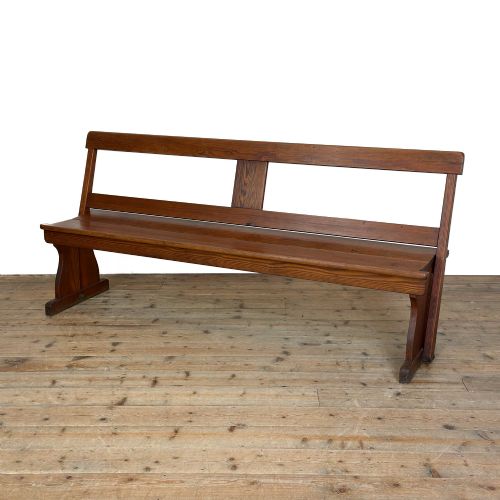
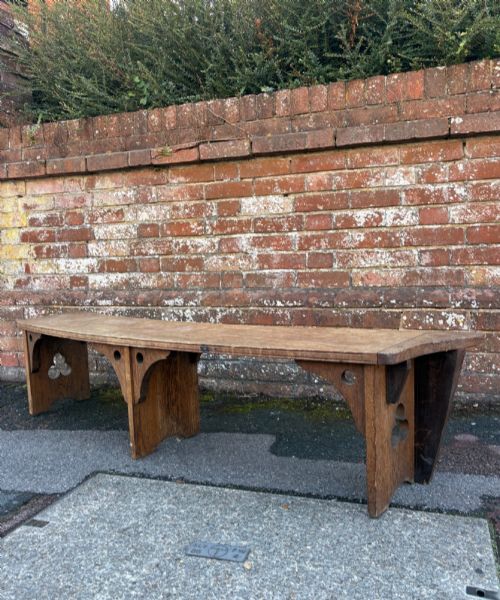
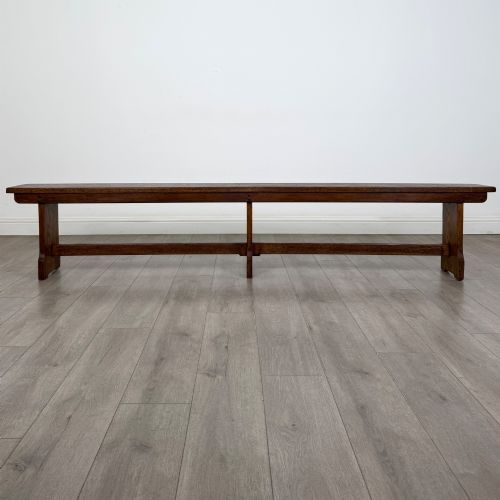
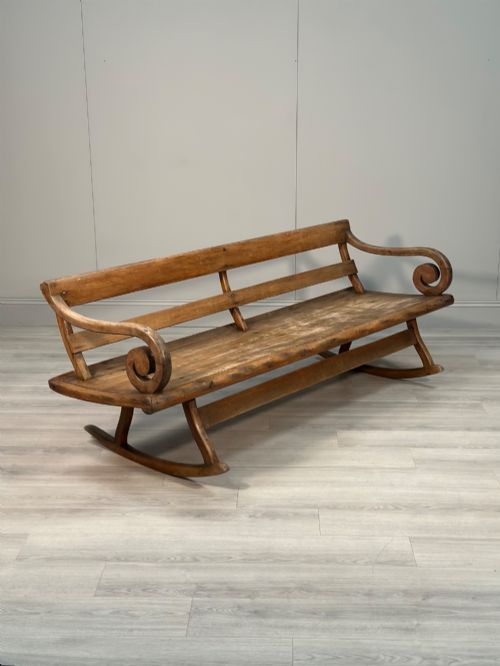
Brown Wooden Bench Seat
A brown wooden bench seat brings solid timber character and practical seating into a hallway, living space or kitchen.
Brown Wooden Bench Seat
A brown wooden bench seat encompasses robust settles, church pews, chapel benches, and hall seats designed for communal or utilitarian seating. Buyers hunting for a brown wooden bench seat encounter vernacular forms shaped by country life alongside more formal Georgian and Victorian iterations.
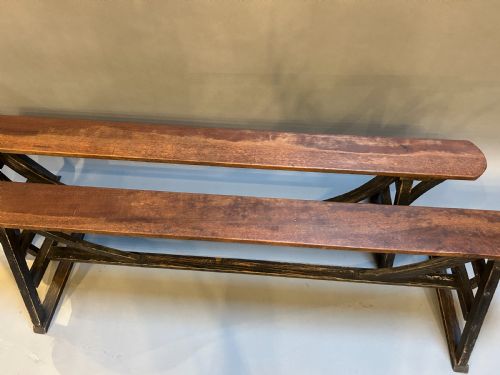
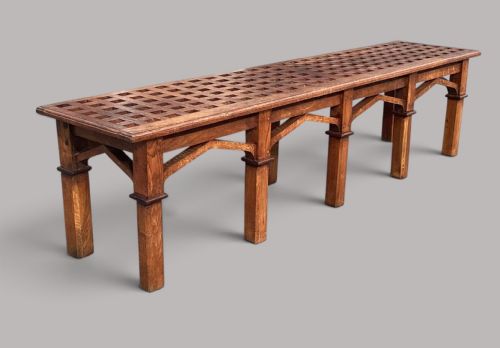
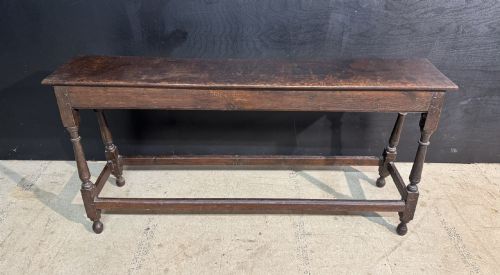
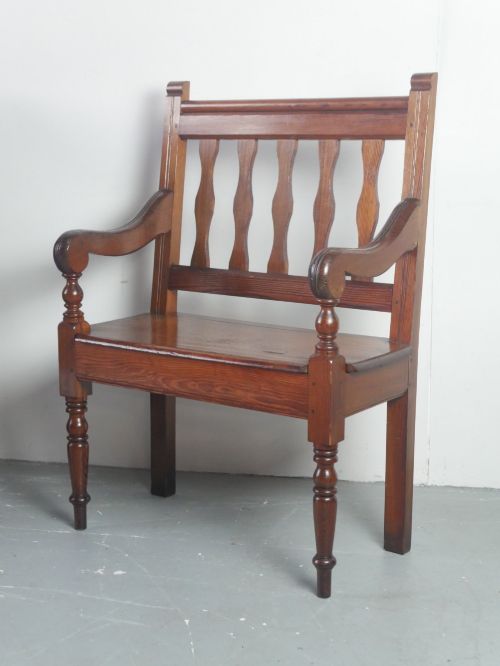
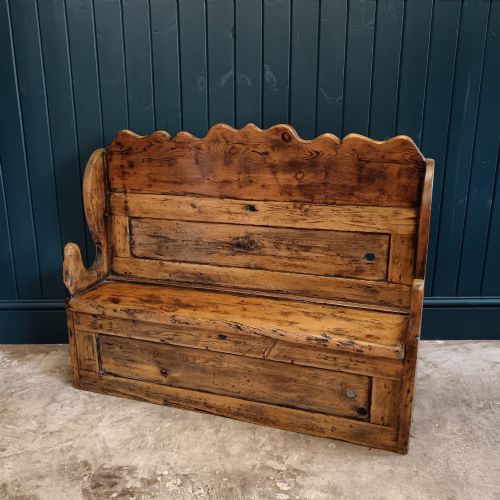
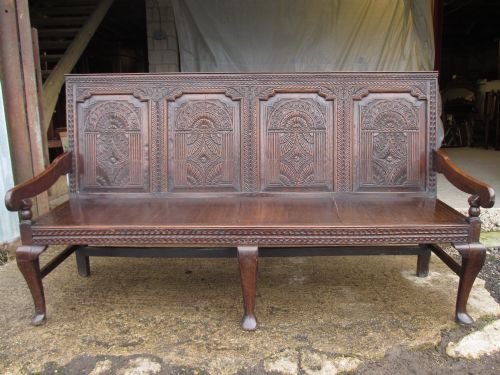
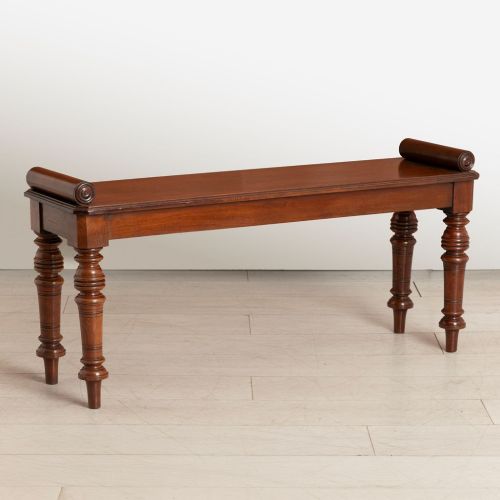
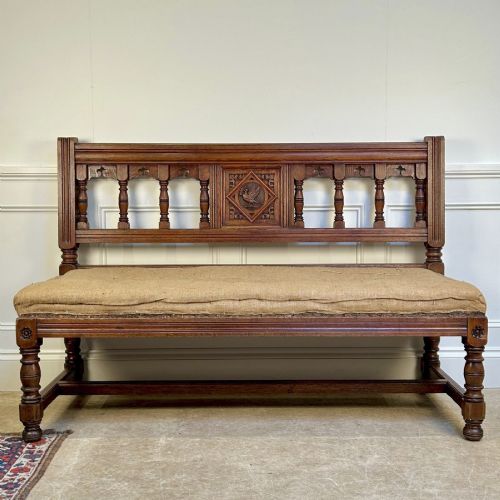
Pieces range from rustic vernacular chapel pews in pine to carved Gothic revival oak benches and slender elm hallway seating. Buyers typically find sturdy timber constructions reflecting practical domestic and institutional use.
Materials and construction methods
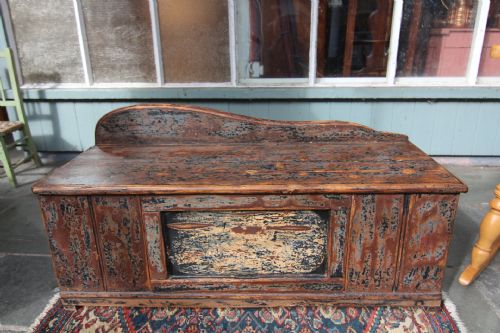
Construction relies heavily on native timbers such as oak, elm, ash, and pine, frequently joined using traditional pegged mortise and tenon techniques. Cabinet makers utilised solid boards for seats and backs, often incorporating box storage bases beneath hinged lids.
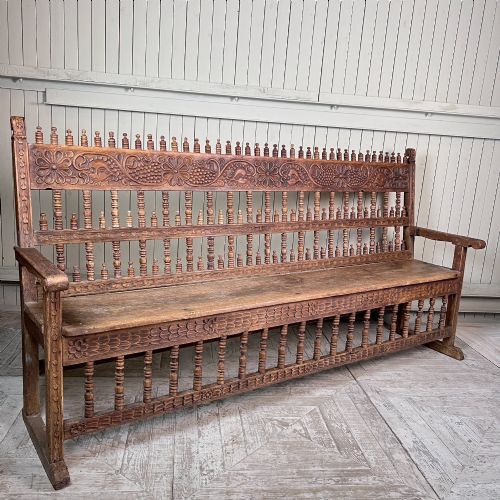
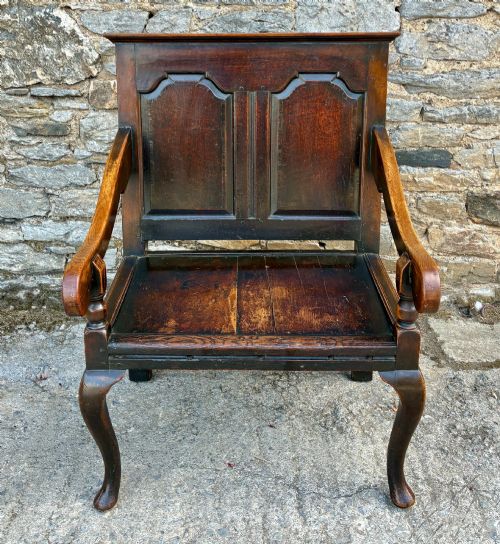
Carving, panel-back construction, and turned supports define the decorative and structural approach of earlier periods. Surfaces display natural patination developed through decades of daily use and simple wax polishing.
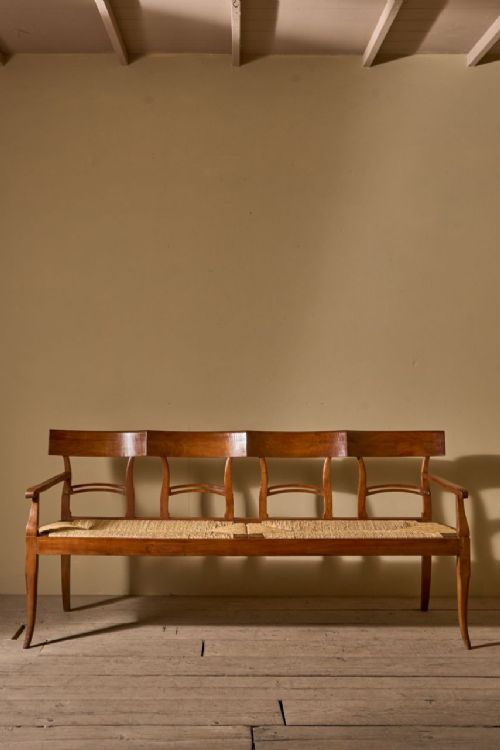
Listings feature oak, pine, mahogany, and elm across Georgian, Victorian, and Arts and Crafts periods.
Assessing quality and craftsmanship
Quality rests in the selection of timber, the integrity of the joinery, and the proportion of the piece. Superior examples exhibit tightly fitted panels, substantial timber thickness, and minimal later alterations to the frame or seat.
The depth of the patina and the crispness of any carved detailing distinguish finer workshops from utilitarian vernacular pieces. Structural honesty and original surface finishes elevate certain examples above standard workshop output.
GIllows
The Brown Wooden Bench Seat Glossary
- Settle
- A wooden bench with a high back, solid arms, and frequently a box base with a lift-up seat. This form provided shelter from draughts in traditional domestic interiors.
- Joint stool
- A sturdy wooden stool constructed with mortise and tenon joints rather than turned legs inserted into a seat slab. These predate many standard chair forms.
- Box settle
- A settle featuring an enclosed compartment beneath the seat for storage. The hinged lid doubles as the seating surface.
- Chapel pew
- A long wooden bench originally built for religious assemblies, frequently constructed from pine or pitch pine. They often feature simple panelled backs and ends.
- Patina
- The surface sheen and colour developed by timber over years of handling, polishing, and exposure to light. Collectors prize undisturbed historical surfaces.
Brown Wooden Bench Seat: Frequently Asked Questions
Where should I place a wooden bench seat?
A narrow hall bench fits well in a restricted entryway, providing a practical spot for putting on shoes.
Larger settles and church pews suit dining tables, large kitchens, or living rooms where they anchor a wall space.
How do I care for antique timber benches?
Maintain the wood by applying a natural beeswax polish occasionally to nourish the dry grain.
Keep wooden seats away from direct heat sources and radiators to prevent the timber from splitting.
How can I tell an 18th-century settle apart from a 19th-century one?
Eighteenth-century examples often display hand-planed surfaces, pegged joinery, and simpler, heavier proportions.
Nineteenth-century revival pieces frequently incorporate machine-sawn timber and more ornate Gothic or Jacobean carving styles.
Did settles originally have storage?
Many traditional settles incorporated a box base beneath the seat to store household blankets and dry goods.
Open-frame settles relied purely on the high back and arms for structural support and draught exclusion.