

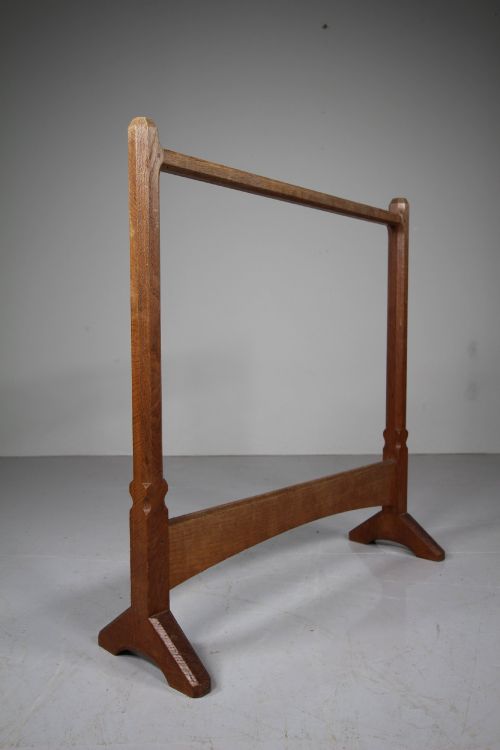
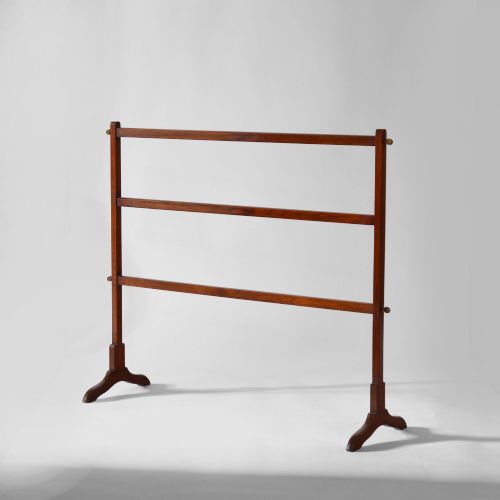
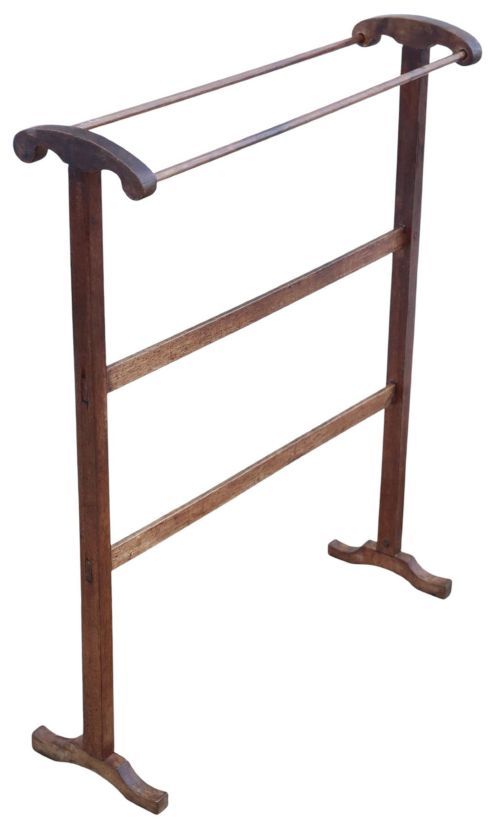
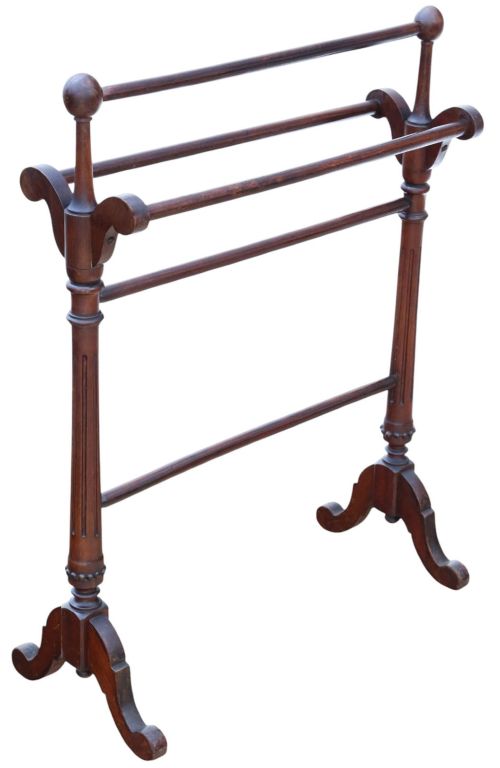
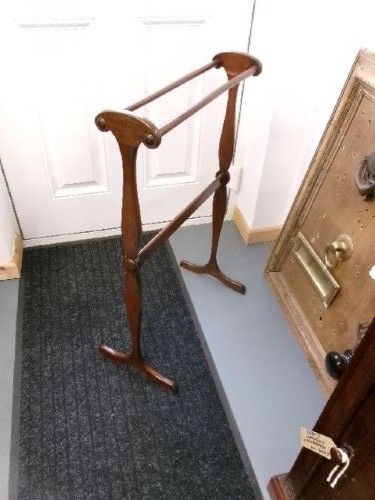


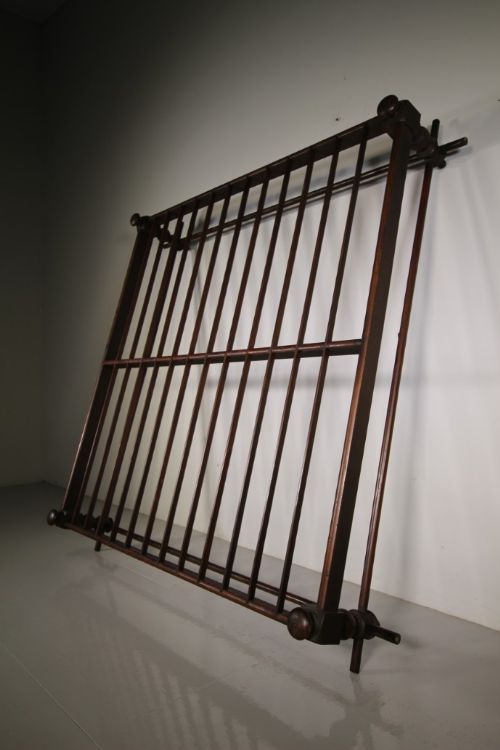


Brown Wooden Airer
A brown wooden airer is a practical domestic utility made for drying linen, and you want one for its solid craftsmanship and period utility.
Brown Wooden Airer
A brown wooden airer covers freestanding towel rails and kitchen hanging racks designed for domestic utility. When you search for a brown wooden airer, you encounter sturdy pieces primarily configured for drying textiles in the home.
The pieces listed here date from the Regency era through the Victorian and Edwardian periods up to nineteen ten. You will most frequently meet mahogany or oak standing towel rails and folding versions.
Makers utilised resilient hardwoods to build these items for daily household service. Forms range from simple three-fold rails to large country house towel stands and kitchen racks.
How they were made
These items were constructed using durable timbers such as mahogany and oak, frequently paired with brass hardware. Boxwood details and subtle inlaid decoration occasionally appear on Edwardian examples.
Joinery techniques focused on folding mechanisms and sturdy upright frames to support damp laundry or textiles. Cabinet makers built these utility pieces to withstand heavy daily use in Victorian and Edwardian households.
Brown Wooden Airer Retail Price Guide 2026
Typical asking prices for brown wooden airer among the pieces listed under this phrase on Sellingantiques today, from the lower quarter to the upper quarter. They describe what is for sale here now, not the wider market.
The listings here span the Regency, Victorian, and Edwardian periods, featuring mahogany and oak alongside brass and boxwood.
What varies in quality
Quality rests upon the selection of timber, such as richly grained mahogany versus utilitarian oak, and the elegance of the turning on the upright bars. Five-bar configurations and larger country house proportions indicate higher ambition.
Finishing touches like inlaid wood and brass fittings distinguish finer Edwardian and Victorian examples from plain farm kitchen pieces.
The Brown Wooden Airer Glossary
- Cheval towel rail
- A freestanding pivoting rail mounted on a supportive frame. This design allows the bars to swing or angle independently.
- Folding towel rail
- A multi-section frame hinged to collapse flat when not in use. It offers convenient storage while maintaining structural rigidity.
- Kitchen hanging rack
- A ceiling-mounted or wall-hung utility frame utilised for drying herbs or clothes. These items maximise vertical space in domestic rooms.
- Inlaid mahogany
- Timber decorated by inserting contrasting woods into shallow carved recesses. This technique marks more refined Edwardian pieces.
Brown Wooden Airer: Frequently Asked Questions
What is a brown wooden airer used for?
These items were originally designed for drying towels, laundry, and linens in domestic settings. They provided a portable and efficient way to air textiles near a hearth or in a utility space.
Today, they serve the same practical drying function while adding traditional character to bathrooms, bedrooms, and kitchens.
How do I date a wooden towel rail?
Dating relies on observing timber choices, construction methods, and stylistic details. Regency and early Victorian pieces often feature heavy mahogany frames, whereas Edwardian examples may include delicate inlays.
Examining the turning of the bars and the type of hinges used helps place the piece within the nineteenth or early twentieth century.
Are these airers suitable for modern bathrooms?
Their sturdy hardwood construction and functional folding designs make them ideal for modern homes. They provide ample hanging space for towels without requiring permanent wall installation.
Ensure the wood is maintained with appropriate oils to resist moisture in damp bathroom environments.
What is the difference between a rail and a rack?
Rails typically stand on the floor as freestanding pieces with multiple folding or fixed bars. They can be moved easily around a room as needed.
Racks, such as kitchen hanging racks, are fixed structures designed to utilise overhead or wall space for suspending items.