




Brown Wood Window Seat
A brown wood window seat gives a room a purposeful perch, turning an overlooked sill into a place to sit and watch the street.
Brown Wood Window Seat
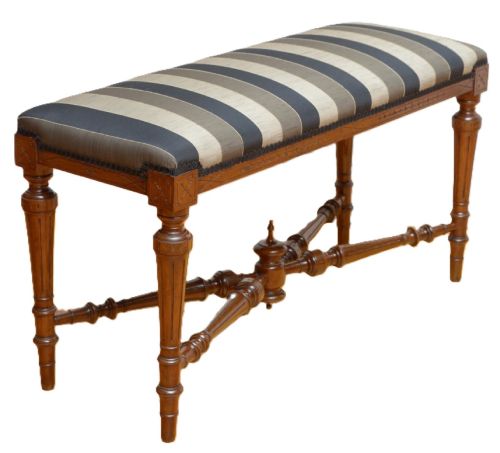
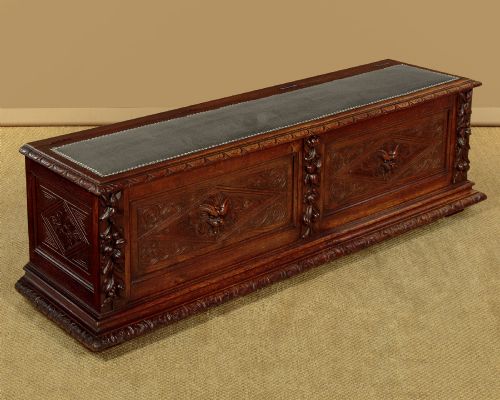
A brown wood window seat covers a broad family of low benches, long stools, and ottoman boxes designed to sit beneath glazing or along a hallway. When you search for a brown wood window seat, you encounter forms ranging from heavy nineteenth-century oak benches to polished mahogany frames with upholstered tops.
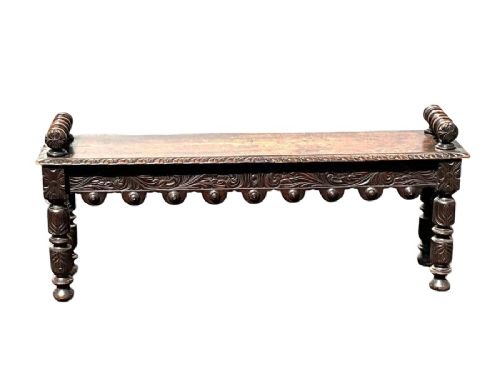
The pieces on this page span several decades and styles, including Victorian oak, Regency mahogany, and occasional revival pieces like Jacobean or Moorish designs. You are most likely to meet sturdy oak and mahogany examples built for utilitarian comfort in domestic settings.
Beyond standard benches, the selection includes long footstools, duet stools, and altar benches adapted for similar placement. Their shared characteristic is a low profile and a wooden structure meant to support cushions, fabric, or leather pads.
How they were made
Cabinetmakers constructed these seats primarily using solid oak and mahogany, often shaping the timber with hand tools to create turned legs or carved panels. Hardwood frames provided the structural rigidity needed for daily seating.
Upholstery techniques varied from simple drop-in pads covered in textile or leather to intricate tapestry tops fixed over webbing. Brass fittings occasionally appear as hinges on ottoman boxes or decorative accents on specific revival styles.
Brown Wood Window Seat Retail Price Guide 2026
Typical asking prices for brown wood window seat among the pieces listed under this phrase on Sellingantiques today, from the lower quarter to the upper quarter. They describe what is for sale here now, not the wider market.
Periods represented span the Regency era through the Edwardian period, including Victorian and Qing Dynasty examples.
What varies in quality
Quality in these seats rests upon the selection of timber and the crispness of any carved detail, such as the elephants or scrollwork seen on certain frames. Heavier construction and thoughtful proportions separate utilitarian workshop items from more ambitious cabinet work.
The integrity of the wooden frame and the quality of the surviving upholstery materials determine the lasting appeal of each piece. Superior examples maintain tight joints and well-chosen grain patterns across the seat rails and legs.
I.M. Gillows of Lancaster
The Brown Wood Window Seat Glossary
- Ottoman box seat
- A bench featuring a hinged lid that opens to reveal interior storage space. These pieces combine seating utility with hidden storage for textiles or household items.
- Duet stool
- A wide stool designed to seat two people simultaneously, frequently associated with piano playing or long window recesses. They offer an extended timber frame supported by multiple legs.
- Altar bench
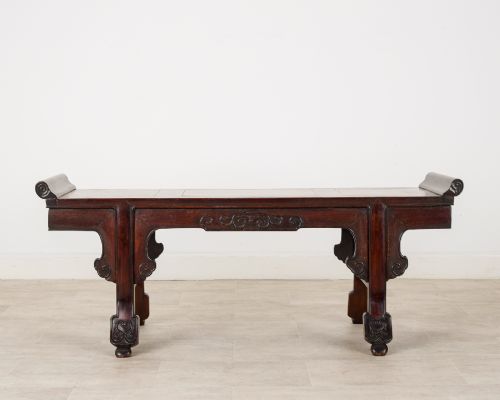
- A low, long form adapted from temple or ritual furnishings into domestic seating. They typically feature dense Chinese hardwoods and distinct linear proportions.
- Regency
- A stylistic period spanning the early nineteenth century defined by classical restraint and mahogany frames. Furniture from this era often incorporates clean lines and polished surfaces.
Brown Wood Window Seat: Frequently Asked Questions
Where should I place a window seat?
These low benches fit naturally beneath low sills, along narrow hallways, or at the foot of a bed where their length does not block walking paths.
Their shallow depth allows them to occupy transitional spaces without crowding a room.
Can I use a footstool as a window seat?
Long footstools and duet stools share similar proportions and height dimensions with traditional window seating. Many people repurpose these upholstered forms for seating beneath glass.
Check the length and weight capacity of the individual frame to ensure it suits regular seating rather than just resting feet.
How do I care for the wood?
Maintain the timber surfaces by keeping them away from direct heat sources and sudden temperature shifts that dry out old polish. Regular dusting with a dry cloth preserves the finish.
Apply occasional wax polish if the timber appears dry, buffing gently along the grain.
What periods do these seats come from?
The listings span the nineteenth and early twentieth centuries, featuring Victorian, Edwardian, and Regency designs alongside revival styles. Each era brings distinct carving techniques and wood selections.
Earlier pieces often use solid oak or mahogany, while later items incorporate diverse revival aesthetics.