





Brown Wood Tea Tray
A brown wood tea tray brings tactile warmth and enduring utility to any interior, offering a solid surface for hosting or display.
Brown Wood Tea Tray
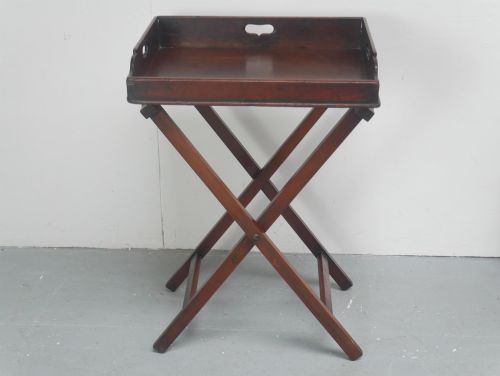
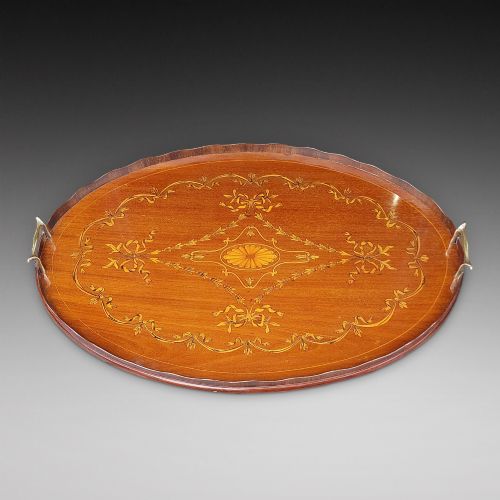
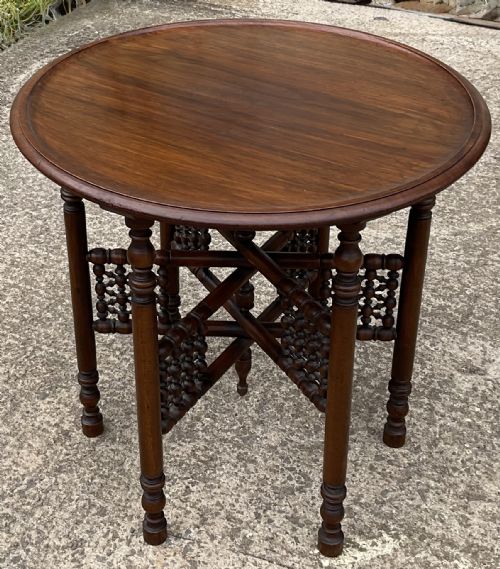
A brown wood tea tray encompasses portable serving platters and rigid table tops designed for afternoon hospitality or display. These items emerge from various periods including the Georgian era, the Victorian epoch, and the Edwardian years.
Origin variations span traditional English workshops alongside Anglo-Indian production and Eastern carving traditions. Buyers encounter both utilitarian servers and decorative display pieces suited to daily use or formal interiors.
How they were made
Construction relies heavily on dense timbers such as mahogany, walnut, teak, and satinwood, frequently enhanced by decorative wood veneer or burr walnut sections. Skilled cabinet makers shaped these materials using traditional joinery and robust framing techniques to ensure lasting strength.
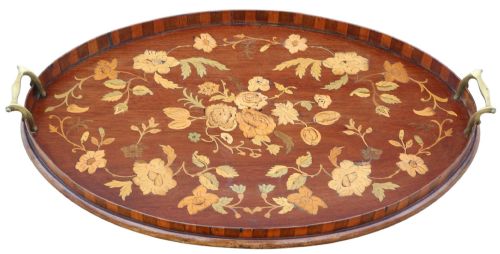
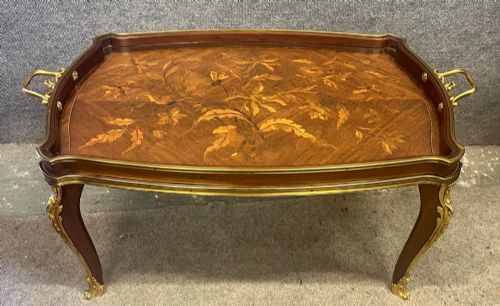
Surface enrichment often involves intricate inlay work, marquetry patterns, and hand carving executed in regional workshops. Many trays incorporate brass handles, gallery rims, or scalloped edging to secure items during transit.
Brown Wood Tea Tray Retail Price Guide 2026
Typical asking prices for brown wood tea tray among the pieces listed under this phrase on Sellingantiques today, from the lower quarter to the upper quarter. They describe what is for sale here now, not the wider market.
Some miniature trays prove that even Victorian tea service could be scaled down for the most compact gatherings.
What varies in quality
Quality differentiates by the precision of the timber selection, such as figured mahogany or matched oyster veneer, and the crispness of any inlaid marquetry. Finer examples display meticulous hand carving and integrated brass hardware that complement the underlying wood grain.
Structural integrity also separates standard items from superior pieces, seen in the tight fit of corner joints and the stability of galleried edges. Age-appropriate patination on the timber surface indicates genuine historical use rather than modern distress.
The Brown Wood Tea Tray Glossary
- Mahogany
- A durable, reddish-brown tropical hardwood favoured by cabinet makers for its stability and fine grain. It forms the primary structure of many historical serving items.
- Marquetry
- The art of applying decorative veneer pieces in geometric or pictorial patterns onto a wooden surface. This technique creates intricate ornamentation on tabletops and trays.
- Galleried
- A raised wooden or metal rim running around the edge of a tray or table top to prevent objects from sliding off. This feature is common on formal serving tables.
- Silver table
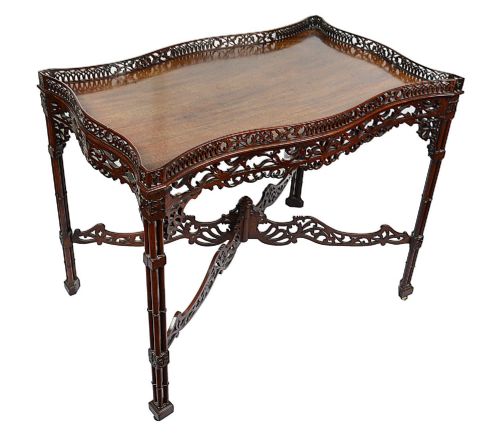
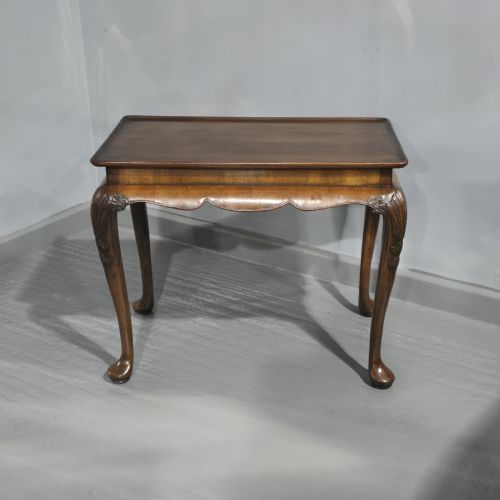
- A specific low table historically used for displaying silver tea services or serving afternoon refreshments. These often feature raised edges and elegant leg supports.
- Oyster veneering
- A decorative woodworking method where small branch wood is cut transversely to produce circular or oval patterns resembling oyster shells. It yields a distinctive, rippled surface texture.
Brown Wood Tea Tray: Frequently Asked Questions
What is a tray top table?
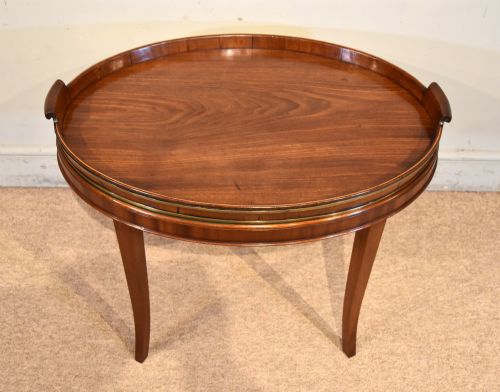
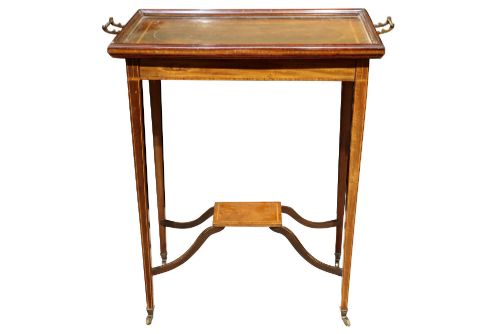
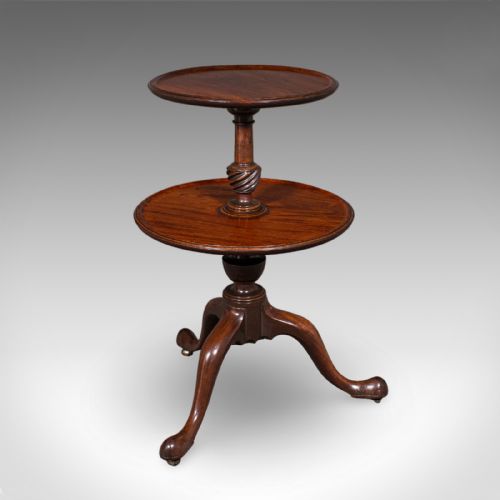
A tray top table combines a portable serving tray with a dedicated support stand or forms a table with an integral raised rim. This design allows the surface to function both as standalone furniture and as a removable tray.
Such dual-purpose items served domestic needs in formal reception rooms and private chambers alike.
How do I care for a wooden tea tray?
Maintain wooden surfaces by dusting regularly with a dry cloth and avoiding excessive moisture or direct heat sources. Periodic application of appropriate wax polish preserves the natural sheen of the timber.
Preventative care protects delicate veneers and historical finishes from drying out over time.
Are these trays suitable for daily use?
Many solid wood and sturdy serving trays remain fully functional for carrying items or hosting guests today. Items featuring delicate marquetry or antique veneer are better suited to static display and lighter service.
Assessing the construction strength helps determine whether a piece handles active hospitality or decorative placement.
What defines an Edwardian tray?
Edwardian items typically reflect early twentieth-century tastes, often showcasing lighter satinwood highlights, neat inlay work, and refined proportions. They frequently utilise mahogany or walnut within domestic occasional furniture.
These pieces combine decorative appeal with practical utility for Edwardian entertaining customs.