


Brown Wood Study Desk
These brown wood study desk pieces offer timeless workspaces built from rich timbers like mahogany, oak, and walnut across Georgian, Victorian, and Edwardian eras.

Brown Wood Study Desk
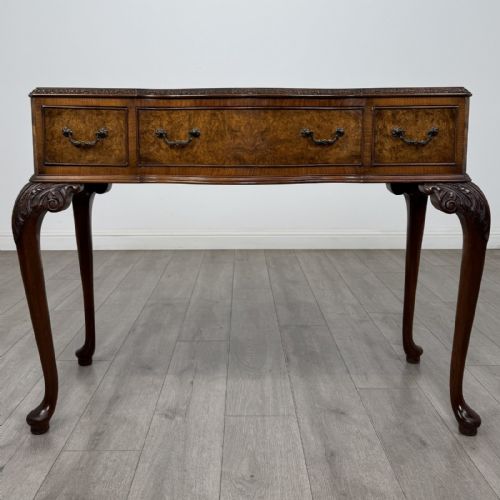
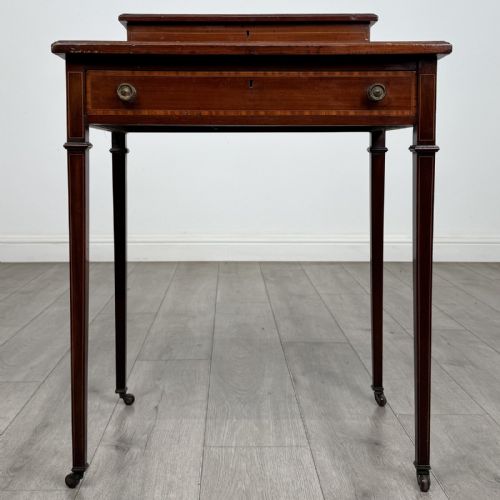
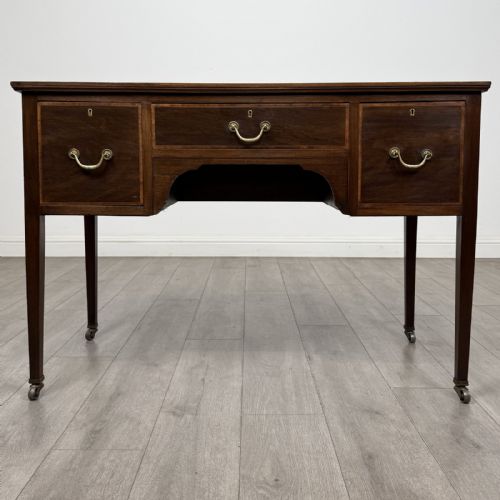
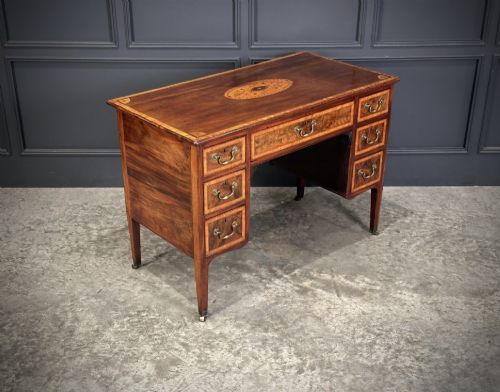
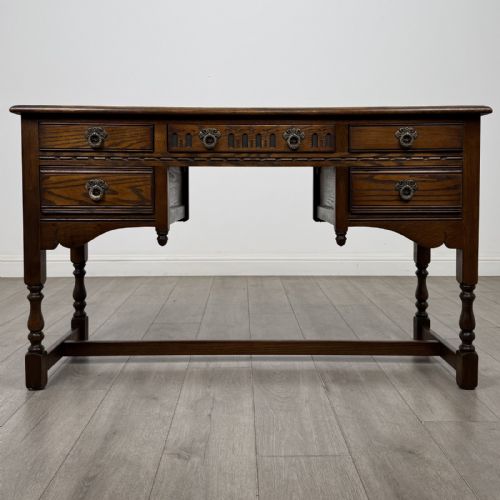
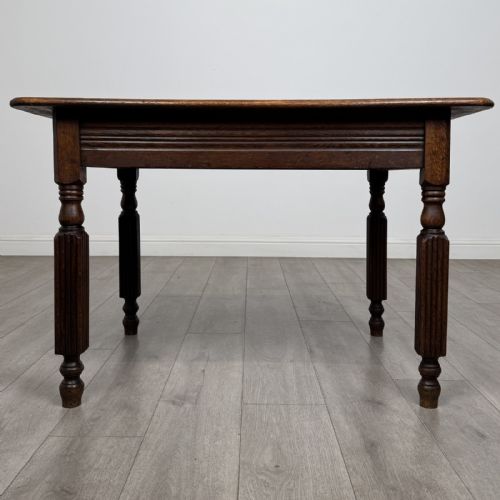
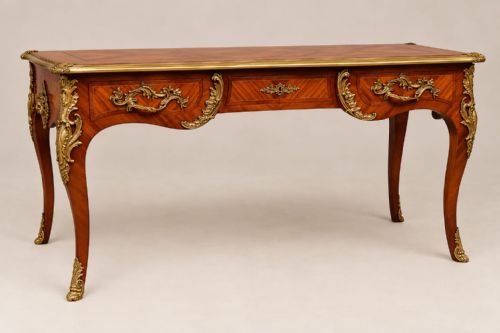
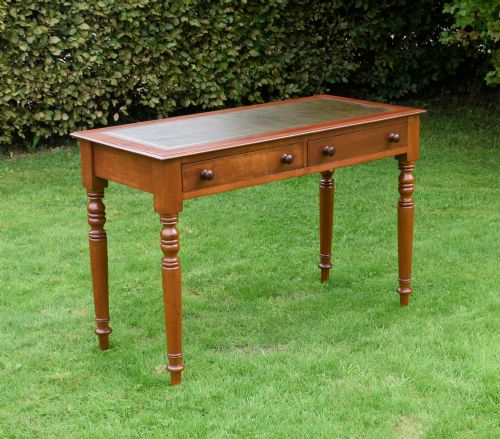
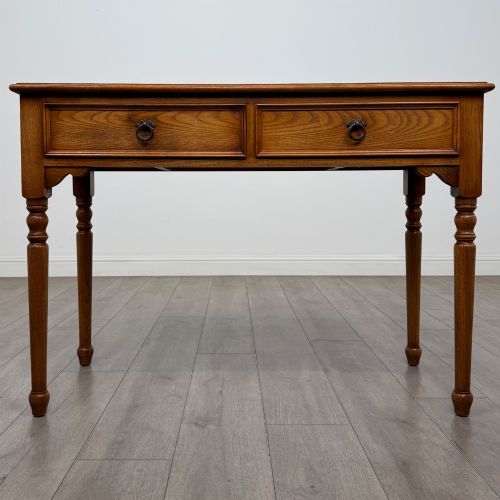
A brown wood study desk encompasses writing tables, pedestal desks, kneehole desks, and bureaux spanning centuries of domestic and library use. When exploring these listings, the most common forms encountered are mahogany writing tables and pedestal desks originating from the Georgian, Victorian, and Edwardian periods.
Makers and workshops across the nineteenth and early twentieth centuries produced these items in various regional styles, including English Country Revival and Black Forest iterations alongside formal pedestal arrangements. Pieces range from compact drop-side writing tables to large freestanding library tables designed for central room placement.
The materials span dense hardwoods such as oak, walnut, burr elm, and yew, often complemented by inset leather surfaces and brass hardware. Each form reflects the specific writing and administrative habits of its era, from simple single-drawer tables to elaborate cylinder desks.
Materials and Joinery
Cabinet makers utilised solid timbers and selected veneers, notably flame and burr mahogany, walnut, and satinwood, applied over secondary framing woods. Surfaces frequently incorporated inset tooled leather writing panels, while structural joints relied upon traditional dovetailing and mortise and tenon techniques.
Hardware details such as brass drop handles, key escutbrellas, and occasional ivory inlay or Wedgwood plaques were integrated into the primary structure. Timber was seasoned and hand-finished, often displaying subtle variations in grain pattern and natural colour depth across panels.
Black Forest owls peer from carved wooden bookends alongside these study desks.
Indicators of Quality and Execution
Superior examples distinguish themselves through the selection of highly figured timbers, such as burr elm or flame mahogany, matched carefully across drawer fronts and top surfaces. The presence of original handles, intact leather inserts, and secondary drawer linings executed in solid oak or mahogany indicates higher workshop standards.
Construction rigour separates standard utilitarian pieces from master cabinet work, evident in tight dovetail joints, smooth drawer operation, and refined edge mouldings. The integration of specialised mechanisms, such as tambour shutters or cylinder tops that function without binding, marks the upper tier of production.
Trollope & sons·Jackson & Graham·Hobbs & Co.·Edwards & Roberts
The Brown Wood Study Desk Glossary
- Kneehole desk
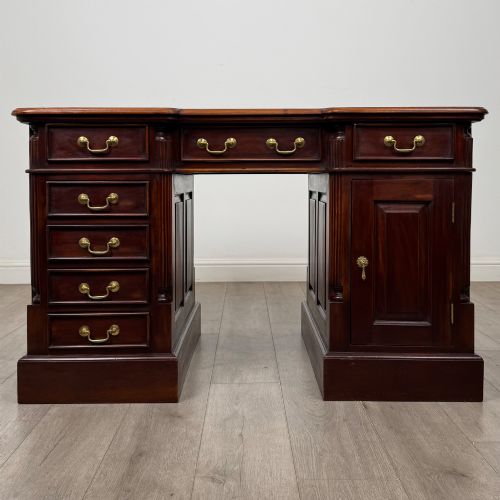
- A writing desk featuring a central recess for the user's legs, flanked by pedestals containing multiple drawers. This compact form became particularly popular during the Georgian and Victorian periods.
- Pedestal desk
- A heavy freestanding desk supported by two vertical columns of drawers with a central opening. These items often feature finished backs allowing them to stand in the middle of a room.
- Tambour
- A flexible shutter formed of narrow vertical strips of wood glued to canvas or leather backing, allowing it to slide in a track. This technique encloses pigeonholes and writing compartments on cylinder and bureau desks.
- Bureau
- A sloping front desk that opens to reveal a writing surface and internal pigeonholes, occasionally raised on a frame or stand. Georgian and Edwardian iterations frequently utilise oak or mahogany.
Brown Wood Study Desk: Frequently Asked Questions
How do I date a wooden desk?
Dating relies upon examining construction methods, timber choices, and hardware styles associated with periods like the Georgian era or Edwardian times. Hand-cut dovetails, secondary woods, and specific ornamental motifs provide clear chronological markers.
Changes in cabinet-making technology from the eighteenth through to the early twentieth century help narrow the decade of manufacture. Original labels, stamps, or workshop signatures further clarify the origin.
Were these desks used for writing?
These pieces served primarily for correspondence, household administration, and study before the widespread adoption of modern office furniture. Writing tables and pedestal desks provided dedicated storage for stationery and ledgers.
Many incorporated specialised compartments, such as pigeonholes and small drawers within cylinder tops or tambour sections, to organise letters and documents securely.
How should I maintain the leather top?
Leather inserts require gentle cleaning with a damp cloth and occasional treatment with appropriate leather dressings to prevent drying and cracking. Avoid using harsh chemical solvents or excess water near the surrounding wood.
Maintaining a stable room humidity helps preserve both the vegetable-tanned leather and the underlying timber framing against shrinkage or warping.
What is the difference between a library table and a pedestal desk?
A library table is typically an open-frame table with legs and drawers beneath the top, designed to be accessed from all sides. Pedestal desks utilise solid drawer columns beneath the work surface, offering greater fixed storage.
Library tables often stood in the centre of large rooms, whereas pedestal desks were traditionally positioned against walls or within private studies.