

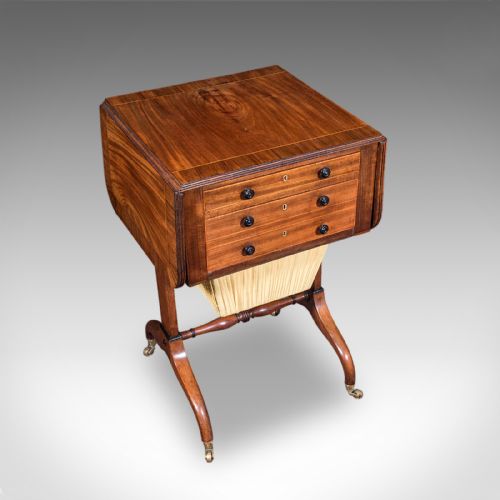
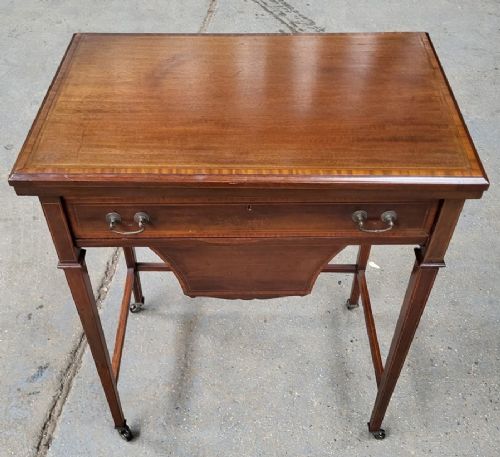
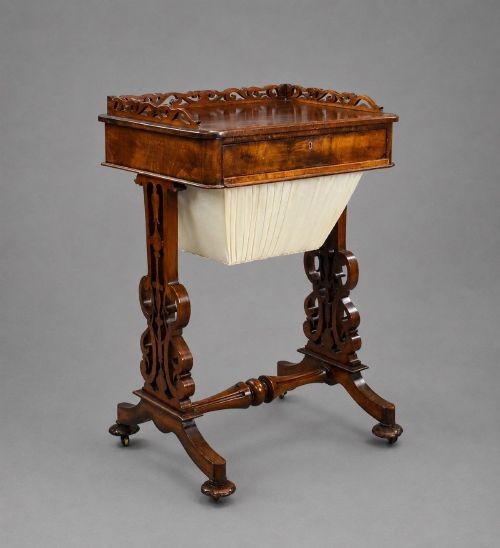


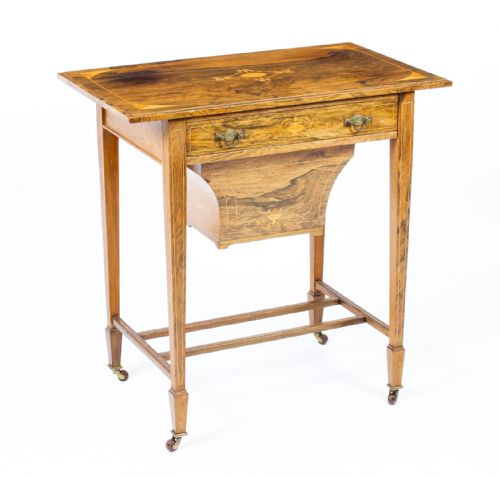

Brown Wood Sewing Box
A brown wood sewing box is a practical container for needlework essentials, combining clever interior compartments with rich timber grains.
Brown Wood Sewing Box
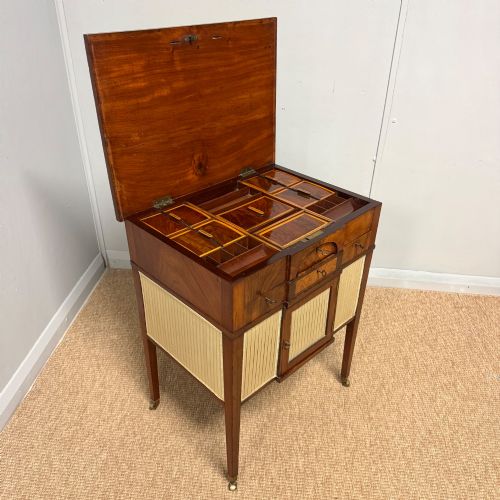
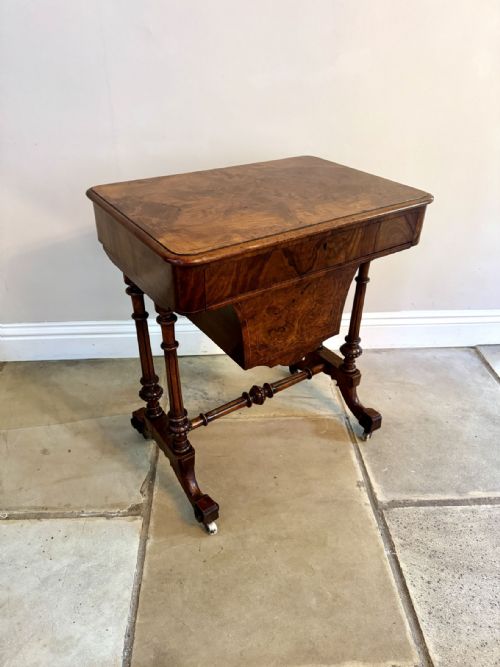
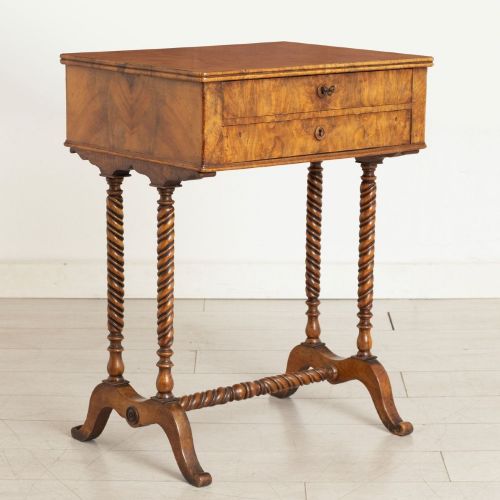
A brown wood sewing box encompasses everything from small tabletop caskets to larger freestanding work tables designed to hold thread, needles, and fabric. The selection on this page leans heavily toward Victorian and Edwardian work tables alongside smaller tabletop boxes.
Makers utilised rich timbers such as mahogany, walnut, and burr walnut, often shaping them into trumpet forms, drop-leaf tables, or fitted trinket boxes. These pieces bridge the gap between functional craft storage and refined domestic furniture.
Origins span the nineteenth century, taking in Regency, William IV, and Edwardian periods, with occasional specialised pieces like Anglo-Indian coromandel boxes or Tunbridge Ware examples. Buyers encounter various formats, including folding games tables that double as needlework stations.
Materials and Construction
Carpenters constructed these pieces using solid timbers and decorative veneers like burr walnut, mahogany, and satinwood, frequently applying boxwood stringing and geometric inlaid banding for visual contrast. Brass mounts, escutcheons, and hinges provide functional hardware that often secures lids and drawers.
Interiors typically involve fitted compartments, small wooden trays, and fabric-lined wells designed to organise spools, pins, and sewing tools. Surface finishes rely on traditional polishing methods that highlight the natural grain patterns of the wood.
Brown Wood Sewing Box Retail Price Guide 2026
Typical asking prices for brown wood sewing box among the pieces listed under this phrase on Sellingantiques today, from the lower quarter to the upper quarter. They describe what is for sale here now, not the wider market.
Some Victorian boxes feature hidden mechanisms and secret drawers that challenge users to find the correct sequence to open them.
Indicators of Quality
Quality rests in the choice of timber and the precision of the cabinetwork, particularly where veneers meet at corners or inlay is embedded into the solid wood. Finer examples display complex figure in burr walnut or mahogany, tight joinery, and intact interior fittings rather than replaced components.
The sophistication of the internal layout distinguishes simpler utility boxes from superior pieces intended for the parlour, such as those with detailed Tunbridge Ware mosaic decoration or specialised folding tops.
Waring & Gillow·Chadwick
The Brown Wood Sewing Box Glossary
- Work Table
- A freestanding table with storage specifically built for needlework and sewing implements. These often include a fabric bag or wooden well suspended beneath the top.
- Tunbridge Ware
- A type of decorative woodwork characterised by tiny mosaic tiles formed from naturally coloured woods to create pictorial or geometric designs. It is commonly found on nineteenth-century boxes.
- Burr Walnut
- Timber taken from a growth on a walnut tree, yielding a swirling, highly figured grain pattern prized for cabinet doors and table tops.
- Trumpet Work Table
- A nineteenth-century sewing table featuring an octagonal or flared body shaped like a trumpet, resting on a pillar and tripod base.
- Haberdashery Cabinet
- A display or storage unit originally used in shops for sewing accessories, cottons, and small drapery items.
Brown Wood Sewing Box: Frequently Asked Questions
What is a brown wood sewing box used for?
These boxes and tables were originally designed to keep threads, needles, fabrics, and small tools organised during needlework sessions. Today, they function well as storage for modern craft supplies or as decorative accent tables.
The compartmentalized trays inside make them practical for sorting small items like jewellery, office supplies, or keepsakes while maintaining a tidy surface.
How do I identify the period of a sewing box?
Dating relies on observing timber choices, construction techniques, and stylistic details such as Regency pedestal bases or Edwardian string inlay. Earlier nineteenth-century pieces often use solid mahogany or rosewood, while mid-century examples lean toward burr walnut.
Hardware styles, including brass locks and hinges, also offer clues to the decade of manufacture when combined with overall form.
Where were these sewing boxes placed in a home?
Freestanding work tables usually sat beside chairs or sofas in the drawing room or parlour where ladies gathered for handcrafts. Tabletop boxes rested on side tables, desks, or dressing chests.
Their portable nature meant they could be moved easily to a source of natural light near a window.
Are the interiors usually original?
Many surviving pieces retain their original wooden compartments and lift-out trays, though fabric-lined wells and silk pockets often show wear from use. Replacements of fabric linings are common in pieces of this age.
The structural wooden inserts and small lidded compartments generally remain intact unless the box suffered heavy damage.