

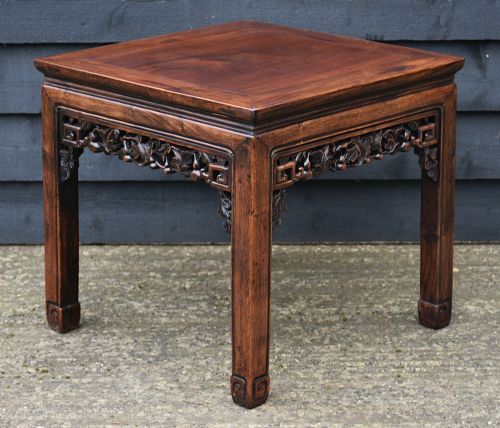
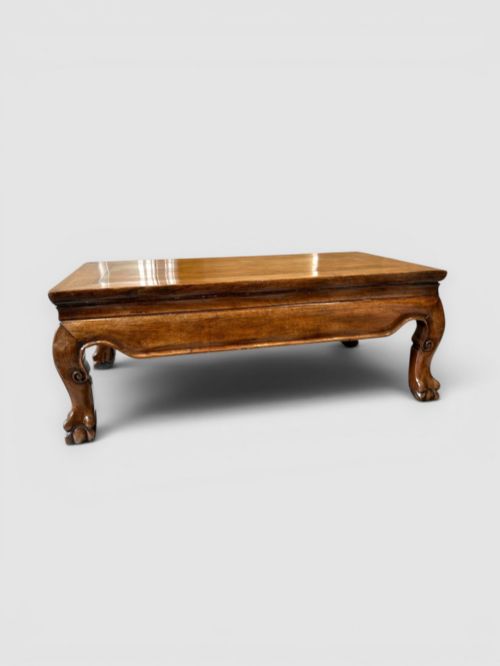


Brown Wood Opium Table
These low brown wood opium table pieces offer practical living room surfaces rooted in traditional Chinese craftsmanship.
Brown Wood Opium Table
A brown wood opium table sits low to the floor, functioning today as a compact coffee table in contemporary interiors. These low tables originate from various periods including the nineteenth century and the early twentieth century.
The listings show pieces categorised as coffee tables and low tables, often reflecting traditional Chinese or Qing Dynasty design. Most examples take rectangular forms, occasionally featuring scroll ends suited to low seating arrangements.
How they were made
Cabinetmakers utilised dense timbers such as hardwood, elm, padouk, huali wood, and rosewood to construct these low surfaces. These materials provide the structural integrity required for low-profile furniture subjected to daily use.
Surfaces often display carved decoration and rely on traditional joinery methods passed down through generations of Chinese artisans. The application of finishes enhances the natural grain and produces a deep patina over decades of handling.
Brown Wood Opium Table Retail Price Guide 2026
Typical asking prices for brown wood opium table among the pieces listed under this phrase on Sellingantiques today, from the lower quarter to the upper quarter. They describe what is for sale here now, not the wider market.
The current selection spans the nineteenth century through the early twentieth century, featuring elm, padouk, huali wood, and rosewood.
What varies in quality
Quality rests upon the selection of timber and the crispness of any carved ornamentation found along the apron or legs. Dense woods like huali and padouk generally exhibit superior grain definition and weight compared to standard elm.
The condition of the finish and the depth of the patination dictate visual appeal across different examples. Well-preserved surfaces show a warm, even lustre developed through age rather than modern intervention.
The Brown Wood Opium Table Glossary
- Kang table
- A low platform table traditionally placed upon a heated brick bed in northern Chinese homes. These surfaces served for dining, writing, or smoking.
- Scroll end
- A decorative terminal detail where the ends of the table top curl outward or upward. This stylistic flourish frequently appears on nineteenth-century pieces.
- Padouk
- A heavy, durable tropical hardwood prized for its reddish-brown colour and fine grain. Cabinetmakers selected this material for formal furniture.
- Patina
- The surface sheen and colour acquired by wood over many years through use, polishing, and exposure to light. A desirable patina signals age and careful maintenance.
- Qing Dynasty
- The last imperial dynasty of China, spanning from sixteen forty-four to nineteen twelve. Furniture from this era encompasses varied regional styles and traditional carving.
Brown Wood Opium Table: Frequently Asked Questions
How are these low tables used today?
These tables function well as central coffee tables in living spaces with low seating arrangements. Their compact proportions fit smaller rooms where standard coffee tables overwhelm the floor space.
They also serve as display surfaces for decorative objects or books. The low profile creates a distinct visual balance in modern interiors.
What materials make up these tables?
Cabinetmakers built these pieces using various Asian hardwoods, including huali wood, padouk, rosewood, and elm. These dense timbers ensure stability despite the low legs.
Each wood species yields a different grain pattern and natural colour tone. Over time, these materials develop a rich surface patina.
How do I date a brown wood opium table?
Dating relies on examining construction methods, timber choice, and stylistic details like scroll ends or carved aprons. Pieces from the nineteenth century often exhibit hand-cut joinery and aged surfaces.
Comparing the form to documented Qing Dynasty or Republic period examples helps narrow the decade of production. Wear patterns also offer clues regarding age.
Are these tables sturdy enough for daily use?
The heavy hardwoods utilised in their construction provide notable structural strength. Traditional joinery allows the frame to withstand regular household demands.
Placing felt pads beneath the feet protects both the floor and the base of the table. Routine dusting keeps the wood finish in sound condition.