

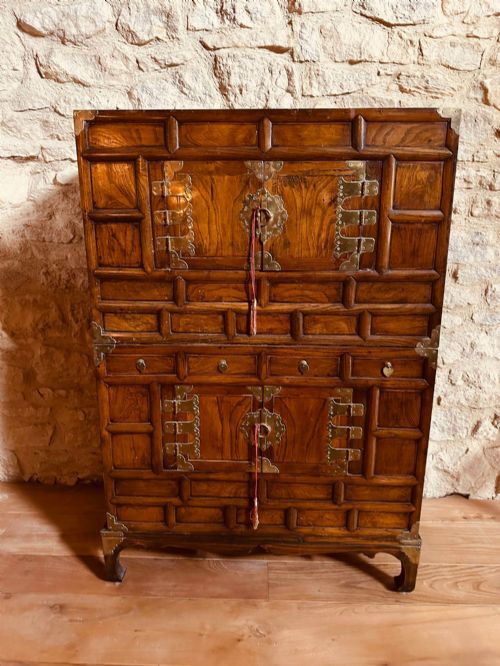
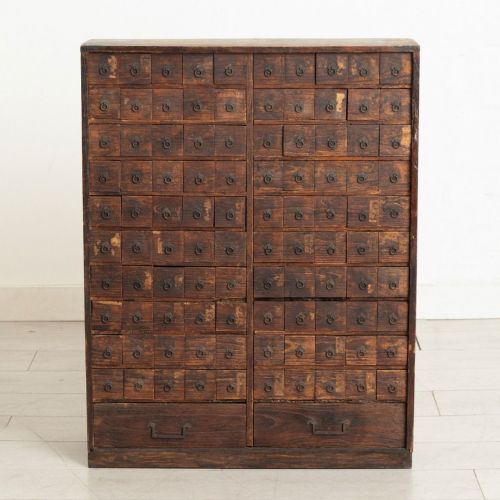


Brown Wood Medicine Chest
A brown wood medicine chest offers compact storage with distinct period character, combining practical compartmentalisation with rich timber grain.
Brown Wood Medicine Chest
A brown wood medicine chest encompasses small cabinets, banks of drawers, and lidded boxes designed to hold remedies and dry goods. When buyers search for a brown wood medicine chest, they typically find pieces originating from British, French, Chinese, Japanese, and Korean traditions spanning the eighteenth century to the early twentieth century.
The forms vary from multi-drawer apothecary banks to hanging wall cupboards and table-top boxes with fitted interiors. Examples range from vernacular oak and elm work to polished display units and lacquered timber pieces from the Meiji and Qing periods.
Most entries on this page present as functional storage furniture, whether intended for a professional chemist or domestic household use. The construction directly reflects regional storage needs, resulting in dense banks of small drawers or secure lidded compartments.
Materials and construction methods
Makers utilised solid timbers including oak, elm, cedar, and lacquered timber, building robust frames suited to containing heavy medical supplies. The primary woods were chosen for stability and straight grain, ensuring tight fits for numerous small drawers and doors.
Hardware played a functional role in construction, incorporating brass hinges, corner brackets, and handles alongside iron fixtures to reinforce corners and drawers. Glass panels appeared in select display variants, while internal dividers were fitted to secure glass bottles and jars.
Brown Wood Medicine Chest Retail Price Guide 2026
Typical asking prices for brown wood medicine chest among the pieces listed under this phrase on Sellingantiques today, from the lower quarter to the upper quarter. They describe what is for sale here now, not the wider market.
Listings span the eighteenth century through the early twentieth century, incorporating oak, elm, cedar, and iron materials across various global traditions.
Distinguishing quality across examples
Quality reveals itself in the precision of the joinery and the complexity of the internal arrangement, particularly within multi-drawer banks where uniform drawer fitting requires considerable skill. The choice of primary timber and the retention of original brass or iron hardware also elevate an example.
Surface finish dictates visual appeal, distinguishing vernacular pieces with simple wax polishes from highly finished display boxes and lacquered pieces. Originality of internal layout and fittings preserves the integrity of the piece.
The Brown Wood Medicine Chest Glossary
- Apothecary cabinet
- A small chest or set of drawers historically used by practitioners to store medicinal herbs, powders, and remedies. These pieces typically feature numerous small compartments to organise diverse ingredients.
- Bank of drawers
- A multi-drawer unit stacked vertically or horizontally to maximise storage capacity for small items. This configuration is standard in apothecary and chemist storage furniture.
- Meiji Period
- The era in Japanese history spanning from eighteen sixty-eight to nineteen twelve, known for distinct cabinet-making traditions and refined timber work. Pieces from this time often show exceptional joinery.
- Qing Dynasty
- The final imperial dynasty of China, lasting from sixteen forty-four to nineteen twelve, characterised by provincial cabinet forms and traditional joinery. Furniture from this period frequently utilises native hardwoods.
Brown Wood Medicine Chest: Frequently Asked Questions
What were these chests used for originally?
These chests served pharmacists, doctors, and households as secure storage for dried herbs, medicinal compounds, and remedies. The numerous small drawers and compartments kept ingredients separated and accessible.
Over time, many transitioned from working medical environments into domestic settings for general storage or display.
How do I date an antique medicine chest?
Dating relies on examining the timber species, construction joinery, and hardware style. Eighteenth-century pieces often display hand-sawn boards and vernacular construction methods, while nineteenth and early twentieth-century examples show more industrialised manufacturing.
Regional styles, such as French country or Japanese Meiji period work, also provide clear chronological and geographical indicators.
Are these chests suitable for modern homes?
Their compact dimensions and numerous compartments make them practical for organising small household items, jewellery, or stationery. They function well on tabletops, desks, or mounted on walls depending on the specific form.
The rich wood tones and varied drawer configurations add distinct character to traditional and contemporary interiors alike.
How should I care for the wood surface?
Maintain the timber by dusting regularly with a dry cloth and occasionally applying a traditional beeswax polish to nourish the grain. Avoid placing the chest in direct sunlight or near heat sources to prevent timber splitting.
Preserve original brass and iron hardware by keeping it dry and avoiding harsh chemical cleaners.