

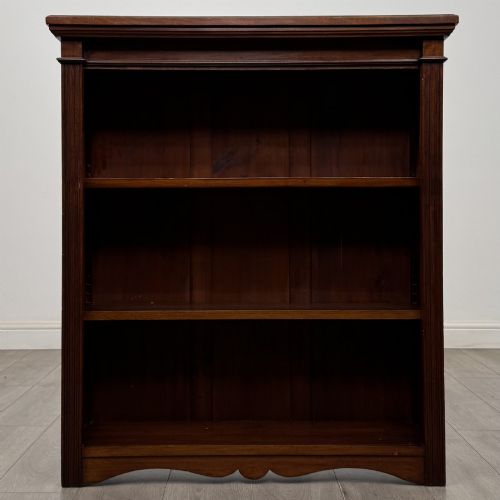
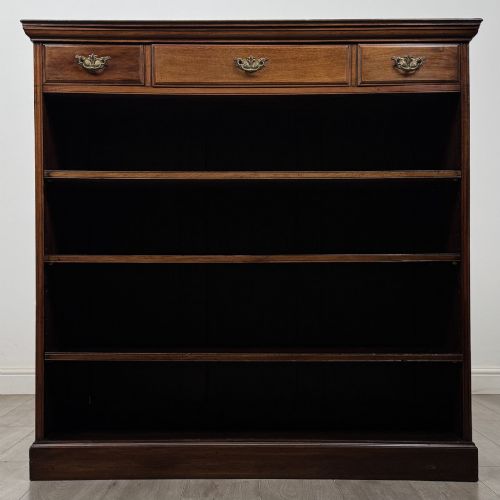
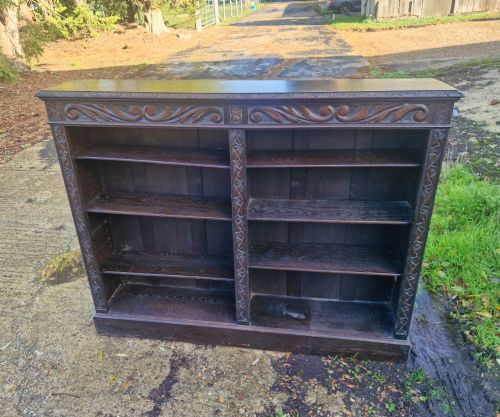

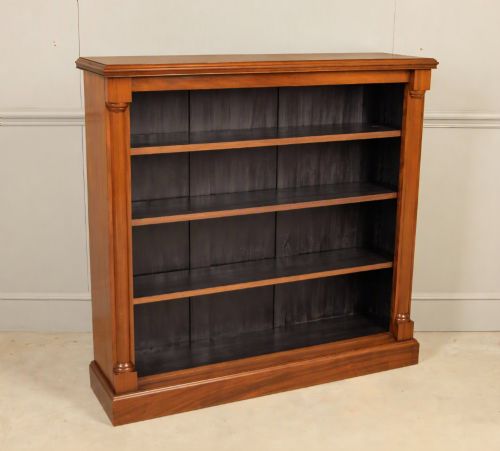

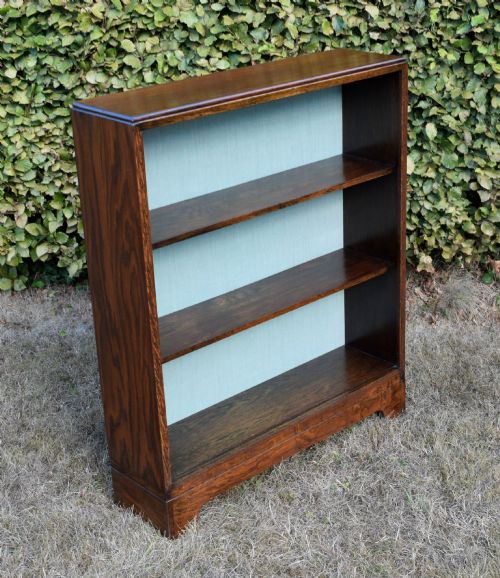

Brown Wood Book Shelf
A brown wood book shelf offers practical storage and traditional character, turning everyday reading material into a handsome interior feature.
Brown Wood Book Shelf
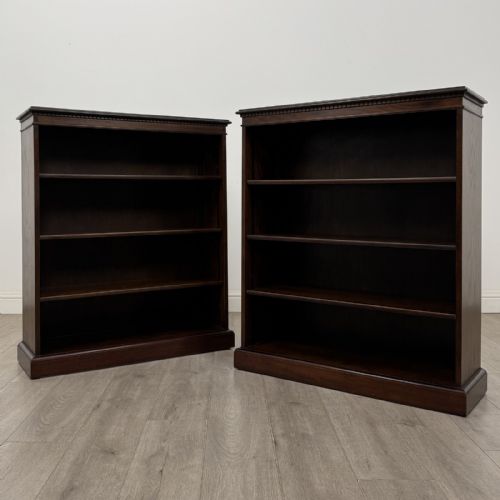
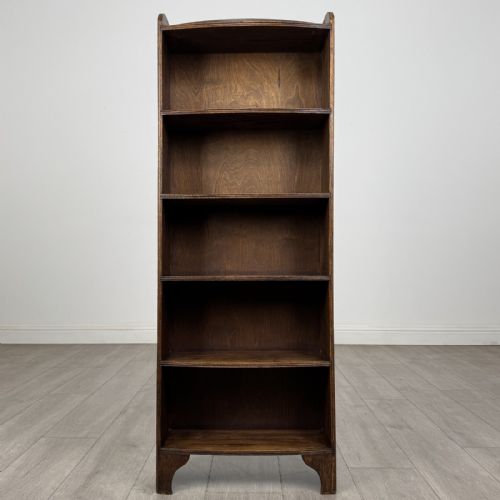
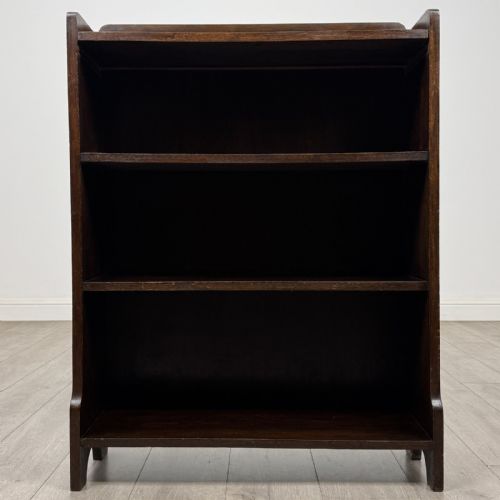
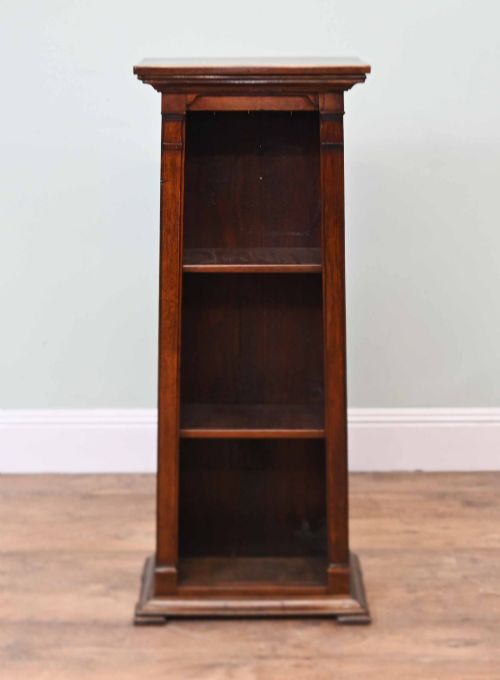
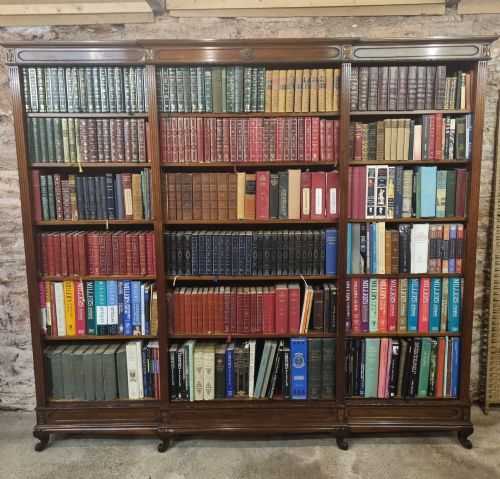
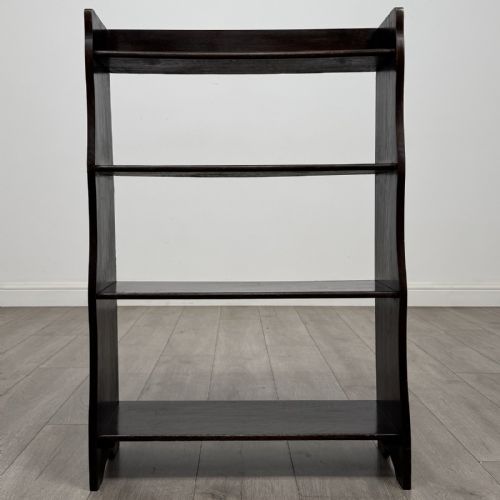
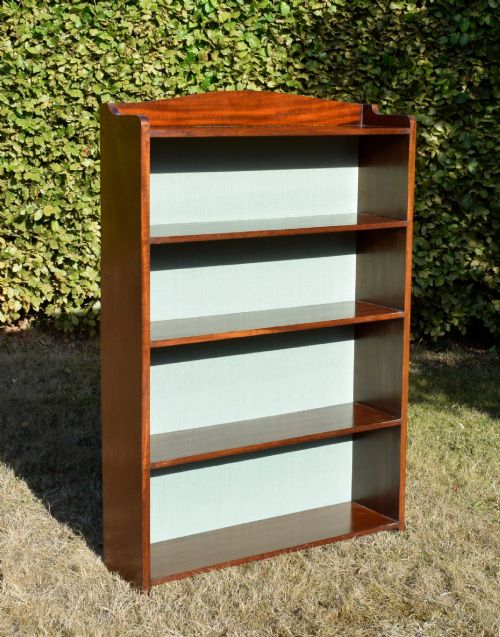
A brown wood book shelf primarily takes the form of an open bookcase, tabletop whatnot, or revolving stand designed for accessible domestic storage. These pieces emerge across nineteenth and early twentieth century periods, spanning simple utilitarian deals to formal breakfront designs.
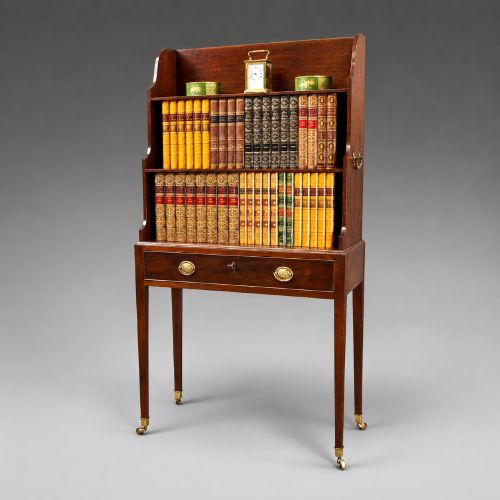
Victorian and Edwardian iterations dominate the selection, frequently utilising deep mahogany, figured walnut, or solid oak. Buyers will also encounter specialised forms like waterfall bookcases and carved bookends that bring distinct stylistic flair to smaller spaces.
The aesthetic range stretches from austere Arts and Crafts creations to ornate Regency revivals and geometric Art Deco units. Selecting the right piece relies on matching timber tones and proportions to the intended room.
Materials and construction methods
Cabinet makers relied predominantly on dense hardwoods like mahogany and walnut, alongside durable oak and pine, chosen for their structural strength and rich grain patterns. Timber selection dictated both the weight of the piece and the complexity of the exterior ornamentation.
Joinery techniques ranged from traditional hand-cut dovetails in drawer construction to sturdy pegged frames on heavier oak shelving units. Details such as raised galleries, applied mouldings, and occasional ormolu mounts enhanced the visual depth of the woodwork.
Brown Wood Book Shelf Retail Price Guide 2026
Typical asking prices for brown wood book shelf among the pieces listed under this phrase on Sellingantiques today, from the lower quarter to the upper quarter. They describe what is for sale here now, not the wider market.
A pair of carved wooden owls keeps permanent watch over library volumes.
Assessing craftsmanship and condition
Superior examples display thoughtful timber selection, ensuring that grain patterns align harmoniously across the visible expanses of the shelves and panels. Finer pieces also integrate functional elements like smoothly adjustable shelving systems or well-fitted lower drawers without binding.
The refinement of the surface carving and the crispness of edge mouldings separate standard utilitarian furniture from workshop pieces bearing distinct stylistic ambition. Original patination on the timber surface remains paramount, reflecting decades of careful handling.
Shapland & Petter
The Brown Wood Book Shelf Glossary
- Waterfall bookcase
- A tiered shelving unit featuring graduated shelves that recede from bottom to top, creating a stepped profile reminiscent of a falling stream. These pieces gained popularity during the Georgian and nineteenth-century periods for displaying small volumes.
- Breakfront
- A cabinet or bookcase design where the central section projects forward from the flanking wings. This architectural arrangement adds visual depth and shadow to larger library furniture.
- Whatnot
- A piece of freestanding open shelving with multiple tiers, utilised historically for displaying ornaments, books, or small collectables. They appear frequently in nineteenth-century interiors.
- Revolving bookcase
- A compact, rotating shelving unit designed to sit on a tabletop or floor, allowing easy access to a collection of books from any seated angle. They often incorporate slatted wooden sides and internal cruciform framing.
- Raised gallery
- A low decorative railing or border running along the top edge of a shelf or cabinet. This feature prevents items from sliding off the surface.
Brown Wood Book Shelf: Frequently Asked Questions
How do I choose the right size?
Measure your available wall space and consider the depth of the shelves relative to the books you plan to store. Taller breakfront units suit expansive rooms, while petite revolving or waterfall styles fit neatly into corners.
Take note of whether the shelves are fixed or adjustable to accommodate varying book heights over time.
Were these shelves made for heavy books?
Most antique shelving was constructed from solid hardwoods like oak and mahogany, providing substantial load-bearing capacity for everyday reading libraries. However, open deal or pine variants were often built lighter for general household use.
Inspect the thickness of the timber boards and the support brackets to gauge structural suitability for dense volumes.
How do I care for antique wood?
Maintain the timber by keeping the shelves away from direct heat sources and strong sunlight, which can dry out the natural grain. Regular dusting with a soft, dry cloth preserves the historic finish.
Apply a microcrystalline wax sparingly if the surface appears dry, avoiding modern silicone-based polishes.
How do I date an open bookcase?
Examine the timber species, construction joints, and decorative motifs to establish the manufacturing era. For instance, heavy carved oak frequently points to Victorian or Jacobean revival periods, while clean geometric lines suggest Art Deco.
Hardware styles and tool marks left on the inner panels also offer reliable clues to the age of the piece.