





Brown Wood and Fabric Armchair
These brown wood and fabric armchair examples combine sturdy timber frames with traditional textile coverings for practical daily seating.
Brown Wood and Fabric Armchair
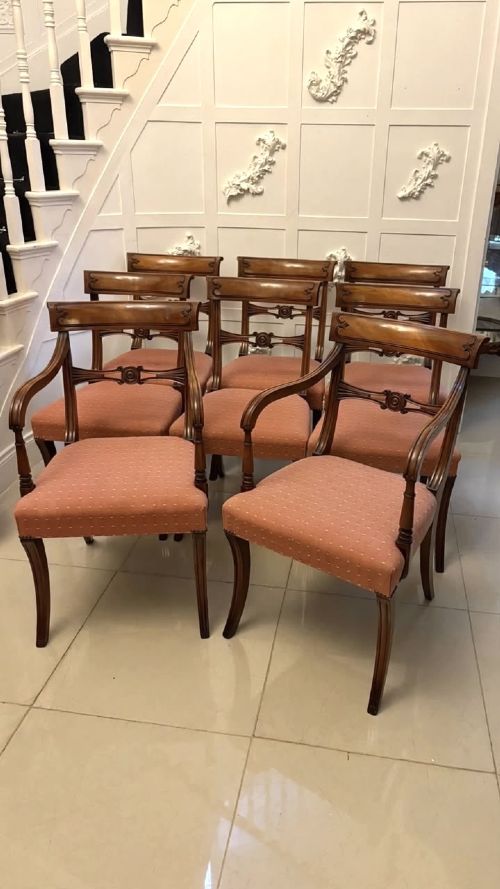
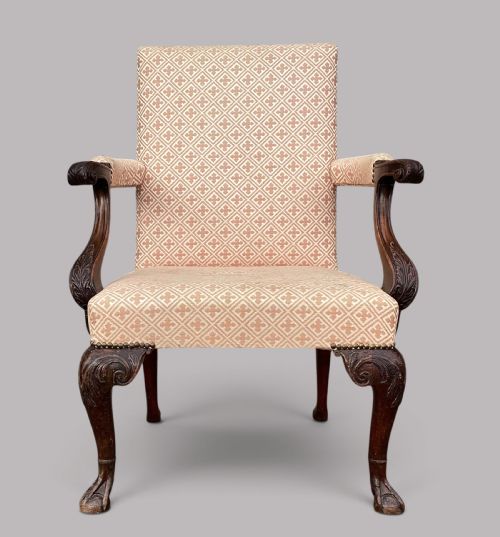
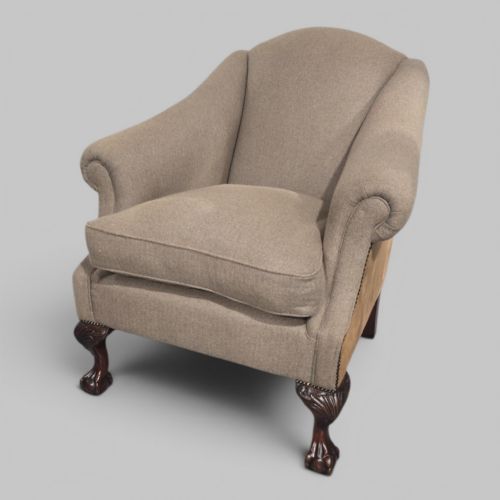
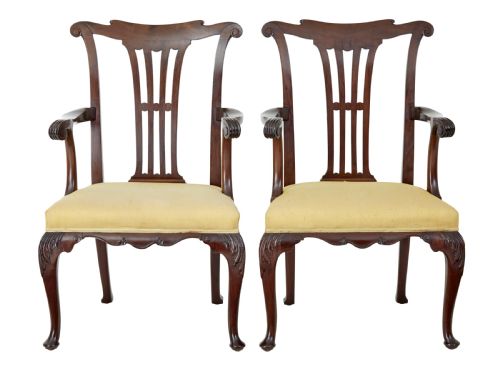
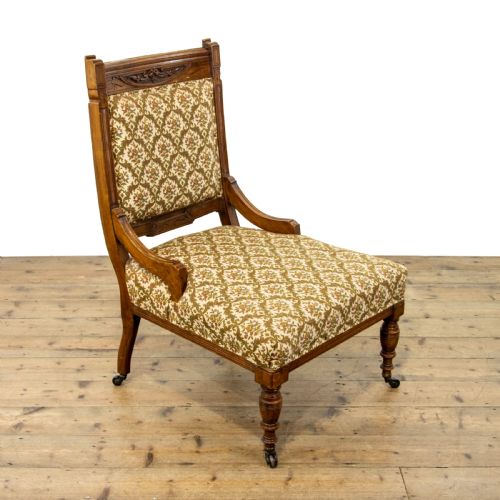
When you search for a brown wood and fabric armchair, you encounter seating built from timber frames paired with textile coverings. The selection spans periods from the mid-eighteenth century through the Edwardian era, incorporating styles such as George III, Chippendale Revival, and Art Nouveau. Most examples function as standalone armchairs, desk chairs, or elements within larger dining sets.
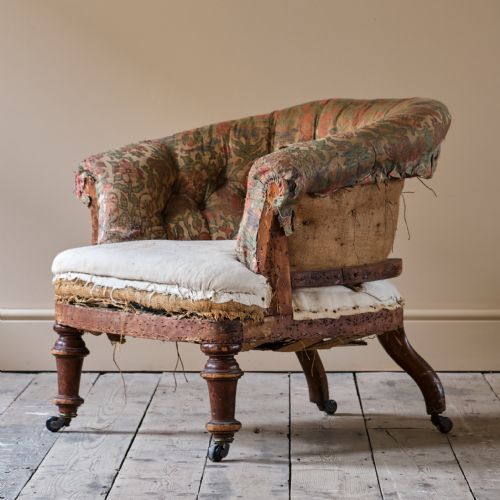
The assortment on this page includes open armchairs, tub back forms, and tall hall seats. Makers and designers referenced in the inventory range from specific Georgian cabinet-makers to later revival workshops working in mahogany and beech. Buyers find both single statement pieces and pairs or larger sets.
How they were made
Frames are constructed predominantly from mahogany and beech, often shaped through carving and joinery techniques typical of their respective periods. Timber components provide the structural skeleton for open arms, cabriole legs, or high backs.
Upholstery methods utilise traditional materials such as hessian, cotton upholstery, wool, and general fabric coverings secured with brass detailing where appropriate. These textile layers provide the padding and surface finish for seats and backrests.
Brown Wood and Fabric Armchair Retail Price Guide 2026
Typical asking prices for brown wood and fabric armchair among the pieces listed under this phrase on Sellingantiques today, from the lower quarter to the upper quarter. They describe what is for sale here now, not the wider market.
Listings incorporate mahogany and beech frames paired with cotton, wool, and hessian upholstery.
What varies in quality
The refinement of the timber carving and the precision of the frame joinery distinguish finer examples from standard production. Pieces reflecting specific historical designs, such as George II or Chippendale styles, often display greater sculptural ambition in the woodwork.
The integrity and authenticity of the upholstery materials also differentiate the pieces, with traditional textiles and period-appropriate coverings holding distinct interest for collectors compared to later replacements.
Giles Grendey
The Brown Wood and Fabric Armchair Glossary
- Mahogany
- A durable hardwood commonly used for furniture frames due to its rich colour and stability. It accepts fine carving particularly well.
- Cabriole leg
- A furniture leg featuring a double curve, typically swelling outward at the knee and tapering inward to the foot. This form is common in Queen Anne and Georgian pieces.
- Hessian
- A coarse woven fabric, often utilised as a base or foundation layer beneath top upholstery. It provides internal support for stuffing materials.
- Tub back
- An armchair design characterised by a continuous curved back and armrest rail enclosing the sitter. It offers an enveloping seating posture.
Brown Wood and Fabric Armchair: Frequently Asked Questions
What periods do these armchairs represent?
The inventory spans the mid-eighteenth century up to the early twentieth century, encompassing Georgian, Victorian, Edwardian, and specific revival movements.
Each era brings distinct stylistic flourishes to the timber frames and upholstery treatments.
Are these chairs suitable for daily use?
Many of these pieces function effectively as desk chairs, dining seats, or reading armchairs in contemporary settings.
Buyers should consider the scale of the timber frame and the firmness of the fabric upholstery for their intended room.
What woods appear in the frames?
Mahogany and beech form the primary structural timbers across the available seating inventory.
These hardwoods provide the necessary strength for carved legs, arms, and back supports.
How do revival styles differ from original pieces?
Revival items, such as Chippendale Design or Queen Anne Style examples, interpret earlier historical aesthetics using the manufacturing methods of their own time.
They offer the visual character of earlier centuries while often reflecting nineteenth or twentieth-century construction standards.