



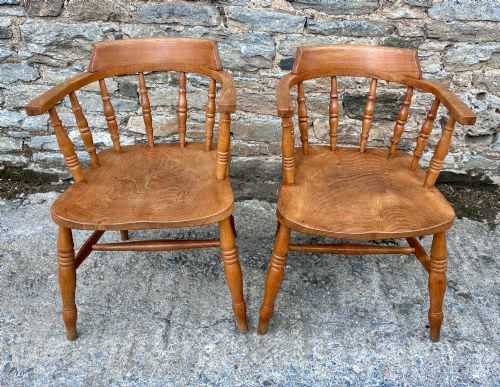
Brown Windsor Armchair
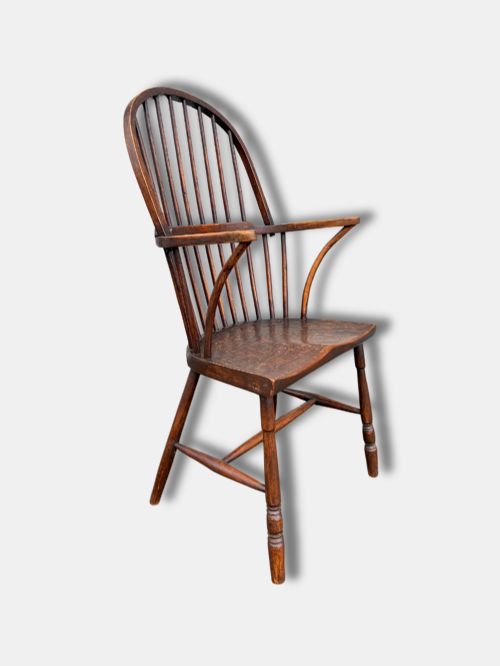
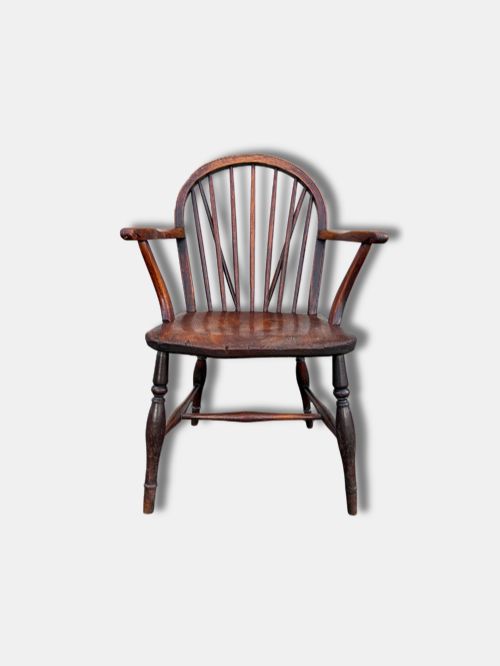
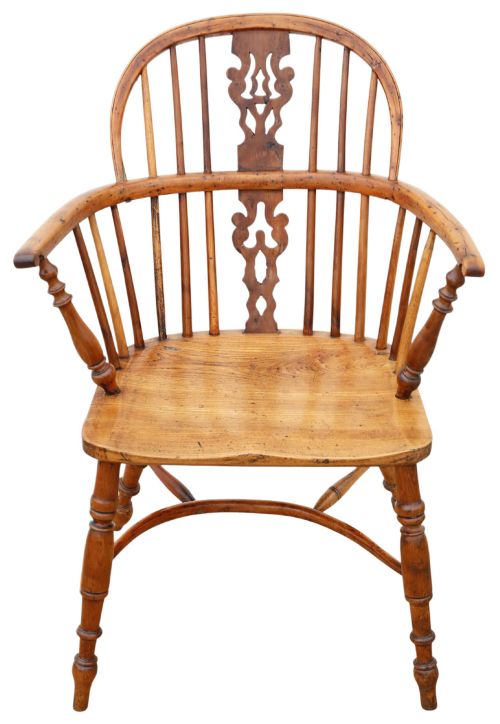
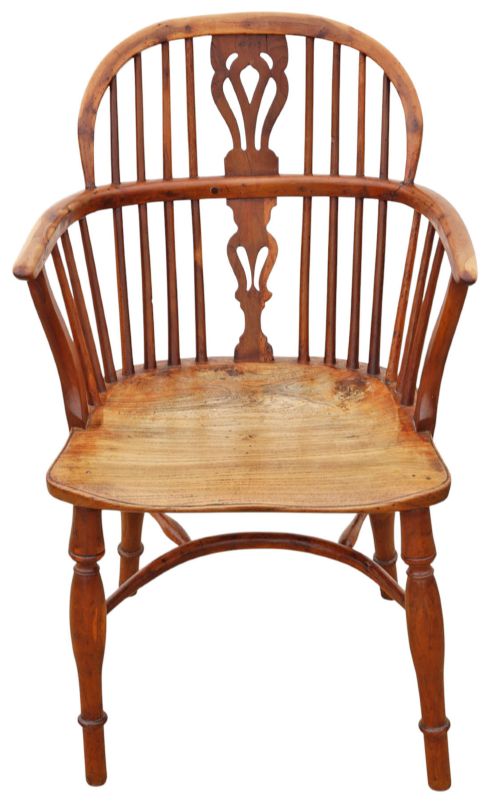
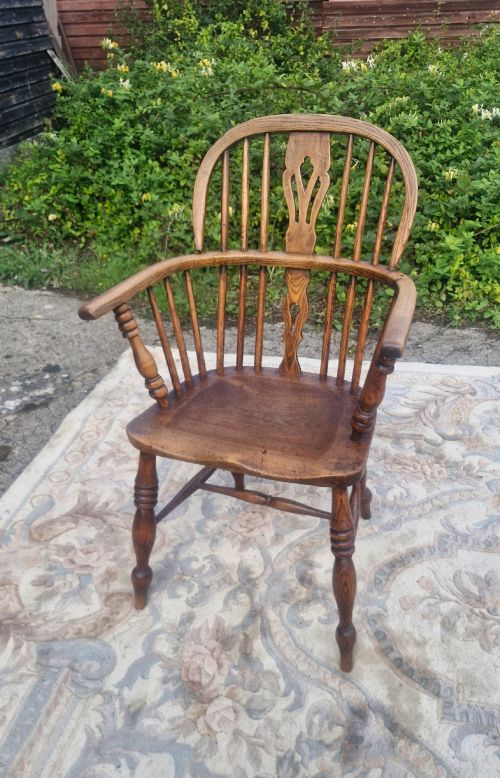
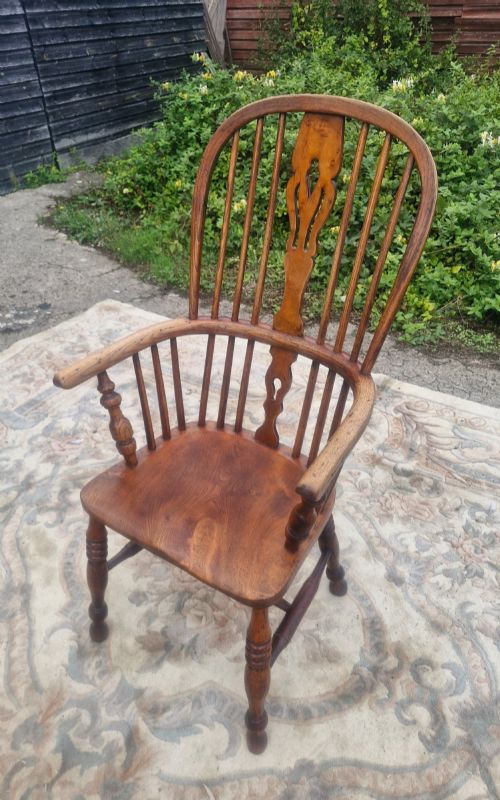
A brown windsor armchair brings honest vernacular comfort to a room through traditional timber construction and time-worn grain.
Brown Windsor Armchair
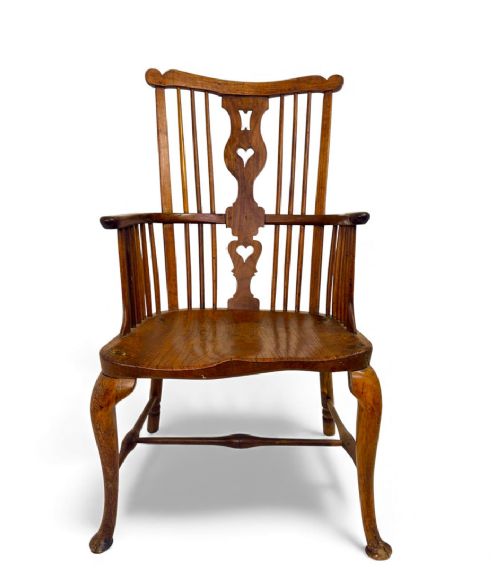
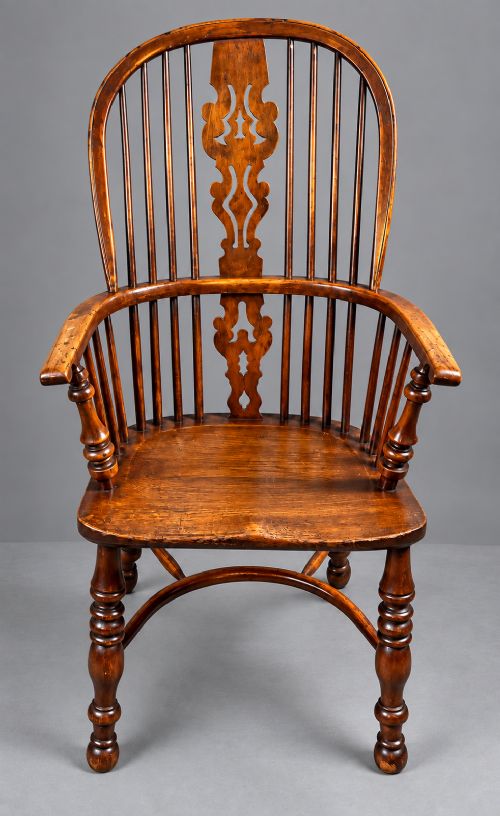
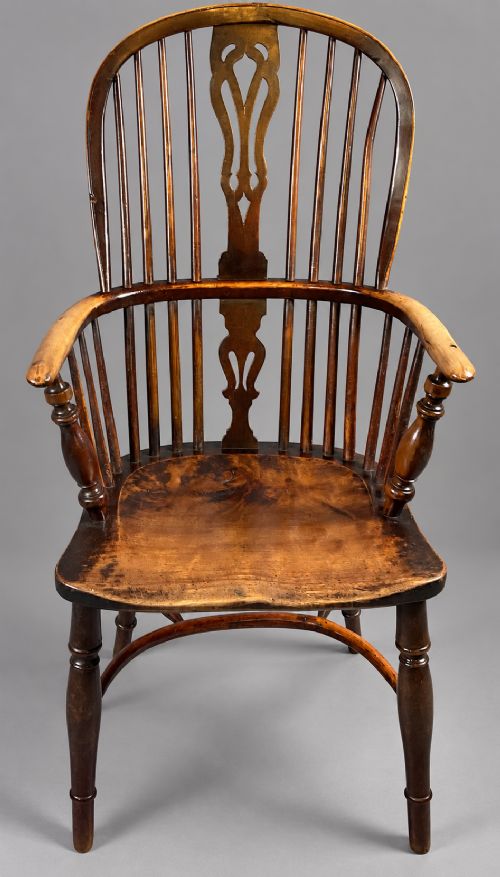
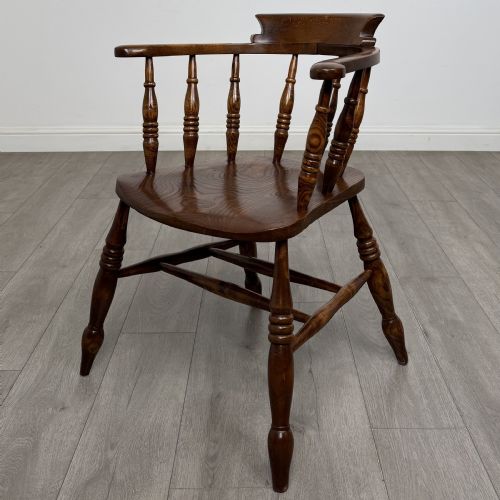
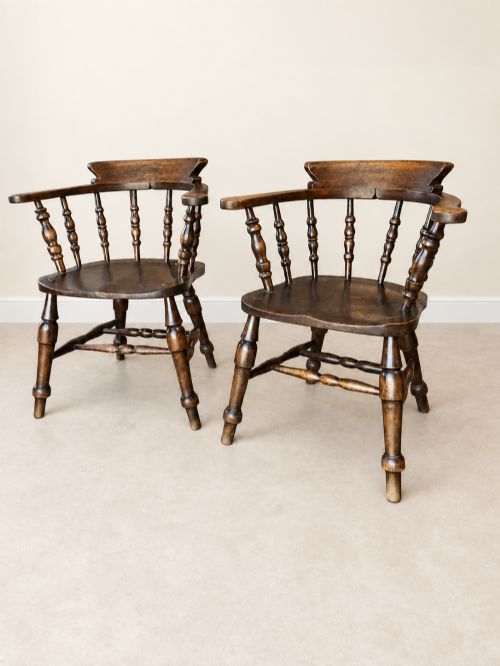
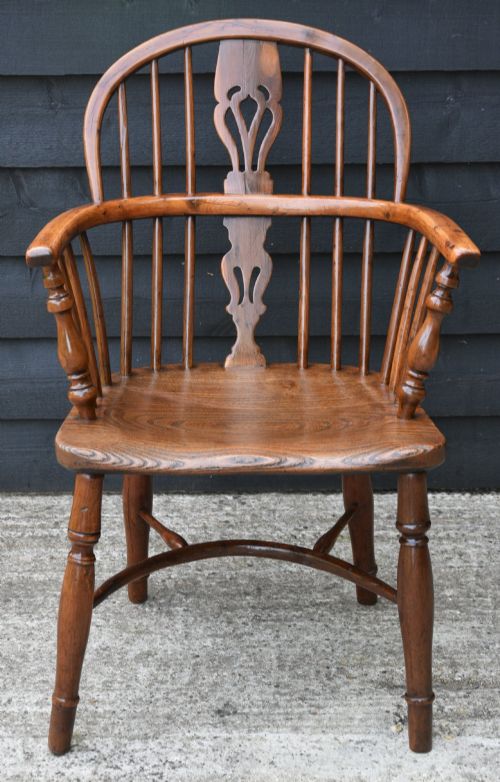
A brown windsor armchair stands as a staple of English country seating, built with a solid wooden seat into which the legs and back spindles are wedged directly. The brown windsor armchair takes many regional forms, from Thames Valley high backs to low-slung smoker's bows and sturdy kitchen armchairs.
Most examples found here date from the eighteenth and nineteenth centuries, spanning periods such as the Georgian era, the Victorian period, and into the early twentieth century. These vernacular seats served everyday functions in farmhouses, cottages, and offices rather than formal drawing rooms.
How they were made
Maker's workshops relied on a mix of native timbers, pairing elm seats with bent ash for hoops and spindles, alongside richly figured yew wood, beech, fruitwood, birch, and oak. Solid elm provided a stable, crack-resistant base for the carved saddle seat.
Framing techniques combined steam-bent wood for the bows and armrests with turned legs and underseat stretchers, sometimes including crinoline stretchers for added rigidity. Joinery depended on wedged tenons passing straight through the seat plank.
What varies in quality
The distinction between ordinary and superior pieces rests on the choice of timber and the depth of the sculpted seat. Yew wood examples with strong grain patterns and deep comb backs or hooped backs generally command greater attention from collectors than plain beech or ash equivalents.
Proportion and patination dictate the visual weight of the chair, with slender spindles, well-turned legs, and centuries of polished surface wear marking out the more accomplished cabinet work.
Gabbitass of Worksop·J SPENCER
The Brown Windsor Armchair Glossary
- Smoker's bow
- A low-backed Windsor armchair with a rounded continuous arm rail, popular in domestic and commercial interiors during the nineteenth century. These sturdy low chairs often utilise beech and elm.
- Crinoline stretcher
- An arched underseat stretcher looping outward between the legs, typical of earlier regional forms. This iron or wooden brace provides structural support to the lower frame.
- Thames Valley chair
- A regional designation for high-back windsors produced along the Thames corridor, frequently incorporating yew wood and pierced splats. These pieces display refined vernacular craftsmanship.
- Comb back
- A Windsor chair design where the central spindles extend upward to support a horizontal headrest resembling a hair comb. This profile appears frequently on eighteenth-century examples.
- Saddle seat
- A thick wooden seat plank sculpted into a concave contour for comfort. Elm serves as the primary material for this shaped component.
Brown Windsor Armchair: Frequently Asked Questions
What woods were used?
Makers utilised a combination of native hardwoods, selecting thick elm for solid carved seats and flexible ash for steam-bent components.
Additional timbers included yew wood, beech, oak, fruitwood, and birch, depending on regional availability and the desired appearance.
How do I date a chair?
Dating relies on structural clues such as the profile of the comb back, the turnings of the legs, and the presence of a crinoline stretcher.
Earlier examples from the eighteenth century typically feature high hooped backs and deep elm saddle seats, while Victorian pieces often adopt lower profiles.
Are these chairs comfortable?
The ergonomic design of the hollowed saddle seat and raked spindle back provides natural support for everyday sitting.
Deep-seated farmhouse versions and wider captain's chairs offer ample room for relaxed posture in a living space or study.
What is a Mendlesham chair?
The Mendlesham chair is a distinct regional type originating from Suffolk, featuring a solid wooden seat and a characteristic rail design.
These mid-nineteenth-century items represent a specialised local variation within the broader tradition of country seating.