

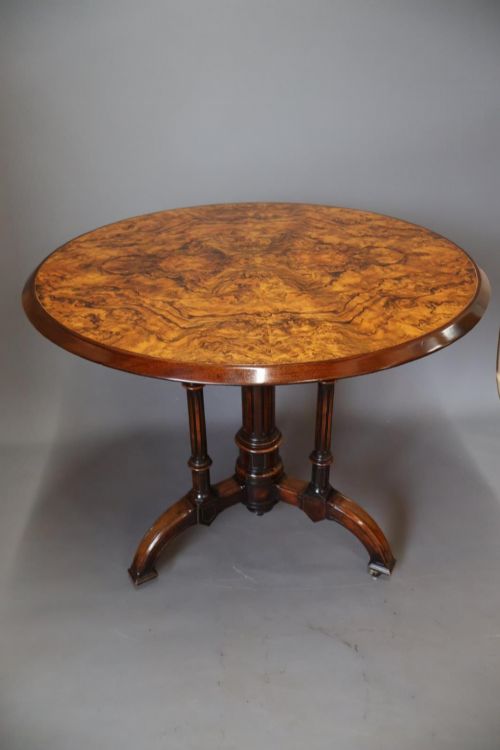


Brown Walnut Foyer Table
A brown walnut foyer table anchors an entrance hall with rich grain, serving as a practical surface for post and keys.
Brown Walnut Foyer Table
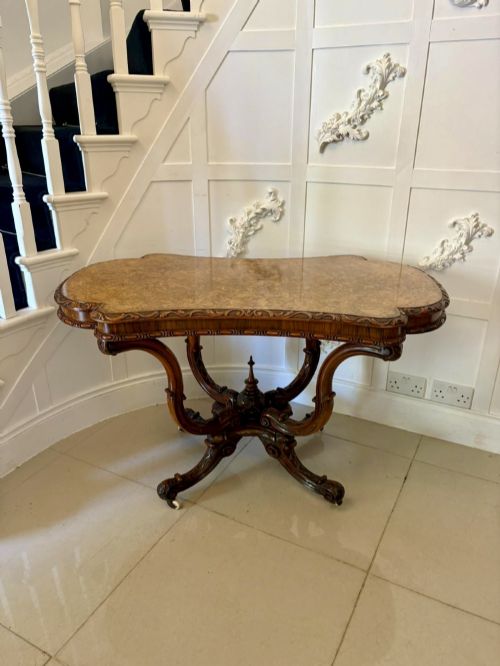
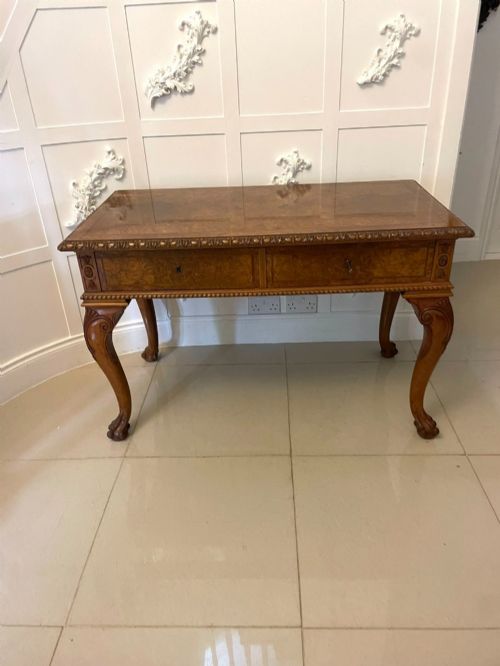
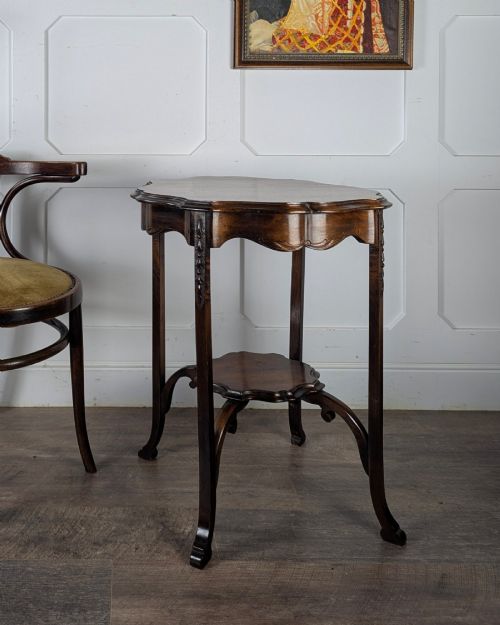
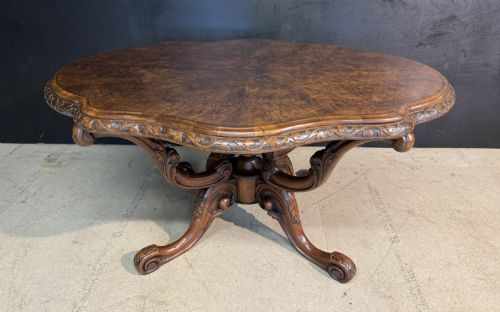
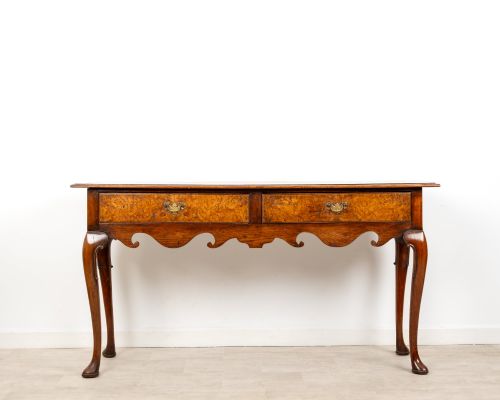
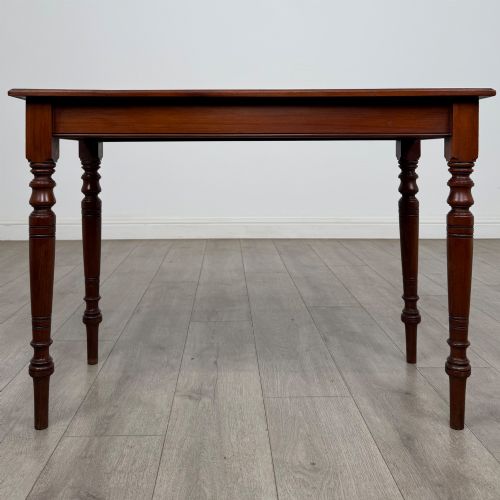
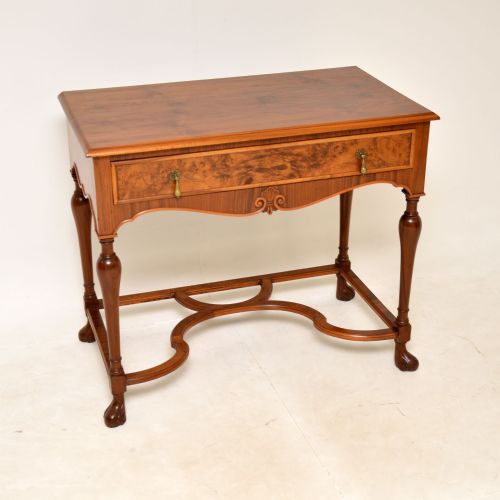
A brown walnut foyer table appears primarily as a centre table, console table, or side table designed for entrance halls and reception rooms. These pieces originate from various periods including the nineteenth century, Victorian era, and the early twentieth century.
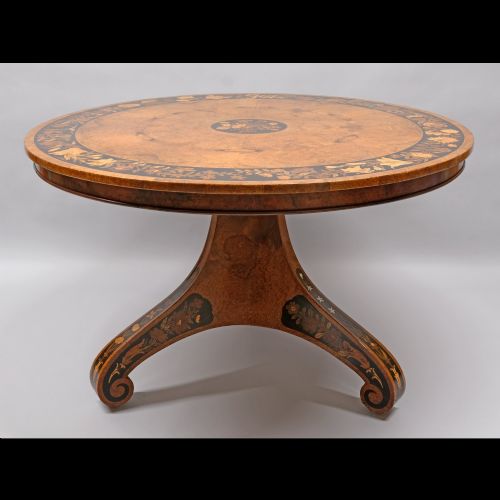
The selection ranges from freestanding Victorian basket-base centre tables to compact console tables and Edwardian side tables. Makers utilised rich timber varieties, shaping them into oval, octagonal, and serpentine forms suited for narrow hallways.
Buyers encountering this phrase will find pieces exhibiting distinct stylistic revivals, such as Queen Anne style cabriole legs, Aesthetic Movement details, and Rococo carving. Each form offers a specific footprint for hallway placement.
Materials and construction methods
Cabinet makers constructed these tables using solid walnut and figured burr walnut veneers, which were frequently applied to create intricate grain patterns across the top surfaces. Secondary woods such as fruitwood and boxwood provided contrasting stringing and banding.
Decorative techniques often involved marquetry and parquetry inlay, incorporating geometric or floral motifs into the timber. Advanced examples also integrated marble tops, coromandel accents, and gilded or carved wooden supports.
Several tables feature violin-shaped tops, proving that nineteenth-century woodworkers occasionally let their instruments dictate their joinery.
Distinctions in craftsmanship
The standard of a brown walnut foyer table depends heavily on the selection of the burr timber and the precision of its veneer matching. Superior examples display seamless grain continuity across large surfaces and meticulous hand-cut marquetry.
Structural refinement separates standard pieces from exceptional ones, visible in the depth of hand-carving on the base, the stability of freestanding frames, and the integration of secondary timbers like boxwood and fruitwood.
Holmes Baldock·James Winter
The Brown Walnut Foyer Table Glossary
- Burr Walnut
- A figured wood harvested from walnut tree growths, prized for its swirling, mottled grain patterns. It provides a highly decorative surface on table tops.
- Console Table
- A table designed to stand against a wall, frequently fixed with brackets or supported by two front legs. These fit narrow hallways where space is limited.
- Centre Table
- A freestanding table finished on all sides to sit in the middle of a room. Victorian examples often feature central pillar supports or basket bases.
- Marquetry Inlay
- The art of applying small pieces of veneer to a structure to form decorative patterns. Craftsmen use woods like boxwood and fruitwood for contrast.
Brown Walnut Foyer Table: Frequently Asked Questions
Where should a foyer table go?
A brown walnut foyer table sits best against an entrance wall or centered in a spacious hallway where guests enter. Its surface provides an ideal drop-off point for daily items while establishing the interior style.
Ensure adequate clearance around the piece for movement. Console and side variants hug walls closely, whereas freestanding centre tables require room on all sides.
How do I maintain walnut furniture?
Protect walnut surfaces by keeping them away from direct sunlight and steady heat sources that dry out timber. Dust regularly with a soft, dry cloth to preserve the finish.
Apply a quality beeswax periodically to nourish the wood and maintain its natural lustre. Avoid placing damp items directly onto the veneer.
What is the difference between a console and centre table?
A console table is built to stand flat against a wall and is often supported at the front by decorative legs or brackets. It works well in narrow entrance spaces.
A centre table is finished on all sides for placement in the middle of a room. These pieces function as freestanding statements rather than wall-anchored furniture.
How do I identify Victorian walnut pieces?
Victorian walnut tables often display rich burr veneers, deep carving, and substantial pedestal or basket bases. They reflect nineteenth-century revivals of earlier styles like Queen Anne and Rococo.
Look for traditional construction methods such as hand-cut dovetails and pegged joints beneath the top. The weight of the timber and the complexity of the inlay also indicate the period.