

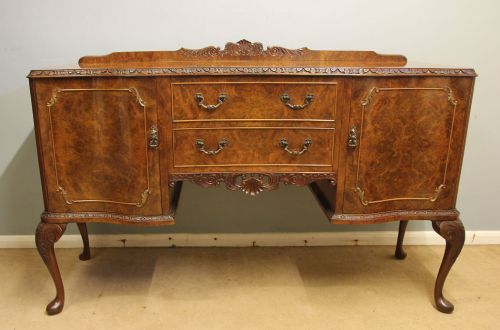


Brown Walnut Dining Cabinet
A brown walnut dining cabinet brings warmth and presence to a room, offering practical storage disguised in rich timber.
Brown Walnut Dining Cabinet
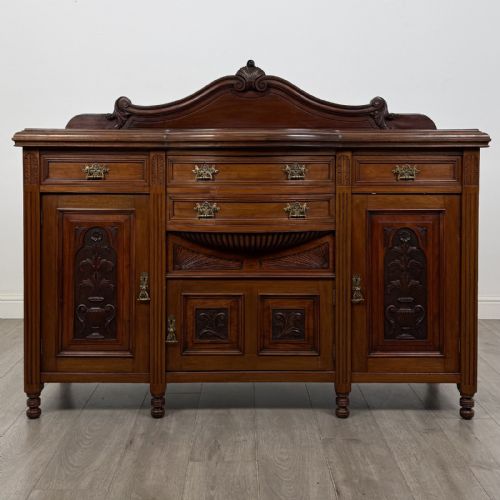
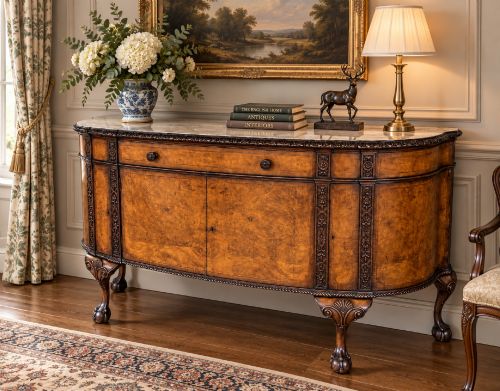
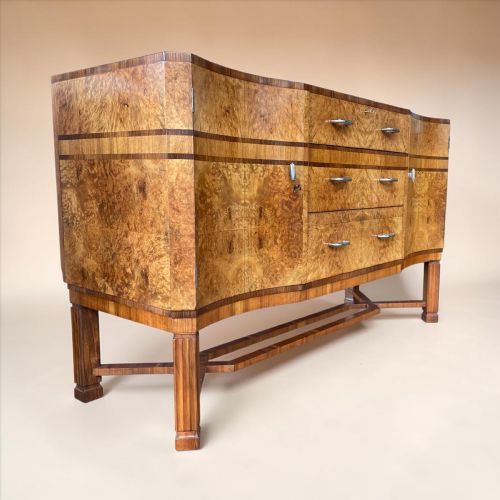
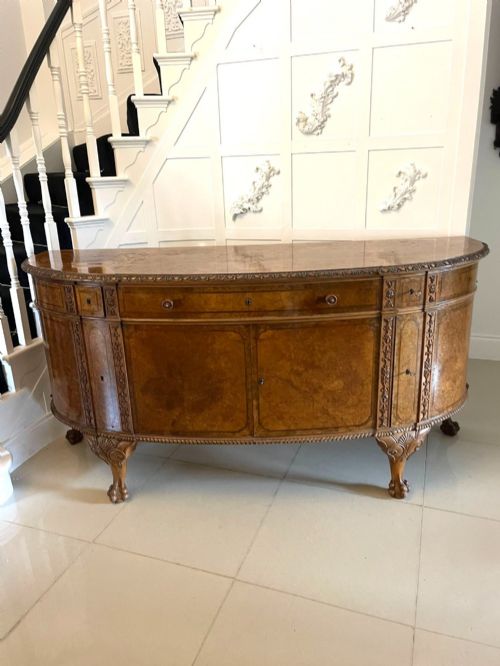
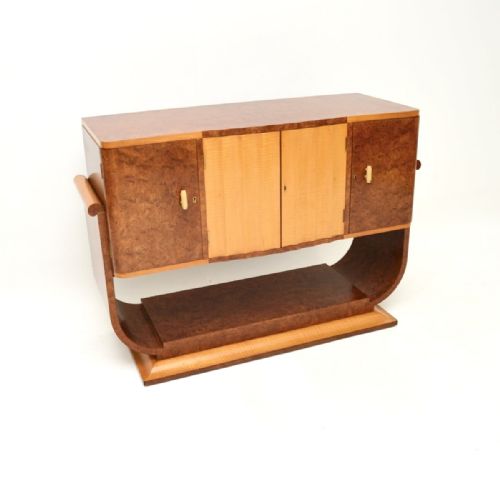
A brown walnut dining cabinet spans several distinct eras, ranging from restrained Victorian pieces to fluid Art Deco designs. When searching for a brown walnut dining cabinet, buyers frequently encounter sideboards, credenzas, and server forms designed to hold dining room essentials.
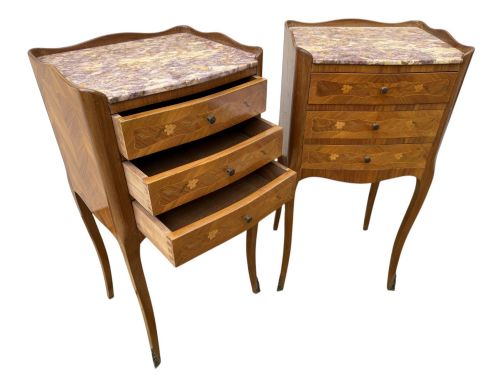
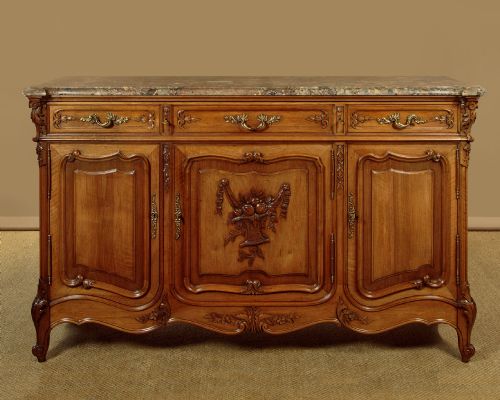
The selection here encompasses eighteenth-century French provincial buffets alongside twentieth-century iterations from the nineteen-twenties and thirties. Makers embraced various formats, including serpentine fronts, bow fronts, and mirror-backed displays.
Queen Anne revival styles and Edwardian pieces also appear, demonstrating how cabinetmakers reinterpreted traditional silhouettes across the nineteenth and twentieth centuries.
Distinguishing quality in walnut furniture
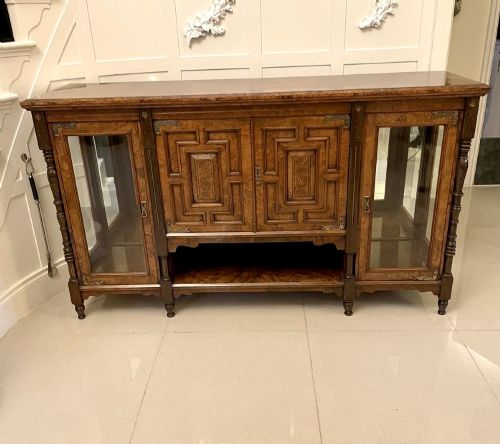
The choice of veneer sets the visual hierarchy, with symmetrical burr walnut figures commanding greater attention than plain timber surfaces. Superior examples display careful bookmatching across drawer fronts and cabinet doors, ensuring the natural grain flows evenly across the piece.
Joinery execution and the crispness of carved elements reveal the hand of skilled makers. Credenzas and sideboards with integrated brass hardware, well-fitted internal cutlery drawers, and substantial hardwood framing represent the more accomplished end of the range.
Brown Walnut Dining Cabinet Retail Price Guide 2026
Typical asking prices for brown walnut dining cabinet among the pieces listed under this phrase on Sellingantiques today, from the lower quarter to the upper quarter. They describe what is for sale here now, not the wider market.
One unexpected dining cabinet even arrives equipped with its own twelve-piece cutlery set ready for service.
Hamptons of Pall Mall London·Whytock & Reid of Edinburgh
The Brown Walnut Dining Cabinet Glossary
- Burr walnut
- A wood harvested from the abnormal growth of a walnut tree, producing intricate, swirling grain patterns. It is typically sliced into veneer for use on prominent cabinet surfaces.
- Crossbanding
- A narrow strip of veneer laid around the border of a panel so that its grain runs at right angles to the central timber. This technique frames the primary surface.
- Credenza
- A low dining room cabinet traditionally used for storing and serving food. In nineteenth-century pieces, these often feature glass doors and elaborate carved woodwork.
- Marquetry
- The art of applying pieces of veneer to a structure to form decorative patterns and pictures. Craftsmen use various coloured woods to achieve tonal depth.
- Serpentine front
- A furniture front characterised by a concave centre flanked by two convex curves, creating a gentle S-shape. This contour requires precise carpentry to execute.
Brown Walnut Dining Cabinet: Frequently Asked Questions
How do I clean walnut wood?
Dust the timber regularly with a soft, dry cloth to prevent particulate buildup on the polished surface.
Avoid silicone-based sprays and excess moisture, applying a quality beeswax sparingly when the wood appears dry.
Where should I place a sideboard?
Position the piece against a dining room wall where it can serve as a surface for serving food or displaying decorative objects.
Keep the cabinet away from direct sunlight and strong heat sources to prevent the walnut veneer from drying and cracking.
What is the difference between a sideboard and a credenza?
Sideboards typically feature legs or a closed base with cupboards and drawers tailored for dining storage. Credenzas often sit lower to the ground and frequently include glass-fronted compartments for display.
Both serve similar functional roles within dining spaces but derive from different regional and stylistic traditions.
How do I identify Art Deco cabinets?
Art Deco pieces from the nineteen-twenties and thirties emphasise streamlined geometry, symmetrical burr walnut veneers, and polished chrome or brass details. They often avoid heavy traditional carving in favour of sleek, curving silhouettes.
French examples frequently incorporate contrasting maple or sycamore elements alongside the dominant walnut.