



Brown Veneer Chest
A brown veneer chest brings rich timber grain and centuries of cabinet-making skill into a room, offering both practical storage and deep historical character.
Brown Veneer Chest
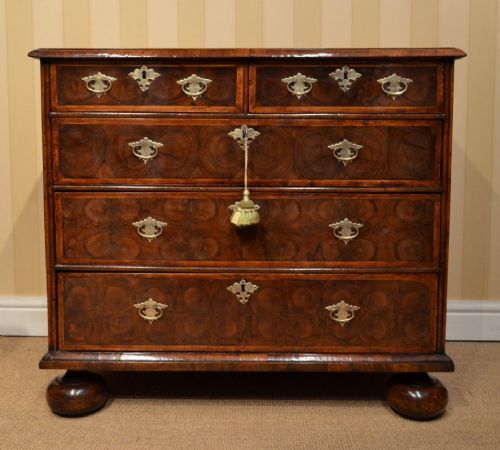
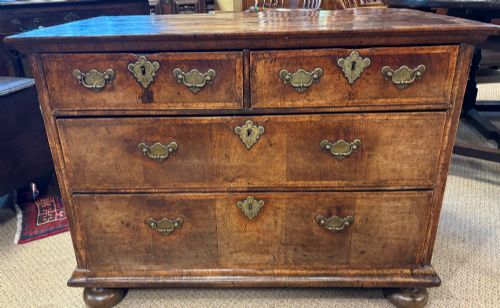
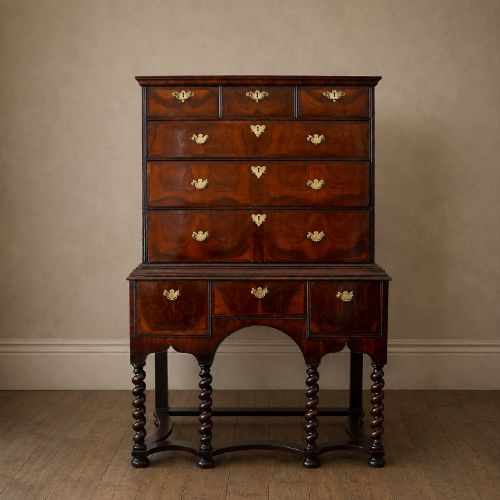
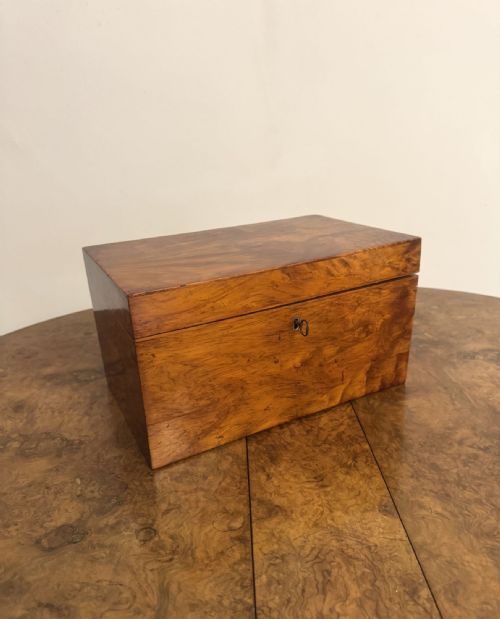
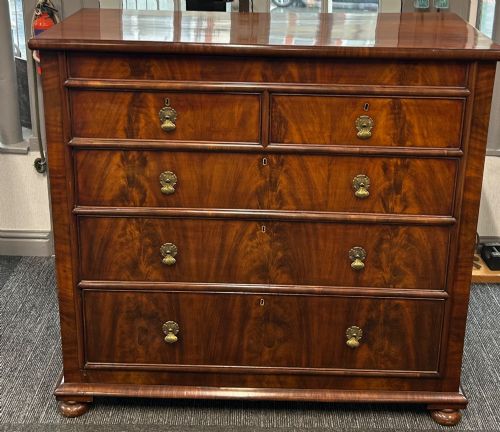
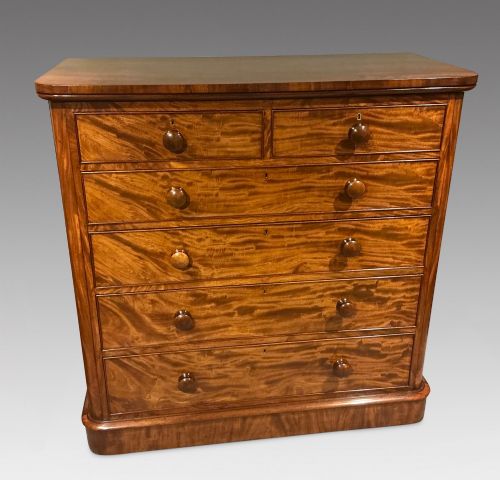
A brown veneer chest encompasses a range of traditional storage furniture designed to display the natural figuring of decorative timbers. The selection includes tallboys, low linen presses, cabinets on stands, and standard drawer configurations.
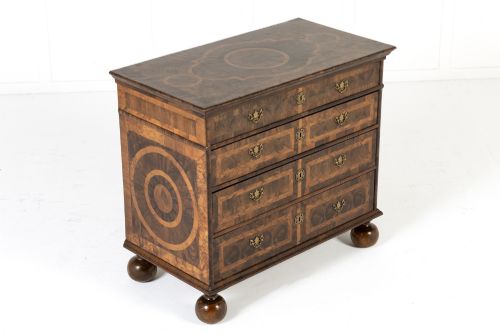
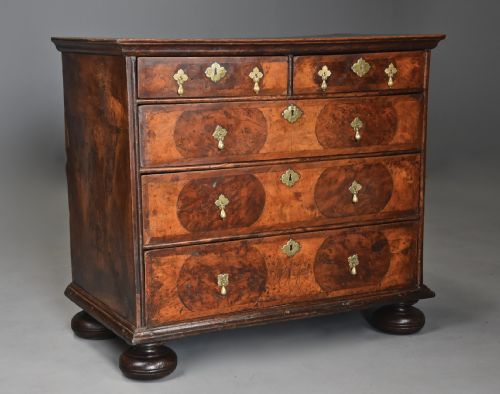
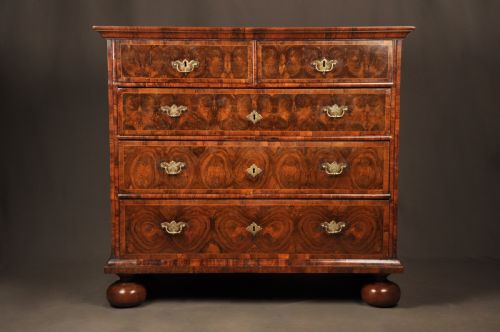
Pieces originating from the seventeenth century showcase early veneering traditions, particularly oyster cut patterns in olive, laburnum, and walnut. Later examples transition into the nineteenth and twentieth centuries through Victorian mahogany and Art Deco designs.
The form often incorporates stands, graduated drawers, or fitted compartments. Buyers encounter both provincial vernacular pieces and high-status formal furniture executed in exotic woods.
Materials and Construction
Cabinet makers applied thin slices of decorative timber over a secondary carcass wood such as oak or pine. This technique allowed workshops to utilise scarce exotic species efficiently while preventing the solid timber from warping.
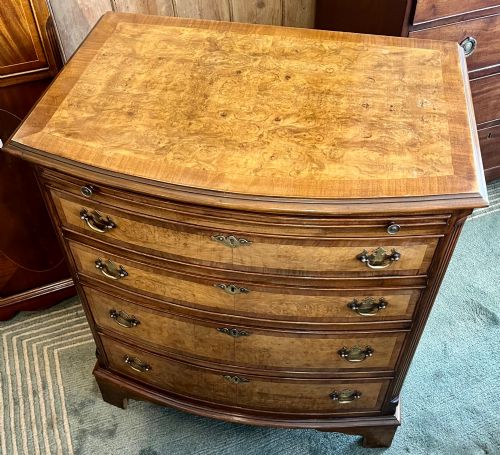
Woods including kingwood, burr walnut, flame mahogany, and yew were selected for their complex grain patterns. Cross-banding, stringing, and oyster cutting - slicing small branches transversely - created intricate geometric surface designs.
Hardware such as brass drop handles and escutcheons completed the construction, fastened alongside traditional dovetail joints on the drawer carcasses.
Brown Veneer Chest Retail Price Guide 2026
Typical asking prices for brown veneer chest among the pieces listed under this phrase on Sellingantiques today, from the lower quarter to the upper quarter. They describe what is for sale here now, not the wider market.
Branch sections sliced thin for oyster veneer create repeating circular patterns resembling handfuls of polished wooden coins.
Distinctions in Quality
The visual impact depends largely on the choice of timber and the precision of the veneer layout. Symmetrical grain matching across a drawer front demonstrates superior planning by the artisan.
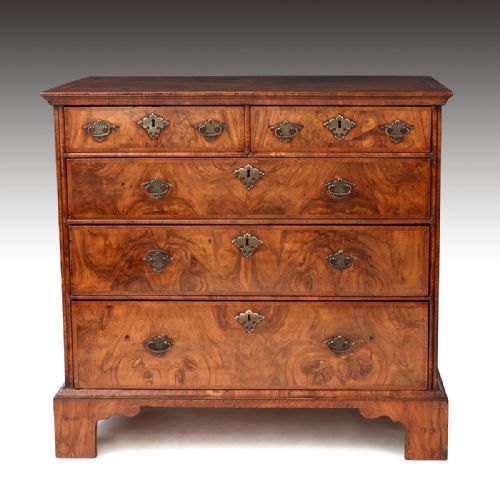
Early seventeenth-century examples display meticulous hand-cut oyster work where individual cross-sections align tightly across the surface. Later pieces rely on the dramatic figuring of flame mahogany or burr walnut to create depth.
The integrity of the underlying carcass and the preservation of the original polished surface dictate the overall standard of survival for each piece.
The Brown Veneer Chest Glossary
- Oyster veneer
- A method of cutting small branches across the grain to produce circular or oval motifs resembling oyster shells. This technique is prominent on seventeenth-century pieces.
- Cross-banding
- A border of veneer laid with the grain running perpendicular to the main panel. It frames the central decorative timber.
- Stringing
- Thin inlaid lines of contrasting wood used to outline drawers and panels. It creates a crisp linear boundary.
- Linen press
- A tall storage piece containing sliding trays or shelves behind upper doors, positioned above lower drawers. They often utilise figured mahogany.
- Coffre forte
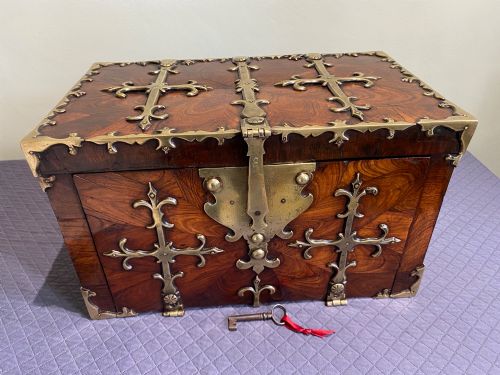
- A strong box or chest designed for secure storage of valuables. These heavy pieces often feature complex veneer work and reinforced interiors.
Brown Veneer Chest: Frequently Asked Questions
What periods do these chests come from?
The selection spans from the late seventeenth century through the Georgian and Victorian eras, extending to twentieth-century Art Deco interpretations.
Early pieces frequently display walnut or olive oyster veneers, while nineteenth-century items tend to feature flame mahogany.
How should I care for a veneered surface?
Maintain stable humidity levels away from direct heat sources to prevent the thin veneer from lifting or cracking over time.
Dust gently with a dry cloth and avoid modern silicone-based polishes that can damage historic finishes.
What is the difference between a chest and a cabinet on stand?
A standard chest rests directly on the floor using bracket feet or a plinth base for drawer storage.
A cabinet on stand elevates the main storage body upon legs connected by stretchers, providing a lighter architectural silhouette.
Are these pieces made from solid exotic wood?
Cabinet makers applied decorative timbers as thin veneers over stable secondary woods like oak or pine.
This construction method utilised expensive materials efficiently while reducing the risk of splitting.