



Brown Timber Conference Table
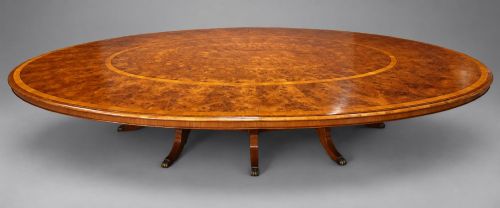
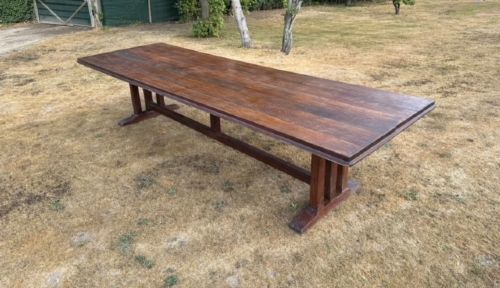
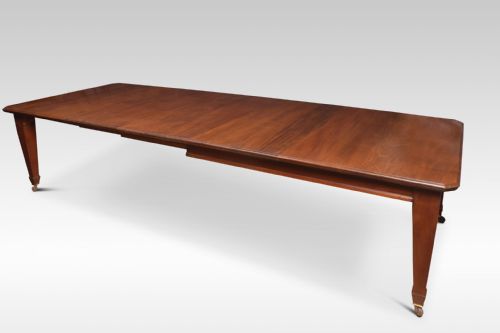
A brown timber conference table anchors a room with presence, offering generous proportions and rich grain for working or gathering.
Brown Timber Conference Table
A brown timber conference table brings substantial scale and historic character to a workspace, drawing on centuries of dining and boardroom design. When searching for a brown timber conference table, buyers encounter large-scale formats originally built for dining or assemblies, spanning the nineteenth century through the Edwardian era.
The pieces listed on this page primarily take the form of large extending dining tables and refectory formats from periods such as the Victorian, Edwardian, Georgian, Regency, and William IV eras. These grand surfaces accommodate multiple seats, utilising sturdy pedestals or multiple legs to support heavy timber tops during daily use.
Materials and construction
Construction relies heavily on dense hardwoods like mahogany, walnut, and oak, selected for durability and deep natural colour. Timber boards are joined to create expansive surfaces capable of withstanding heavy daily use.
Extension systems and structural supports often incorporate brass mechanisms and sturdy pedestals or reeded legs. These elements distribute weight evenly across large spans, maintaining stability when the table is fully extended.
Brown Timber Conference Table Retail Price Guide 2026
Typical asking prices for brown timber conference table among the pieces listed under this phrase on Sellingantiques today, from the lower quarter to the upper quarter. They describe what is for sale here now, not the wider market.
Some tables require fourteen seats, proving that ancestors took very long lunches indeed.
Assessing quality
Quality reveals itself in the choice of timber and the sophistication of the joinery, particularly in how extension leaves fit together seamlessly. Fine examples display well-figured grain patterns and precise carving on pedestals or legs, separating standard utility pieces from masterworks of their period.
The integration of functional hardware, such as brass castors or smooth winding mechanisms, further distinguishes superior construction. Proportion and balance across extended lengths indicate the maker's skill in maintaining structural integrity without sacrificing elegance.
The Brown Timber Conference Table Glossary
- Refectory table
- A long, narrow table traditionally used for communal dining, characterised by sturdy legs joined by stretchers. These pieces provide stable, expansive surfaces suited to modern boardrooms as well as traditional dining rooms.
- Extending dining table
- A table designed with removable leaves or internal mechanisms to increase its overall length. This flexibility allows the furniture to adapt easily for larger gatherings or meetings.
- Pedestal base
- A central support structure that holds up the table top, often featuring multiple carved legs radiating outwards. This design maximises legroom for seated guests.
- Reeded legs
- Furniture legs decorated with parallel convex moulding that resembles bundled reeds. This classical decorative detail adds vertical texture and visual refinement to nineteenth-century tables.
Brown Timber Conference Table: Frequently Asked Questions
How do I seat ten people?
Look for extending formats or large refectory designs specifically noted to accommodate ten or more diners. These pieces typically incorporate multiple leaves or substantial length to provide adequate legroom.
Ensure you measure your room dimensions carefully to allow space for chairs to pull out comfortably around the perimeter of the table.
What maintenance do timbers need?
Protect timber surfaces by using coasters and placemats to prevent heat marks and moisture damage from daily use. Regular dusting with a soft cloth keeps the finish clean.
Apply quality beeswax periodically to nourish the wood grain and maintain the natural lustre of mahogany, walnut, or oak without building up heavy chemical residues.
How do I date a table?
Examine the construction methods, secondary woods used underneath, and hardware styles to establish an approximate period of origin. Stylistic markers like reeded legs or pedestal carving point toward specific eras such as the Regency or Victorian periods.
Compare the timber patina and wear patterns around the edges with documented examples from the same century to confirm authenticity.
Can these tables be used daily?
These robust historic tables were originally built for heavy daily use in grand dining rooms and boardrooms. Their solid timber construction handles regular working or gathering tasks reliably.
Treating the surface with care ensures the antique finish withstands modern office or dining routines while retaining its historic character.