


Brown Stag Antler Trophy
These brown stag antler trophy pieces bring the Scottish Highlands and Black Forest traditions straight into your room.
Brown Stag Antler Trophy
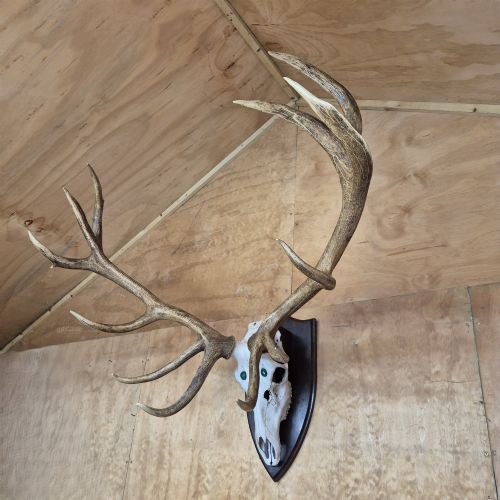
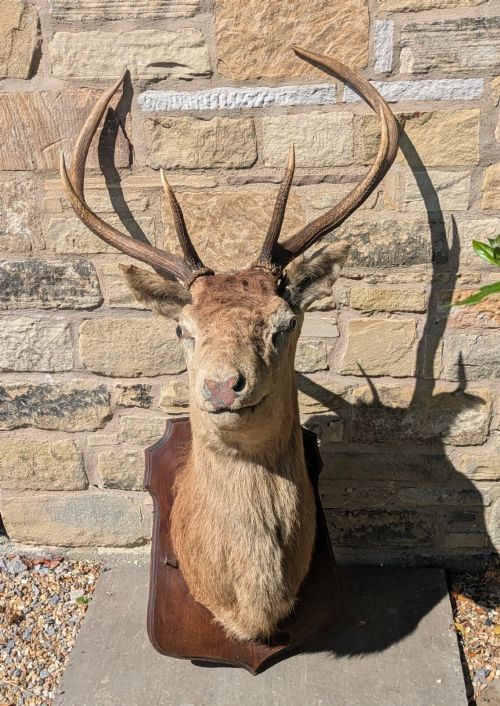
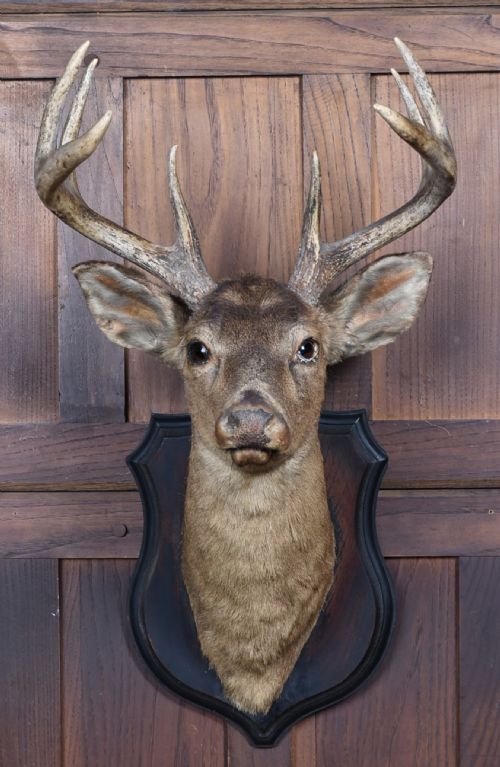
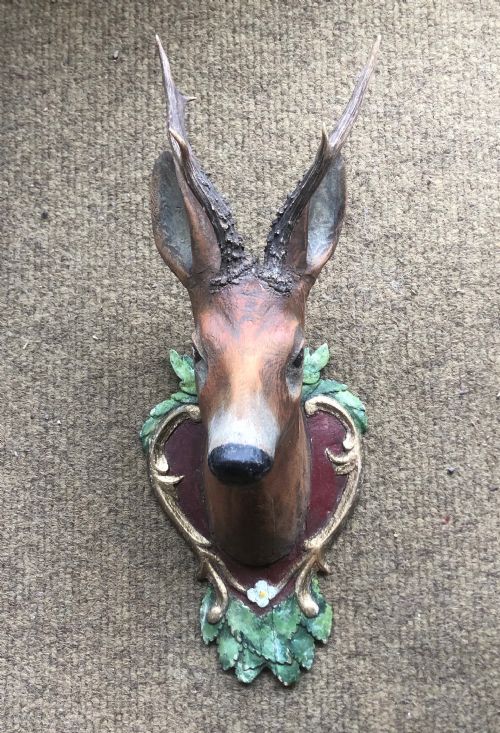
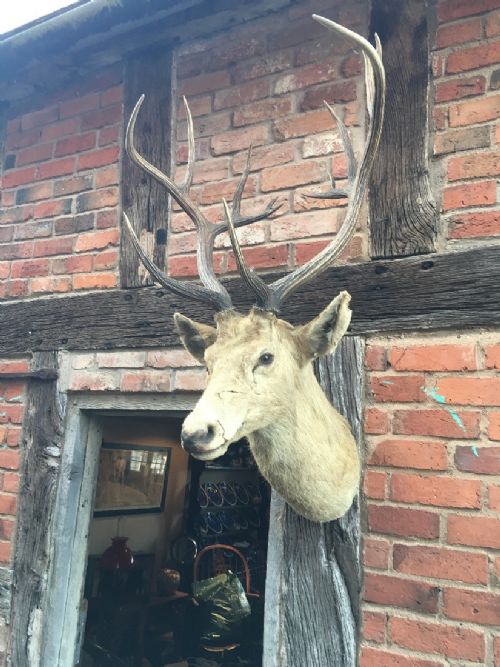
A brown stag antler trophy represents a mounted deer head, skull, or detached antlers fixed onto wooden shields or panels. These wall sculptures span the nineteenth century, the Edwardian era, and the nineteen-twenties.
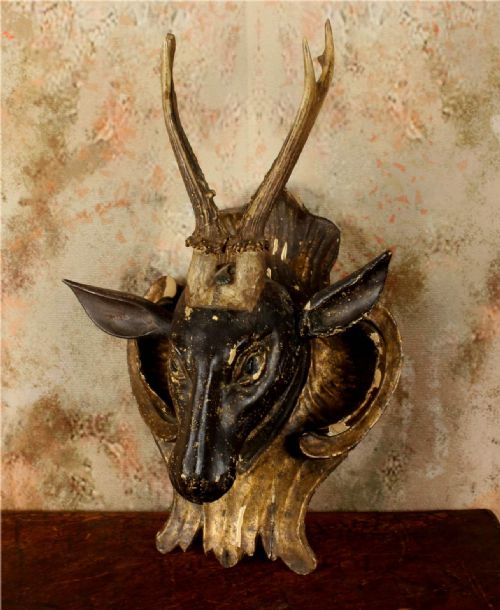
The selections here range from natural taxidermy mounts with glass eyes to carved wood folk art interpretations and painted Swedish pieces. You will encounter everything from modest roebuck heads to twelve-point Royal red deer antlers spanning over a metre.
How they were made
Taxidermists prepared real antlers and hides over anatomical forms, often utilising glass for realistic eyes in Victorian sporting pieces. Skulls and antlers were then secured directly onto wooden shields.
Carpenters carved oak and other woods to create decorative shields and folk art deer heads. Paint was applied to Swedish folk art examples to finish the wooden surfaces.
Materials recorded across the inventory include natural hide, carved oak, bone, paint, and glass alongside the antlers.
What varies in quality
The scale and symmetry of the antlers dictate the visual impact, particularly in large multi-point sets from the Scottish Highlands. Finer taxidermy captures natural anatomical proportions and expression more convincingly than simpler works.
The craftsmanship of the mounting shield matters significantly, with deeply carved oak and detailed folk art carving marking the upper tier. Preservation of the natural hide and bone also separates superior specimens from heavily restored ones.
The Brown Stag Antler Trophy Glossary
- Taxidermy
- The art of preparing, stuffing, and mounting the skins of animals with lifelike effect. This technique preserves the head and neck of the stag for wall display.
- Shield
- A wooden backing board shaped like a heraldic shield where the trophy is mounted. Oak is commonly utilised for this structural support.
- Royal
- A traditional term for a red deer stag antler bearing twelve points. This denotes a mature and impressive trophy.
- Folk art
- Utilitarian or decorative objects created by self-taught makers using traditional methods. In these listings, it describes hand-carved wooden deer heads and painted Swedish pieces.
- Black Forest
- A nineteenth-century style originating in Germany known for deeply carved woodwork depicting animals and foliage. These mounts feature characteristic dark wood and naturalistic carving.
Brown Stag Antler Trophy: Frequently Asked Questions
What periods do these trophies come from?
The available pieces originate from the nineteenth century, including Victorian and Edwardian periods, stretching into the nineteen-twenties and nineteen-thirties. Earlier nineteenth-century examples often reflect traditional Scottish or Black Forest sporting culture.
Twentieth-century pieces maintain similar Highland and taxidermy traditions. Dating relies on the style of the wooden shield and mounting techniques used by the maker.
How do I clean natural antler and taxidermy?
Dust the antlers and mounted hair gently with a soft brush or a dry microfibre cloth on a regular basis. Avoid using water, chemical cleaners, or polishes on the taxidermy elements and natural hide.
Keep mounts away from direct sunlight and damp environments to prevent fading and deterioration of the organic materials. Stable room temperatures protect both the bone and the wooden shields.
What is the difference between taxidermy and folk art deer?
Taxidermy mounts utilise the actual animal skin, fur, skull, and natural antlers prepared over a form to create a lifelike appearance. These pieces often include glass eyes and realistic detailing from Victorian sporting collections.
Folk art deer are entirely carved from wood or painted by hand, offering an artistic interpretation rather than a literal preservation. These pieces showcase regional craftsmanship rather than traditional taxidermy methods.