

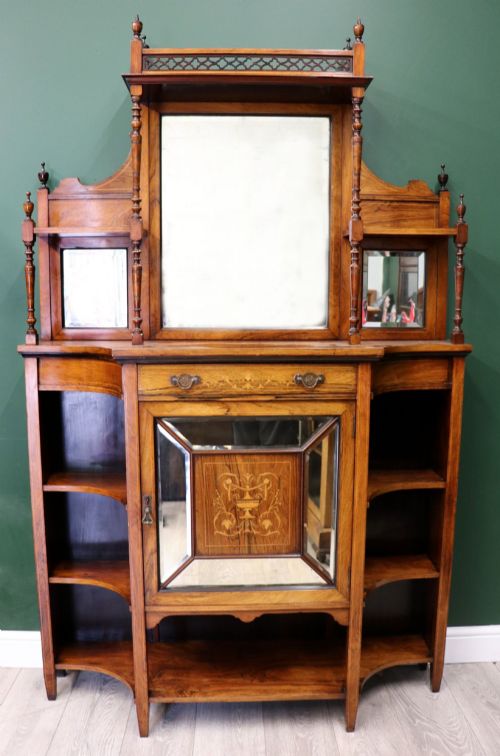
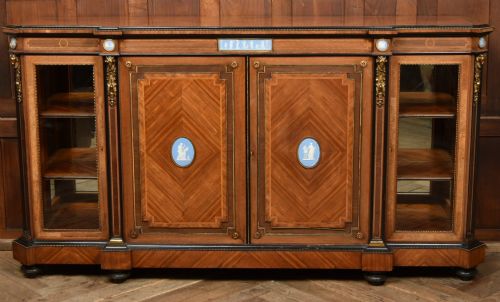
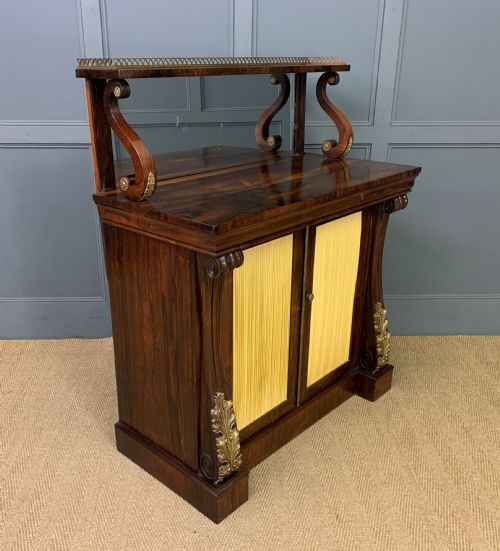

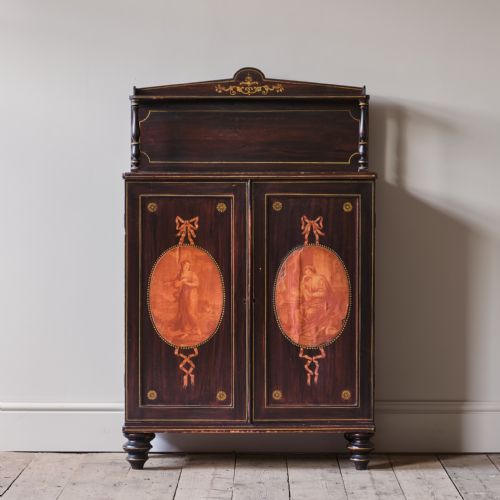


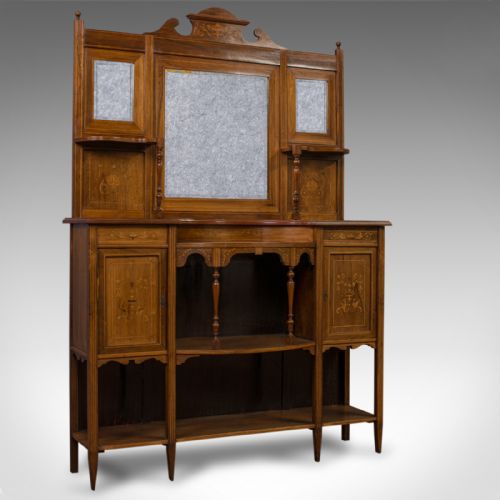


Brown Rosewood Sideboard
These brown rosewood sideboards and cabinets bring rich grain and classical lines to a room, offering both presence and practical storage.
Brown Rosewood Sideboard
When you search for a brown rosewood sideboard, you encounter formal storage pieces spanning the Regency, Victorian, and later revival periods. The selections include chiffoniers, breakfront cabinets, credenzas, and pier cabinets made from rich timbers.
You are most likely to meet Regency and Victorian examples on this page, often featuring brass mounts, delicate inlay, or glass doors. These items served as principal dining room and parlour furniture for displaying plate and storing household linen.
The forms range from compact chiffoniers with single shelved compartments to large four-door breakfront sideboards. Some pieces utilise simulated rosewood paint or alternative woods like satinwood and goncalo alves alongside the primary timber.
Materials and construction
Cabinet makers built these pieces using solid rosewood and mahogany carcases veneered with figured rosewood boards. Workshops applied contrasting details in boxwood, satinwood, and ebony to create intricate marquetry and line inlay.
Metalwork played a structural and decorative role, with cast brass mounts, grilles, and inlay forming geometric patterns across doors and splats. Glazed panels and fabric linings appeared on display cabinets and pier cabinets from the Victorian era onwards.
The listings span the Regency and Victorian periods, incorporating materials such as brass, fabric, glass, satinwood, and jasperware.
Variations in quality
The standard of a brown rosewood sideboard rests on the selection of the timber veneers and the crispness of the secondary inlays. Superior examples display mirrored grain patterns across large surfaces and meticulous boxwood or ebony stringing.
Hardware and secondary timbers reveal workshop origins, where heavier brass mountings and finely cast grilles distinguish better production. The precision of the joinery in breakfront doors and fitted interiors separates standard utility items from high-status furniture.
Edwards and Roberts
The Brown Rosewood Sideboard Glossary
- Chiffonier
- A low sideboard or cabinet, typically featuring a raised shelf back and enclosed lower cupboards, popular in Regency and Victorian interiors.
- Credenza
- A low dining room or parlour sideboard, frequently fitted with glass doors and decorative mounts in the French taste.
- Breakfront
- A piece of furniture where the central section projects forward from the flanking outer sections.
- Marquetry
- The art of forming decorative patterns on a wooden carcase using fitted veneers of various timbers and materials.
- Goncalo alves
- A dense exotic hardwood with striking figuring, utilised in select Regency cabinets.
Brown Rosewood Sideboard: Frequently Asked Questions
How do I date a rosewood sideboard?
Dating relies on stylistic markers such as Regency brass inlay and column supports versus Victorian marquetry and glazed display doors. Construction details within the drawers and the choice of secondary timbers also help establish the period.
Cabinet designs shifted from architectural classical proportions in the early nineteenth century to more ornate revival styles later in the Victorian era.
Where were these cabinets placed?
These pieces traditionally stood against the main dining room or drawing room wall to hold silverware, glassware, and linens. Pier cabinets specifically occupied the narrow wall space between windows.
In modern rooms, they function well as media consoles, hallway storage, or statement display pieces in living spaces.
How do I care for rosewood furniture?
Protect the polished surface by keeping the piece away from direct sunlight and maintaining stable room humidity to prevent veneer movement. Gentle dusting with a dry cloth preserves the finish without building up wax residues.
Avoid placing damp items or heavy heat sources directly onto the timber top.
What is simulated rosewood?
Simulated rosewood is a painted finish applied to a secondary timber, such as pine, to mimic the dark grain and rich colour of genuine rosewood. This technique was common in the Regency period to achieve an expensive look at a lower cost.
Examining the underlying timber where paint has worn reveals the pine carcase beneath.