

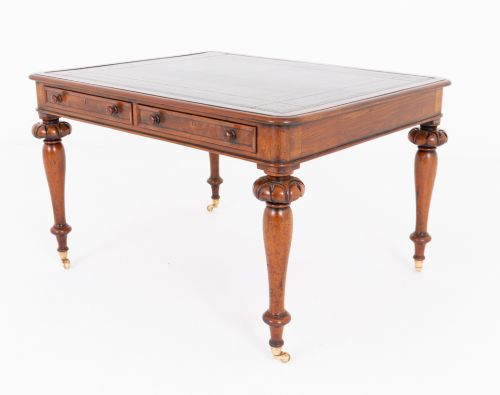
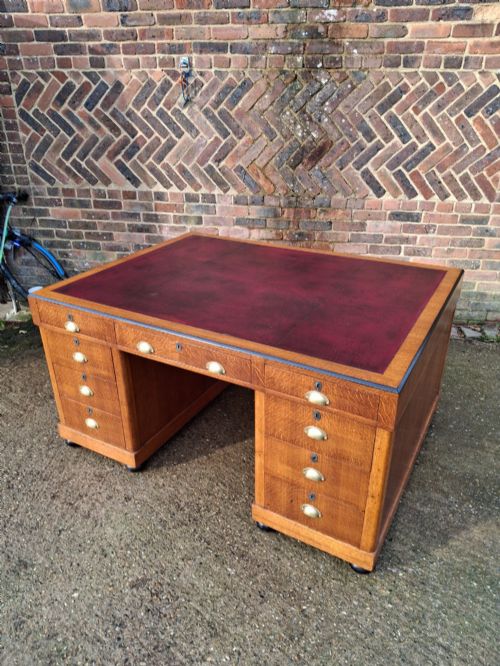
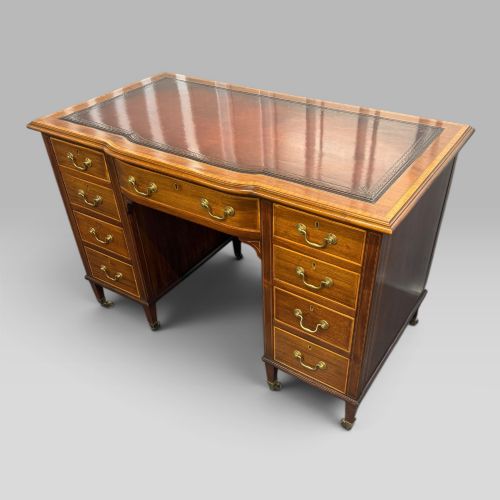
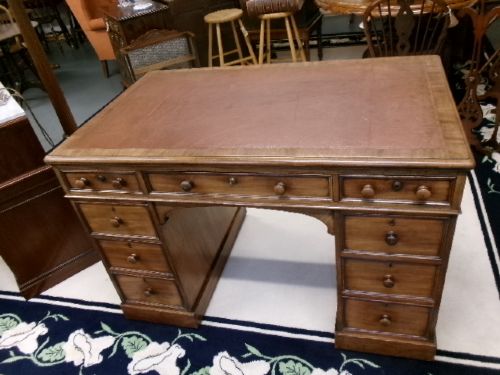
Brown Partners Desk
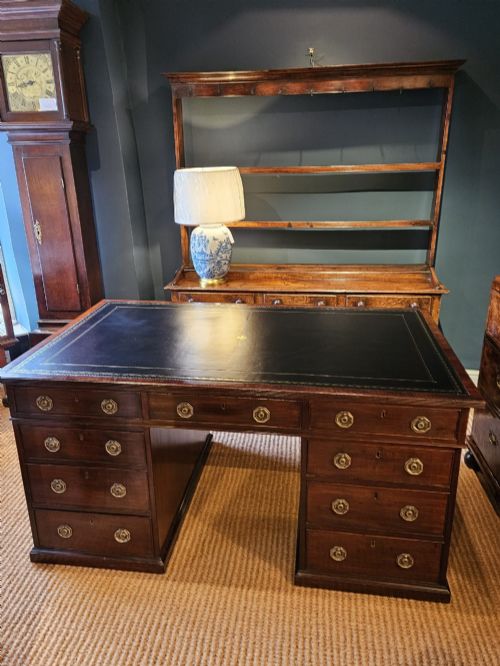
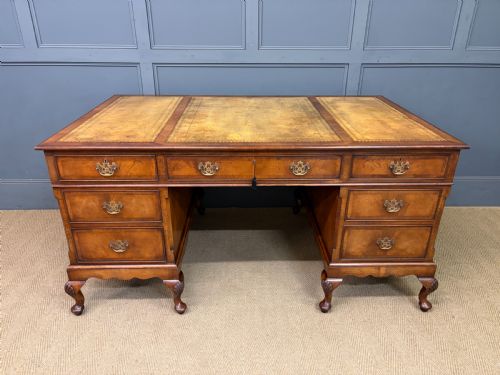
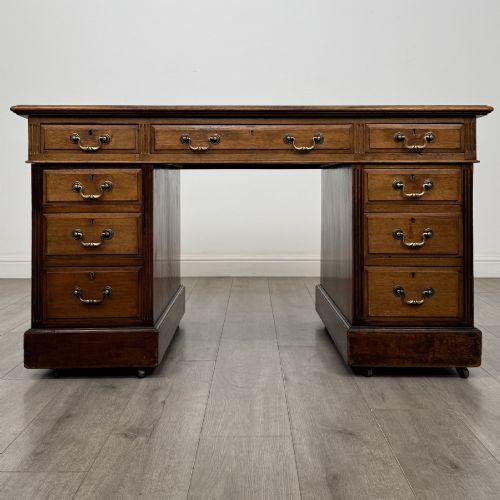
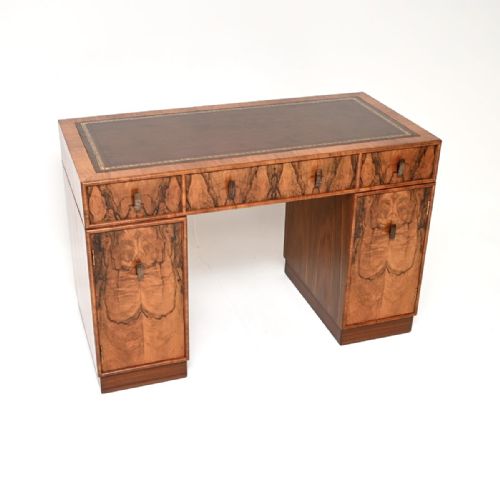
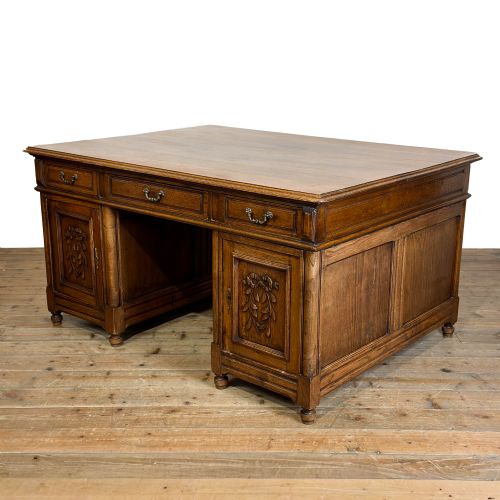
These brown partners desks offer double-sided workspaces with pedestal drawers, bringing substantial presence and rich timber tones to a room.
Brown Partners Desk
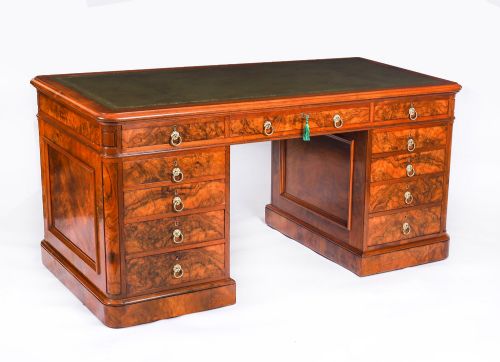
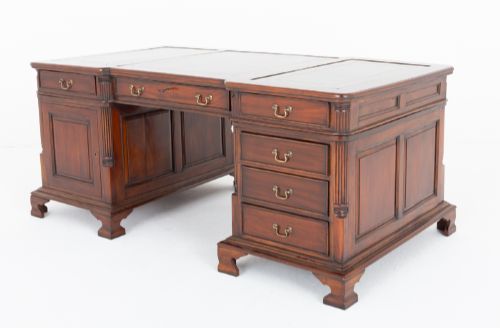
When searching for a brown partners desk, buyers look at substantial double-sided working furniture designed with pedestals of drawers on both sides so two people can sit opposite each other. The pieces seen here span the Georgian period, the nineteenth century, and the Edwardian era, constructed primarily in mahogany, oak, and walnut.
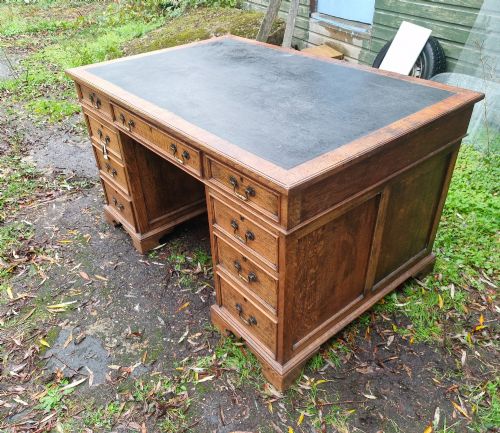
The most common version met on this page is the Victorian mahogany pedestal desk or partners desk, often fitted with a leather writing surface in red or green. These desks feature timber grain and structural depth, reflecting nineteenth-century craftsmanship and domestic utility.
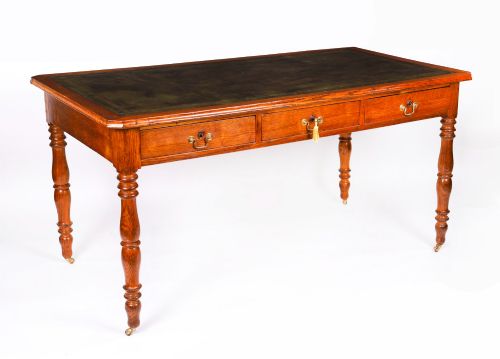
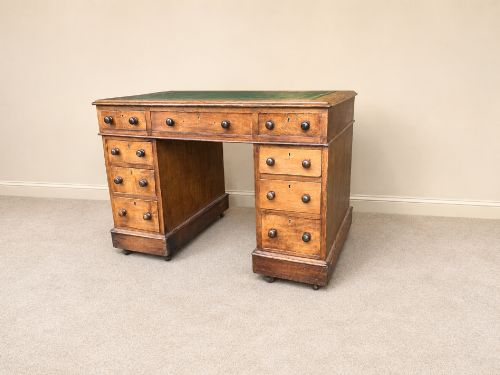
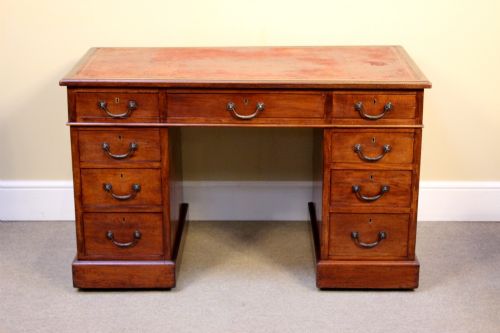
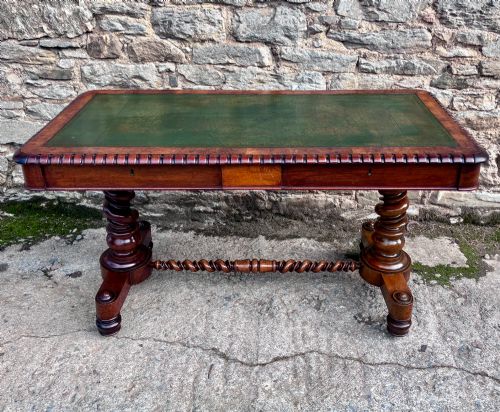
Beyond standard pedestal layouts, variations include breakfront designs, kneehole configurations, and library tables with fitted drawers. Whether dating from the eighteen-sixties or the Edwardian period, these desks function as central architectural pieces for studies and libraries.
How they were made
Makers constructed these desks using solid timbers and veneered surfaces over secondary woods, selecting mahogany, oak, and walnut for their durability and rich grain patterns. Burr walnut and thuya wood appear on finer examples, adding decorative figuring to the drawer fronts and top surfaces.
Writing surfaces were traditionally inset with leather, frequently finished with gold tooling around the perimeter. Drawers utilised traditional dovetail joints, and hardware typically consisted of brass handles, swing handles, or swan neck pulls.
Brown Partners Desk Retail Price Guide 2026
Typical asking prices for brown partners desk among the pieces listed under this phrase on Sellingantiques today, from the lower quarter to the upper quarter. They describe what is for sale here now, not the wider market.
What varies in quality
The distinction between standard commercial production and superior quality lies in the selection of timber veneers and the crispness of carved details such as pillars, claw and ball feet, or inlay work. Maker attribution also elevates a piece, with firms like Maple and Co., Howard and Sons, and Jackson and Graham demonstrating higher levels of cabinet-making ambition.
Proportions and structural integrity dictate the upper tier of these desks, particularly in partners models where the reverse side requires matching craftsmanship and panel detail rather than plain boarding. The integration of secondary materials like ivory inlay, Wedgwood plaques, or original tooled leather surfaces separates workshop-standard furniture from exhibition pieces.
Howard and Sons·Trollope and sons·Charles Andrea Nosotti·Jackson and Graham·Maple and Co·Whytock and Reid of Edinburgh
The Brown Partners Desk Glossary
- Partners desk
- A large double-sided desk designed for two people to work opposite one another, featuring pedestals of drawers on both sides.
- Pedestal desk
- A freestanding desk comprising a top surface supported by two independent banks of drawers or cabinets.
- Kneehole desk
- A compact desk featuring a central recessed space for the legs, flanked by pedestals of drawers.
- Breakfront
- A cabinet or desk front where the central section projects forward from the flanking pedestals or wings.
- Thuya wood
- A fragrant, richly figured wood derived from the Moroccan sandarac tree, utilised for decorative veneers on high-status Victorian furniture.
- Dovetail
- A traditional interlocking joint used in drawer construction, prized for its tensile strength and resistance to being pulled apart.
Brown Partners Desk: Frequently Asked Questions
What is a brown partners desk?
A brown partners desk is a large double-sided writing table with drawers and cupboards on both the front and the back. This configuration allows two people to sit and work facing each other.
Most examples seen on this page date from the Victorian and Edwardian periods, constructed in timbers such as mahogany, oak, and walnut.
How do you use a partners desk?
These desks sit centrally in a room rather than against a wall because finished woodwork and drawers appear on all sides. Two people can use the workspace simultaneously for writing, reading, or administrative tasks.
The large top surfaces also accommodate lamps, books, and desk accessories while providing deep storage in the pedestals below.
How do I live with a leather top?
Leather writing surfaces require moderate care to prevent the material from drying out or cracking over time. Gentle cleaning with a soft cloth and occasional treatment with appropriate leather balms preserves the suppleness and the gold-tooled borders.
Placing hot cups or sharp objects directly on the leather should be avoided, though blotting pads or desk blotters protect the surface during daily use.
How do I tell Victorian from Edwardian desks?
Victorian desks, generally dating from the mid to late nineteenth century, tend to feature denser timbers, darker mahogany tones, and occasionally heavier proportions or elaborate carving. Walnut and burr walnut also feature prominently in Victorian cabinet making.
Edwardian desks, produced in the early twentieth century, often display lighter oak construction, simpler bracket or claw feet, and influences from earlier Georgian styles.