

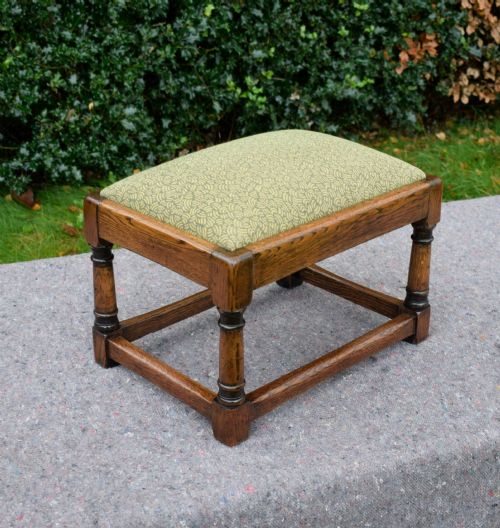
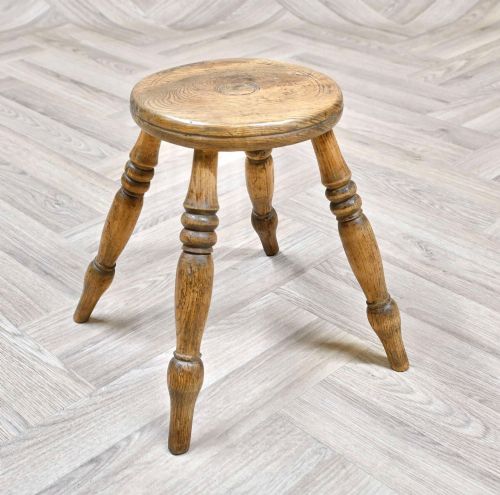
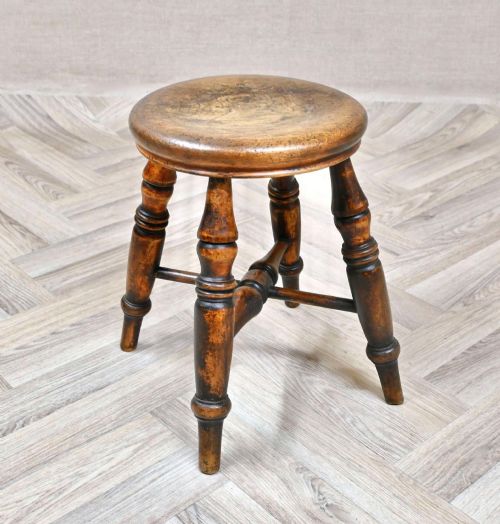
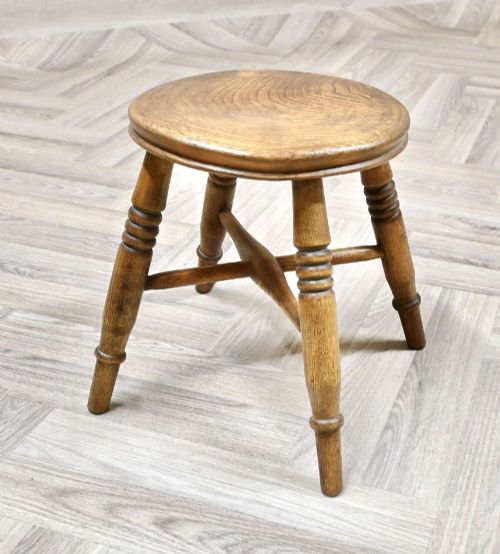

Brown Oak Turned Stool
A brown oak turned stool brings solid timber character and honest joinery straight into a room.
Brown Oak Turned Stool
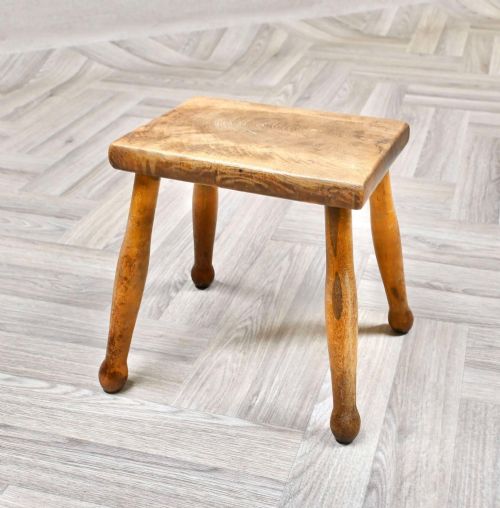
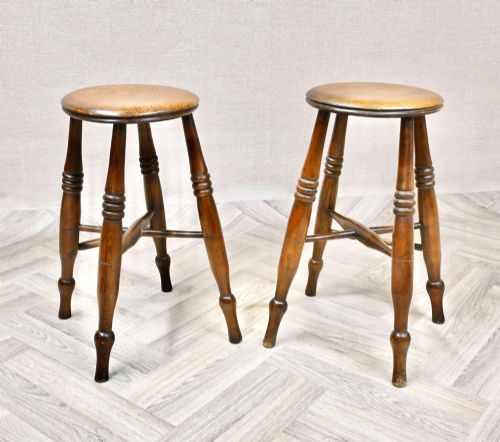
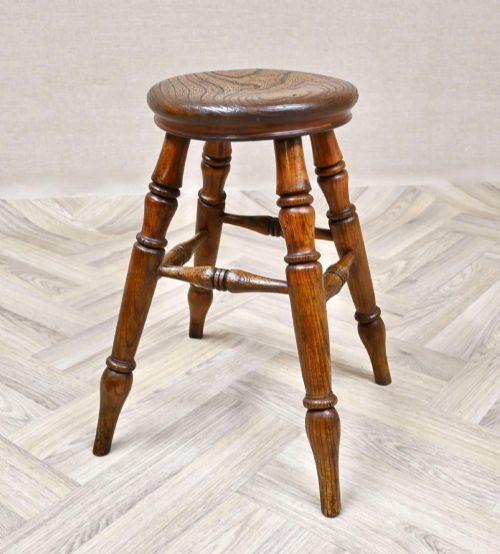
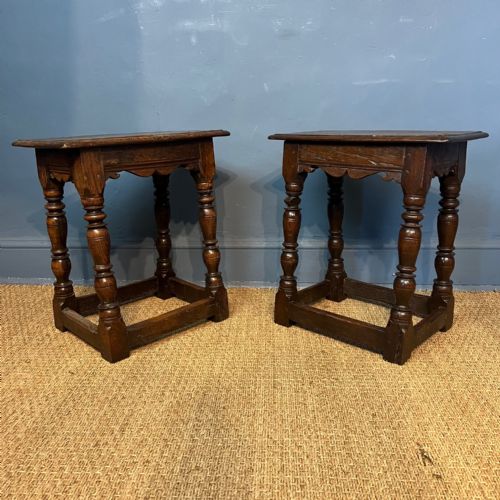
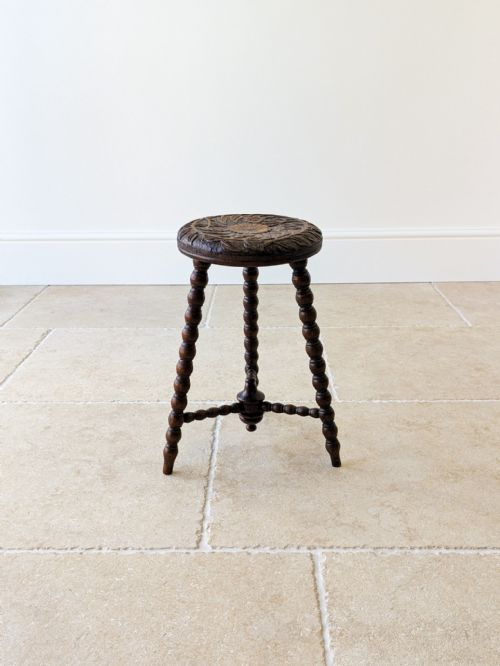
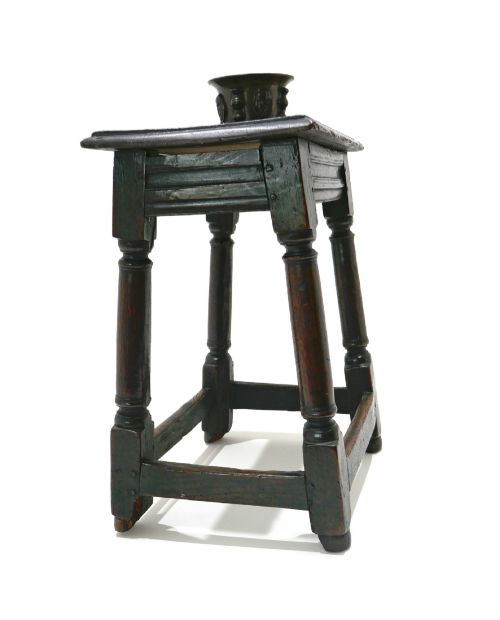
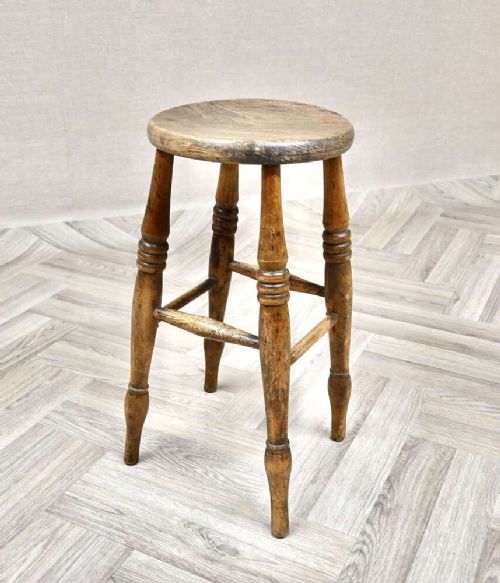
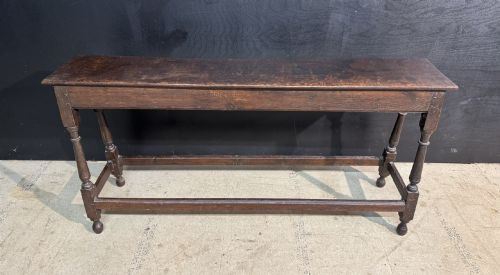
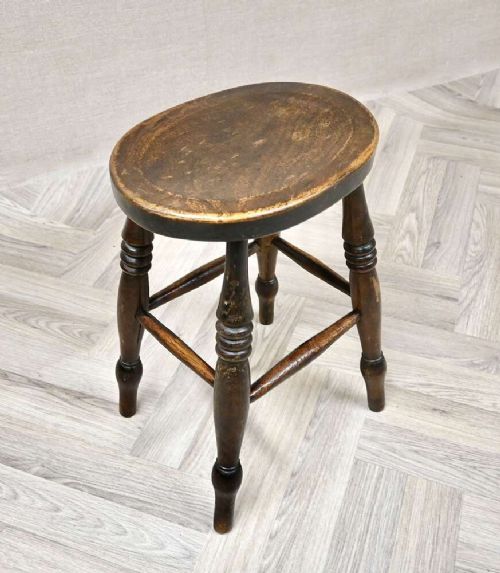
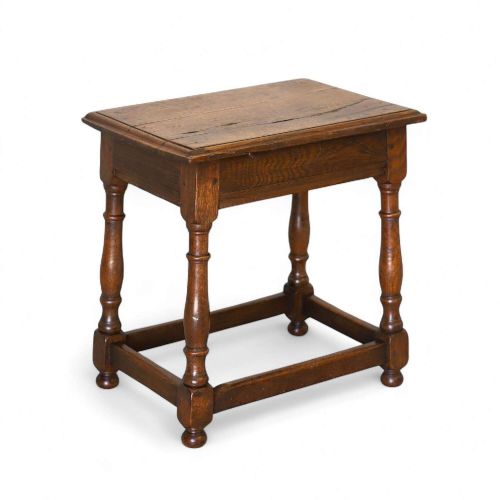
A brown oak turned stool stands on legs shaped on a lathe, carrying the practical weight of centuries past. When you search for a brown oak turned stool, you encounter pieces that range from early joint stools to nineteenth-century country seating.
The selections here span seventeenth-century origins through to Edwardian revivals, taking the form of joint stools, bar stools, and low occasional seats. Oak dominates the inventory, supported by elm, ash, and beech in traditional provincial builds.
How they were made
Cabinetmakers and rural joiners fashioned these items from native timber, selecting oak and elm for their robust grain and durability. Legs took shape on manual lathes to create turned profiles, while tops were fitted using traditional pegged mortise and tenon joints.
Surfaces developed naturally through daily use and friction, leaving visible tool marks and warm patination across the timber. Rush seating also appears where flexible plant fibres were woven directly into the wooden frames.
Brown Oak Turned Stool Retail Price Guide 2026
Typical asking prices for brown oak turned stool among the pieces listed under this phrase on Sellingantiques today, from the lower quarter to the upper quarter. They describe what is for sale here now, not the wider market.
Listings feature timbers including oak, elm, ash, beech, pine, and timber alongside rush seating.
What varies in quality
The standard of a turned stool rests upon the integrity of its timber and the precision of its original joinery. Pieces retaining their unclipped legs and original pegged joints stand apart from examples altered or heavily restored over generations.
Depth of colour and surface patination dictate visual appeal, with older finishes showing a rich, honeyed tone developed through long exposure and polishing.
The Brown Oak Turned Stool Glossary
- Joint stool
- A sturdy wooden seat constructed with pegged mortise and tenon joinery rather than turned spindle frames alone. These pieces date predominantly from the seventeenth and eighteenth centuries.
- Bobbin turned
- A style of leg decoration shaped on a lathe to resemble a series of rounded spools or bobbins threaded together. This motif appears frequently on late seventeenth-century and revival pieces.
- Rush seat
- A seating surface woven from dried marsh rushes, providing a flexible and supportive pad within a rigid wooden frame. This method belongs firmly to traditional country craftsmanship.
- Patina
- The deep, lustrous surface sheen acquired by timber over decades of handling, polishing, and natural ageing. It serves as a key indicator of genuine age and continuous use.
- Carolean
- Pertaining to the reign of King Charles II, a period spanning the mid to late seventeenth century known for richly carved woodwork and spiralling turned supports.
Brown Oak Turned Stool: Frequently Asked Questions
How do I spot a true seventeenth-century joint stool?
Examine the construction methods and timber characteristics closely. Genuine early pieces display hand-cut peg joints, substantial oak shrinkage, and heavy tool marks rather than modern fixings.
The surface patination should look deep and undisturbed by aggressive modern sanding. Old repairs and structural wear often confirm the genuine age of a provincial frame.
Where did people use turned stools in older homes?
These versatile items served multiple domestic purposes around the hearth, dining table, and workshop. Their compact footprint allowed them to tuck neatly beneath furniture when not occupied.
Taverns, farmhouses, and modest dwellings relied on them for heavy daily use, which accounts for the sturdy turned legs and thick timber tops.
How should I care for antique oak furniture?
Keep wooden seating away from direct heat sources and sudden temperature fluctuations to prevent the timber from splitting. Regular dusting with a dry cloth maintains the surface without buildup.
Apply traditional beeswax sparingly when the oak appears dry, buffing it gently to preserve the natural lustre and protect the historic finish.
What is the difference between a joint stool and a regular stool?
A joint stool relies on precise carpentry joints secured with wooden pegs rather than glue or simple nails. This specialised construction method provides exceptional load-bearing strength.
Regular turned stools often utilise legs socketed directly into a solid seat board, following simpler regional traditions found in dairy and tavern settings.