



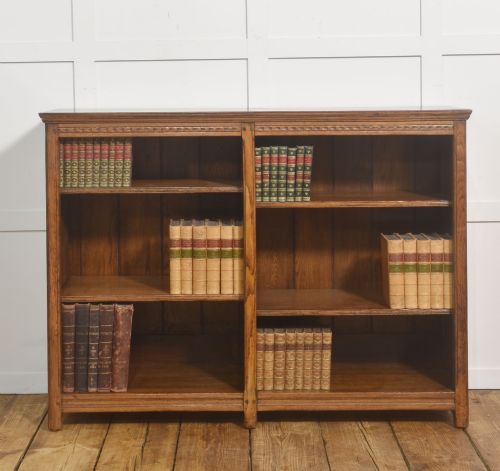
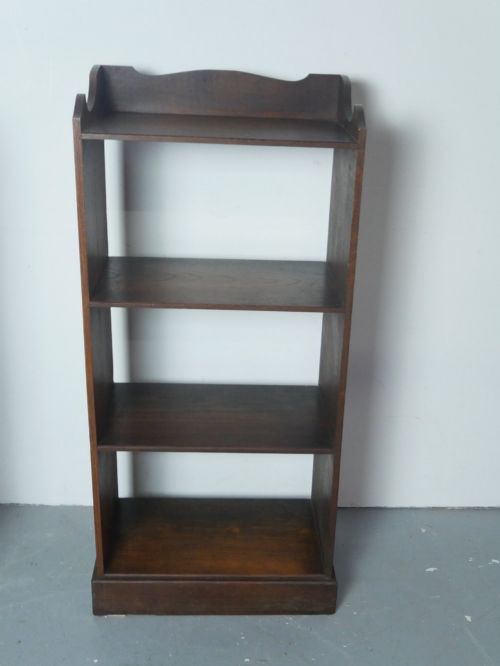
Brown Oak Standing Shelves
Brown oak standing shelves bring rich timber grain and upright utility to a room, spanning the Victorian era through to the Art Deco period.
Brown Oak Standing Shelves
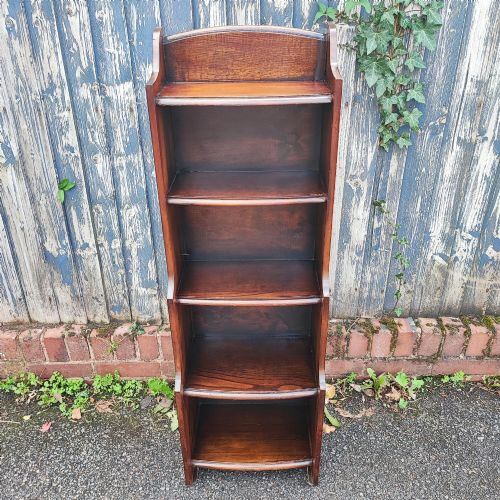
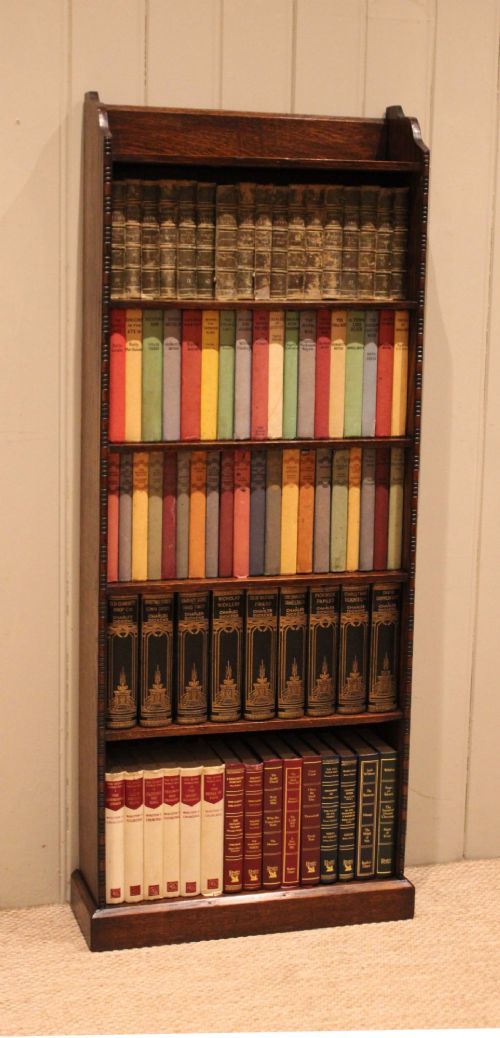
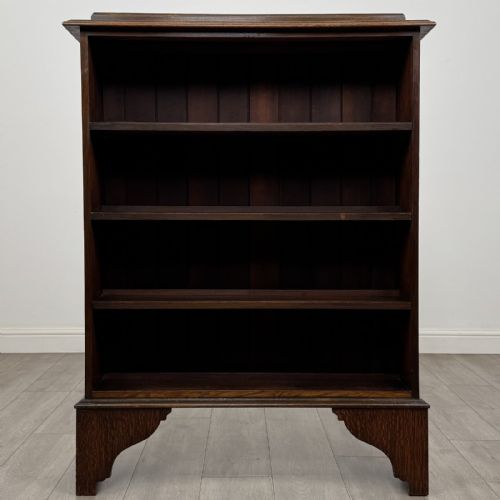
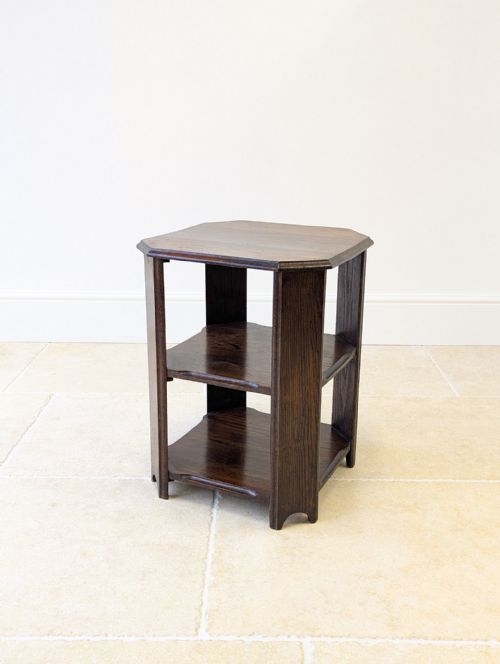
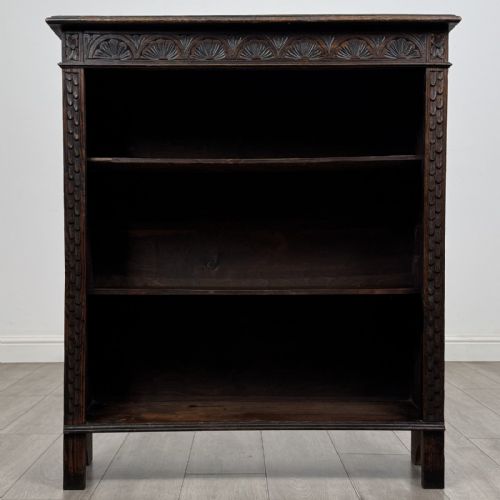
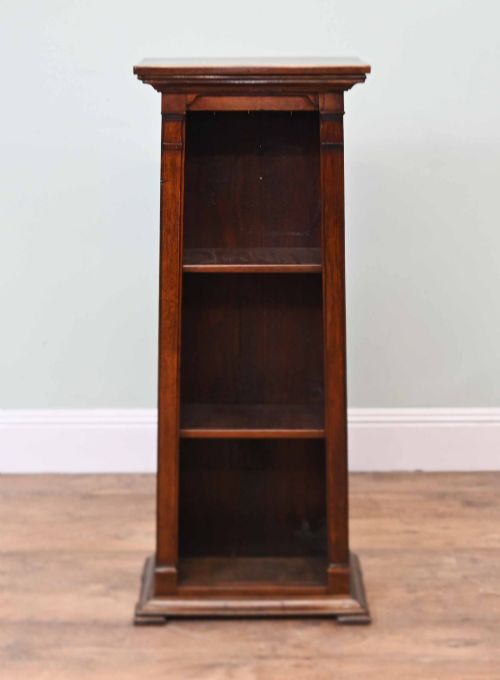
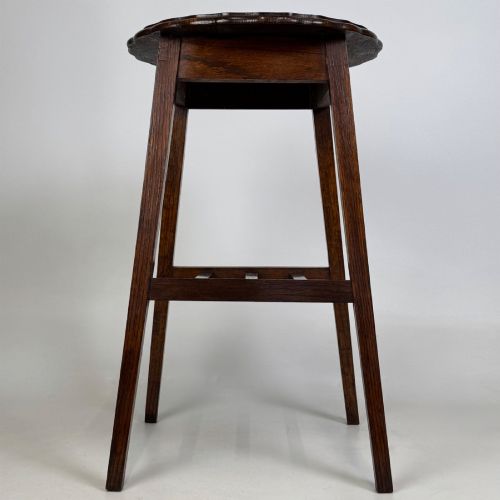
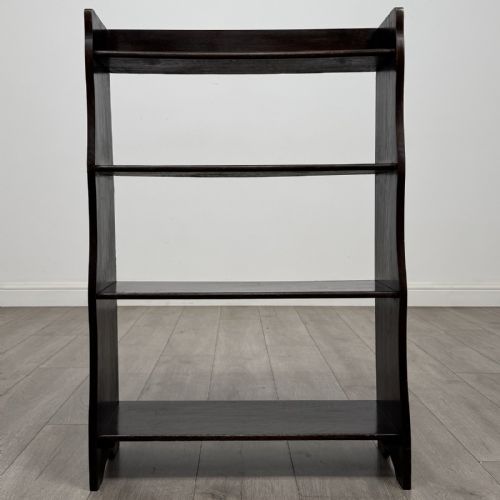
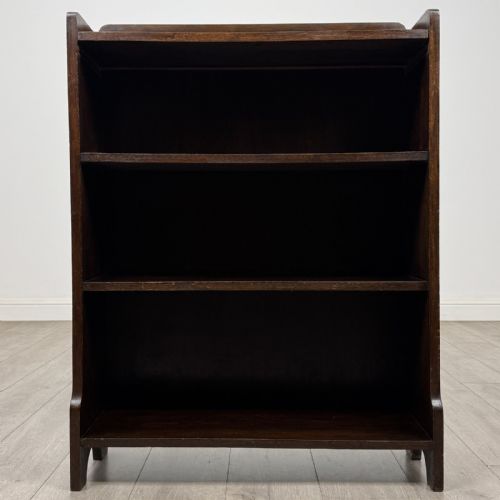
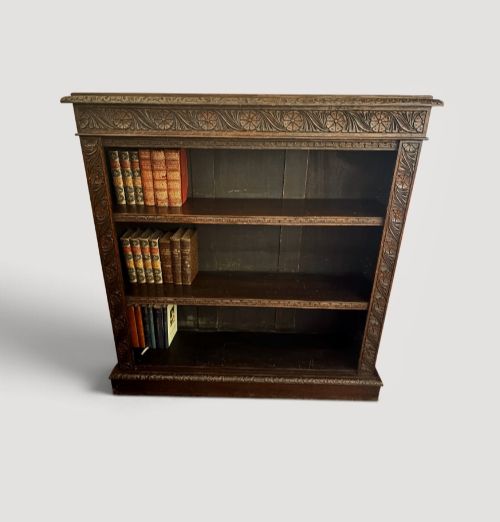
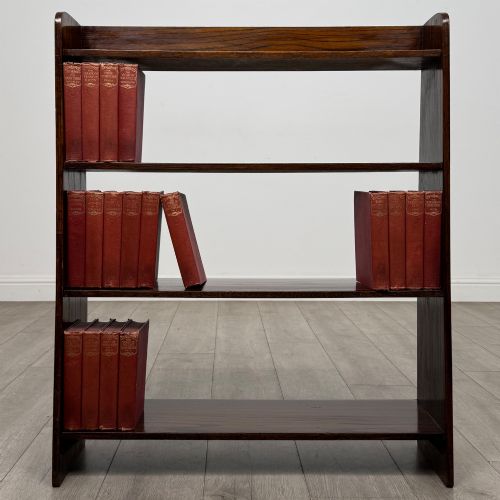
When you search for brown oak standing shelves, you encounter upright storage pieces primarily constructed during the Victorian, Edwardian, and early twentieth-century periods. The selection on this page consists predominantly of open bookcases, alongside occasional side tables, book troughs, and library carts sharing similar timber construction.
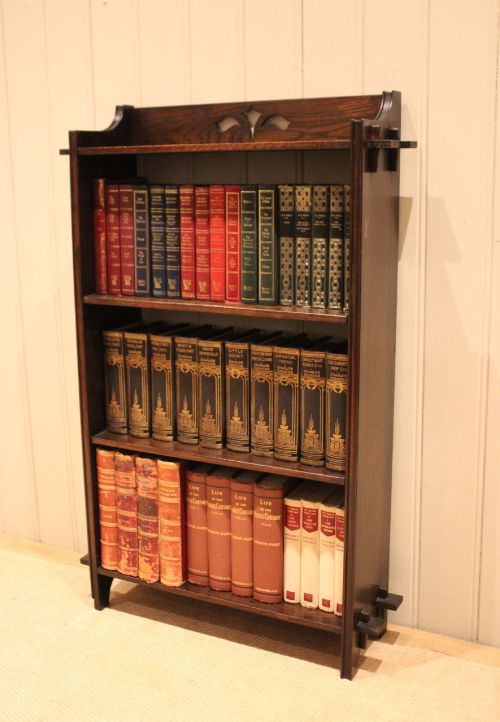
The prevailing aesthetic leans heavily into Arts and Crafts designs, featuring raised galleries, pegged joints, and decorative cut-outs alongside Jacobean and Tudor revivals. Standing items span tall, multi-shelf units down to small occasional bookcases equipped with adjustable shelves or lower drawers.
Assessing Quality
Quality in these brown oak standing shelves rests upon the crispness of the carving, the integration of decorative elements like fret-cuts or raised galleries, and the selection of the oak itself. Pieces displaying thoughtful joinery, such as pegged joints or well-fitted adjustable shelving, distinguish themselves from simpler utility items.
The presence of secondary materials, including specialised marquetry, specimen wood accents, or leather tops, elevates a piece within its period style. Attention to proportion and the preservation of original surface patination determine the standing of individual examples.
Brown Oak Standing Shelves Retail Price Guide 2026
Typical asking prices for brown oak standing shelves among the pieces listed under this phrase on Sellingantiques today, from the lower quarter to the upper quarter. They describe what is for sale here now, not the wider market.
One recorded library cart rolled into service during the nineteenth century just as someone lost their spectacles.
WYLIE LOCHHEAD of GLASGOW·E.A. TAYLOR
The Brown Oak Standing Shelves Glossary
- Raised gallery
- A low decorative railing or rim running along the top surface of a bookcase or table, designed to keep items from sliding off.
- Pegged oak
- Joinery secured with wooden pins or dowels rather than modern fasteners, typical of traditional craft methods.
- Fret-cut
- Timber pierced and shaped with a fretsaw to create openwork patterns or decorative silhouettes.
- Book trough
- A low, open-topped receptacle designed to hold books upright at an accessible angle.
- Specimen wood
- Timber selected and arranged to showcase a variety of different grain patterns and natural colours within a single surface.
Brown Oak Standing Shelves: Frequently Asked Questions
What are brown oak standing shelves?
These pieces are upright wooden furniture items designed primarily for holding books and display objects. They encompass open bookcases, side tables with shelving tiers, and library carts.
Built largely during the late nineteenth and early twentieth centuries, they rely on solid oak timbers and showcase styles ranging from utilitarian Edwardian forms to decorative Arts and Crafts designs.
How were these shelves used?
Original owners utilised these freestanding units in libraries, parlours, and studies to keep frequently read volumes close at hand. Open fronts allowed for quick access to books.
Side table variants and book troughs served adjacent functions in sitting rooms, holding periodicals, decorative items, and luggage alongside reading materials.
How do I style them at home?
Integrate these open oak units into contemporary or traditional rooms by pairing the warm brown timber with neutral walls and soft lighting. Their upright proportions make them useful for corners or narrow wall spaces.
Use the shelves to display books with spine colours that complement the oak, leaving some open space to highlight the timber grain and any decorative cut-outs.
How do I tell periods apart?
Victorian examples often feature heavier carved ornamentation and darker finishes, whereas Edwardian pieces lean toward lighter oak tones and simple raised galleries.
Arts and Crafts items emphasise visible construction methods like pegged joints and geometric fret-cutting, while 1930s pieces introduce restrained mouldings or leather-topped surfaces.