
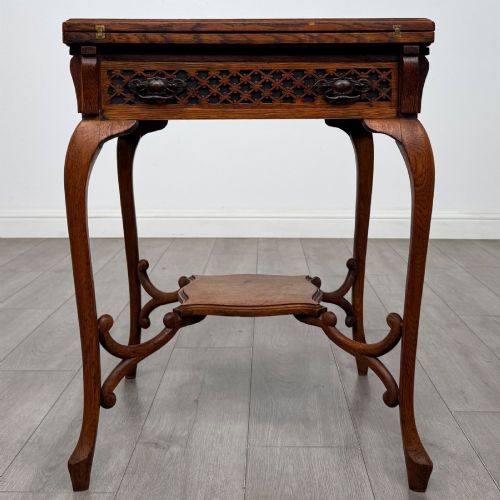
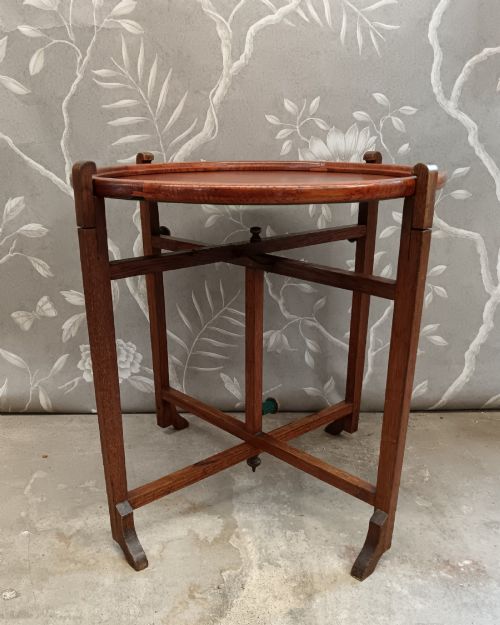


Brown Oak Games Table
These brown oak games tables combine rich timber with fold-over leaves and compartments designed for evening entertainment across the Victorian, Edwardian and later periods.
Brown Oak Games Table
A brown oak games table is a piece of furniture built specifically for card playing, board games and social gatherings, usually featuring a hinged or folding top that reveals a baize-lined playing surface beneath. When you search for a brown oak games table, you encounter forms that range from simple fold-over card tables and tea tables to trifold handkerchief tables and elaborate games compendiums.
Beyond standard card tables, the selection includes specialised items like game blocks and library tables adapted for domestic leisure. These pieces demonstrate how nineteenth-century cabinet makers combined practical storage for counters or cards with sturdy timber construction intended for daily use.
What varies in quality
The distinction between standard pieces and the finest examples rests on the selection of timber and the precision of the cabinet work. Tables featuring burr oak veneers, intricate ebony stringing or carved ornamentation demonstrate a higher level of craftsmanship from workshops like the Manchester School.
Quality also shows in the mechanical action of the folding tops and gate legs, where smooth movement and tight joints indicate superior original construction. Well-preserved baize linings and original brass hardware further elevate the standing of an individual table.
Some Victorian tables conceal their gaming secrets so cleverly that guests might sit entirely unaware of the cards hidden beneath their elbows.
William Trotter
The Brown Oak Games Table Glossary
- Baize
- A coarse woollen material, traditionally green, used to line the playing surfaces of card and games tables. It provides a flat, soft texture that prevents cards from sliding.
- Gate leg
- A hinged leg that swings outward from the frame to support a fold-over table leaf when opened. This mechanism bears the weight during play.
- Trifold
- A tabletop construction consisting of three sections that fold over one another to reduce the footprint when closed. It opens out to create an expanded surface.
- Tantalus
- A locking beverage stand holding decanters securely behind a wooden bar, often incorporated into larger games compendiums. The design prevents unauthorized access to the contents.
- Drop leaf
- A hinged flap of wood attached to the side of a table that can be raised and supported by brackets or swing legs. It allows the table to change size according to the room.
Brown Oak Games Table: Frequently Asked Questions
What is a brown oak games table?
A brown oak games table is a dedicated piece of furniture designed for indoor pastimes, featuring a folding or swivelling top that opens to reveal a playing surface. These items were essential furnishings in nineteenth-century drawing rooms.
They combine the durability of oak timber with specialised compartments or baize linings intended for cards, chess and other parlour games.
How do you open a fold over games table?
Most fold-over tables utilise a pivoting or hinged top leaf that swings around or flips open on brass hinges to double the surface area. A swing leg or gate leg then pivots out from the frame to support the extended leaf.
Care must be taken to support the weight evenly during this movement to avoid straining the original nineteenth-century timber hinges.
What periods do these tables come from?
The examples available span the nineteenth and early twentieth centuries, covering the Regency, Victorian, Aesthetic Movement, Arts and Crafts and Edwardian periods. Each era brought distinct stylistic preferences to the woodwork and inlay.
Victorian and Edwardian versions are the most common, reflecting the height of domestic parlor entertainment.
How do you care for a vintage oak games table?
Keep the timber clean using a soft, dry cloth and protect the surface from direct sunlight and excessive moisture to preserve the original polish and grain. Waxing the oak periodically helps maintain the finish without building up residue.
Special care should be given to interior baize linings by brushing them gently to remove dust without stretching the fabric.