



Brown Oak Dressing Stool
These brown oak dressing stool examples offer solid timber construction and period character, bringing practical seating and traditional craft directly to your interior.
Brown Oak Dressing Stool
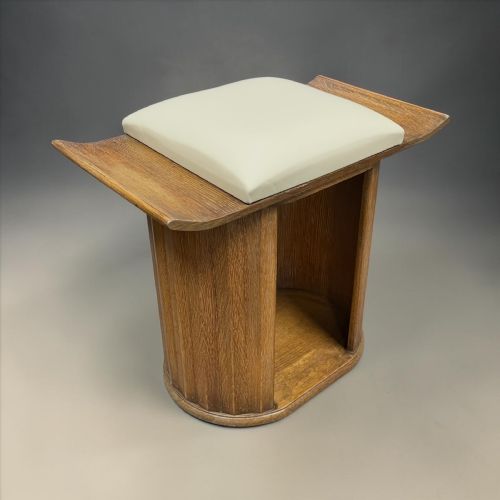
A brown oak dressing stool brings solid timber construction and compact seating to a bedroom or dressing area, reflecting various historical periods. The selection here ranges from nineteenth-century interpretations of earlier centuries to early twentieth-century designs.
You will encounter pieces styled in the Arts and Crafts movement, Victorian revivals, and rustic farmhouse forms. Alongside dedicated dressing stools, the current selection includes footstools, piano stools, and occasional side tables.
Origins stretch from the seventeenth-century lowboy style up to the 1930s Art Deco period, demonstrating how makers adapted traditional oak for domestic seating over centuries.
How they were made
Construction relies heavily on oak timber, chosen for its durability and distinct grain, paired with varied upholstery materials including leather, tweed linen, and tapestry fabric. Metal studs frequently secure these textiles to the wooden frames.
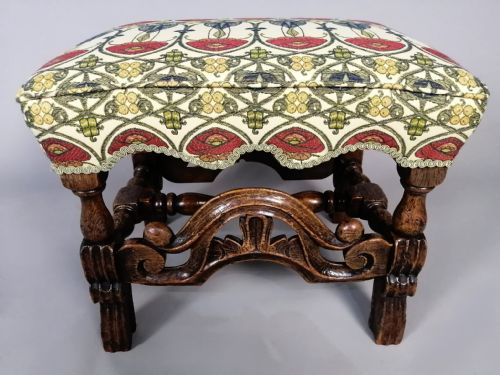
Traditional techniques involve detailed hand carving, seen in Carolean revival and Victorian seat stools, alongside cane work weaving for light, textured seating surfaces. Brass components and metal fasteners appear as structural or decorative additions.
Brown Oak Dressing Stool Retail Price Guide 2026
Typical asking prices for brown oak dressing stool among the pieces listed under this phrase on Sellingantiques today, from the lower quarter to the upper quarter. They describe what is for sale here now, not the wider market.
What varies in quality
Quality rests in the depth of the hand carving and the integrity of the oak frame, where crisply defined ornamentation distinguishes finer pieces from plain or later derivative versions. The treatment of joints and the selection of timber grain dictate the overall presence of the stool.
Upholstery choices also separate standard examples from notable ones, particularly where makers utilise specialised leather or woven tweed linen fixed with individual studs rather than modern staples.
Arthur W Simpson
The Brown Oak Dressing Stool Glossary
- Carolean
- A seventeenth-century stylistic period known for rich wood carving and Baroque influences. Pieces from later centuries often revive these motifs.
- Arts and Crafts
- A design movement valuing hand craftsmanship and simple materials. Stools from this tradition often display honest joinery and saddle seats.
- Lowboy
- A small oak table with drawers, occasionally used for dressing. The evidence includes seventeenth-century examples of this form.
- Cane work
- A seating technique using woven plant material to create a light, flexible panel. This method appears on specific nineteenth-century stool listings.
Brown Oak Dressing Stool: Frequently Asked Questions
Where should I place a brown oak dressing stool?
These compact pieces fit naturally in front of a dressing table or vanity mirror in a bedroom. They also function well as small occasional seats or footstools in living spaces.
Because they feature sturdy oak frames and low profiles, they slide easily beneath tables when not in use.
How do I identify an Arts and Crafts stool?
Arts and Crafts pieces focus on visible construction, plain oak surfaces, and functional designs like saddle seats. They typically avoid excessive ornamentation in favour of honest craftsmanship.
This aesthetic developed around the late nineteenth and early twentieth centuries, prioritising hand-wrought details.
What is a Carolean revival stool?
A Carolean revival piece copies the ornate wood carving and decorative turnings popular during the seventeenth-century reign of Charles II. Makers in the Victorian era frequently reproduced these dramatic styles.
These stools often display deep relief carving on the legs and stretchers.
How do I care for antique oak and leather?
Keep wooden oak frames away from direct heat sources and strong sunlight to prevent the timber from drying out or splitting. Dust regularly with a dry cloth and condition leather or fabric upholstery gently according to its specific textile type.
Avoid using harsh chemical polishes that can damage historic finishes.