



Brown Marquetry Armchairs
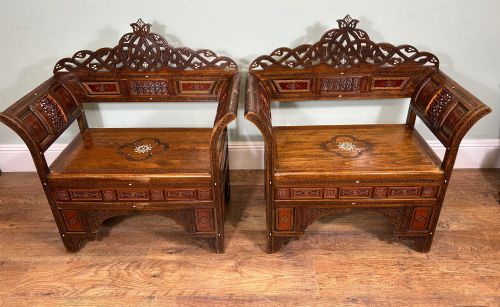
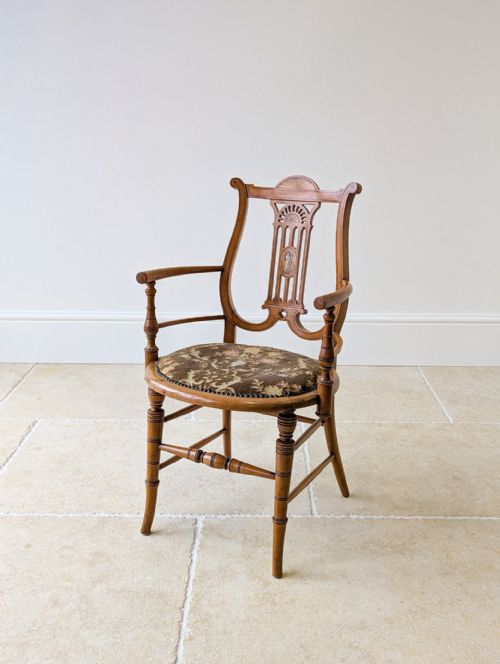
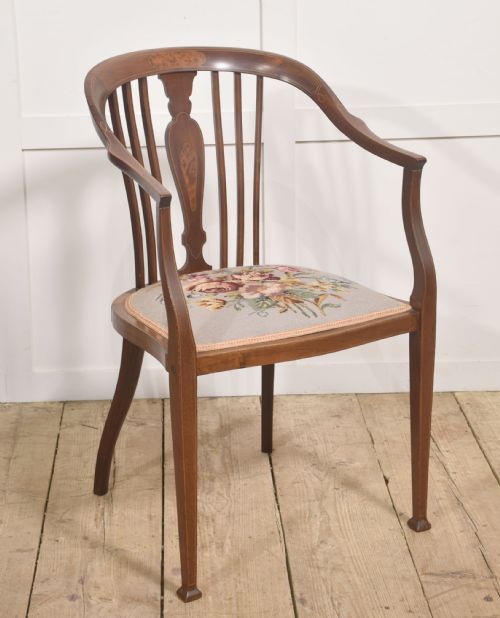
Brown marquetry armchairs combine robust timber frames with intricate contrasting wood inlay, offering both functional seating and notable decorative presence.
Brown Marquetry Armchairs
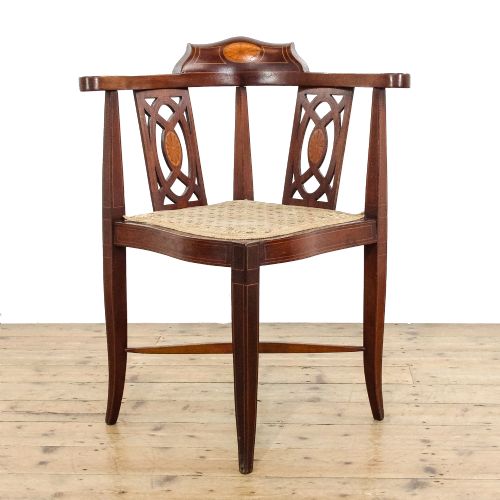
Brown marquetry armchairs encompass a variety of seating forms designed for the parlour, study or bedroom, with Edwardian and Victorian examples appearing most frequently. The selection ranges from standard open armchairs and desk chairs to corner chairs, rocking chairs and low salon seats.
Makers such as James Shoolbred and Jenks and Wood produced distinctive seating during the late nineteenth and early twentieth centuries. Surviving pieces often retain original upholstery fabric or show evidence of re-leathering and restoration.
How they were made
Construction relies primarily on solid mahogany, walnut and rosewood to form the structural frames of the chairs. Artisans then applied delicate satinwood, boxwood and mother of pearl veneers to create complex wood inlay and marquetry patterns.
Upholstery fabrics and leather were secured to the seats using traditional methods, complementing the carved and inlaid wooden armrests, rails and back splats.
Brown Marquetry Armchairs Retail Price Guide 2026
Typical asking prices for brown marquetry armchairs among the pieces listed under this phrase on Sellingantiques today, from the lower quarter to the upper quarter. They describe what is for sale here now, not the wider market.
Several armchairs manage to double as swivelling ships chairs, proving that Victorian comfort could weather stormy seas.
What varies in quality
The sophistication of the wood inlay and marquetry dictates the visual appeal of each chair. Finer examples display meticulous detailing in floral, geometric or damascan motifs across the backrest and frame.
The choice of primary timber and secondary contrasting woods also sets pieces apart, with rich mahogany and figured walnut providing a superior foundation compared to simpler utility alternatives.
James Shoolbred·Jenks and Wood
The Brown Marquetry Armchairs Glossary
- Marquetry
- Decorative veneer work forming pictures or patterns by applying thin pieces of wood to a structural surface. This technique allows for elaborate pictorial designs on chair backs.
- Sheraton Revival
- A late nineteenth and early twentieth-century style drawing inspiration from eighteenth-century neoclassical furniture designs. These pieces often feature straight tapered legs and delicate satinwood inlay.
- Corner Chair
- A seat designed to fit into the corner of a room, typically featuring a diagonal front leg and a curved back rail supported by turned spindles.
- Elbow Chair
- A wooden seat with low arms attached to the back rail, commonly utilised as a desk or parlour chair.
Brown Marquetry Armchairs: Frequently Asked Questions
Where were brown marquetry armchairs used?
These chairs served primarily in formal spaces such as morning rooms, studies, parlours and bedrooms. They provided comfortable seating while functioning as decorative elements.
Larger matching sets also equipped grand reception rooms and drawing rooms during the Victorian and Edwardian eras.
How do I identify an Edwardian armchair?
Edwardian examples typically feature lighter mahogany frames combined with delicate satinwood inlay and Sheraton Revival motifs. They often display slender proportions and refined craftsmanship suited to early twentieth-century interiors.
Stylistic cues draw heavily on eighteenth-century classicism while maintaining the lighter structural builds favoured after the Victorian period.
What is the difference between inlay and marquetry?
Inlay involves inserting pieces of contrasting material into recessed cavities carved directly into the solid wood background of the chair frame. Marquetry employs a mosaic of veneer assembled on a paper backing before being glued to the entire surface.
Both techniques appear frequently across nineteenth and twentieth-century seating to create detailed decorative patterns.
Can I use these chairs at a modern desk?
Many period armchairs and desk chairs offer appropriate dimensions and sturdy construction for daily seating use. Swivelling ships chairs and traditional library desk chairs provide practical functionality for workspaces.
Careful attention to seat height and arm clearance ensures comfortable integration into contemporary office environments.