


Brown Mahogany Music Rack
A brown mahogany music rack brings warmth and order to a room, holding scores or folios in style.
Brown Mahogany Music Rack
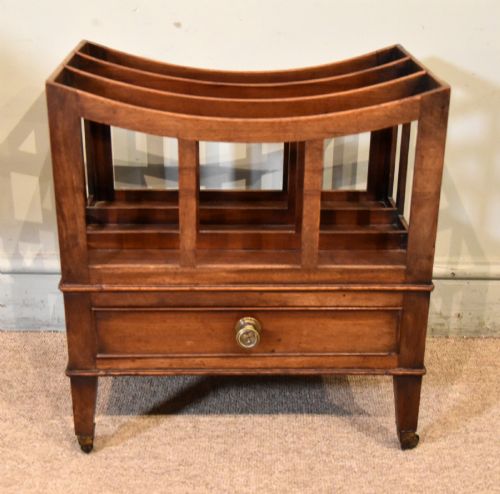
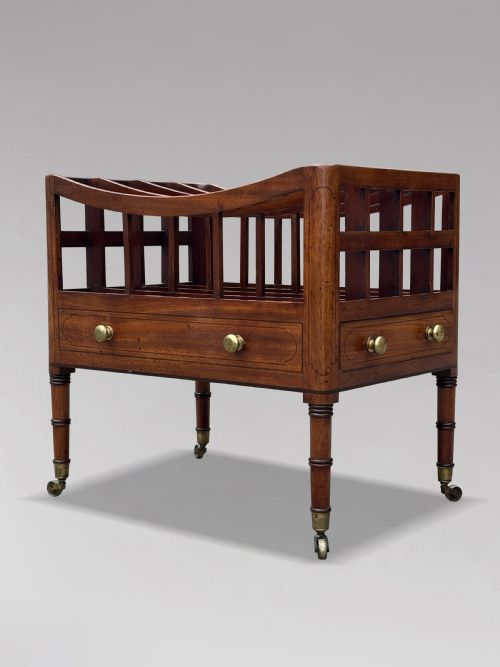
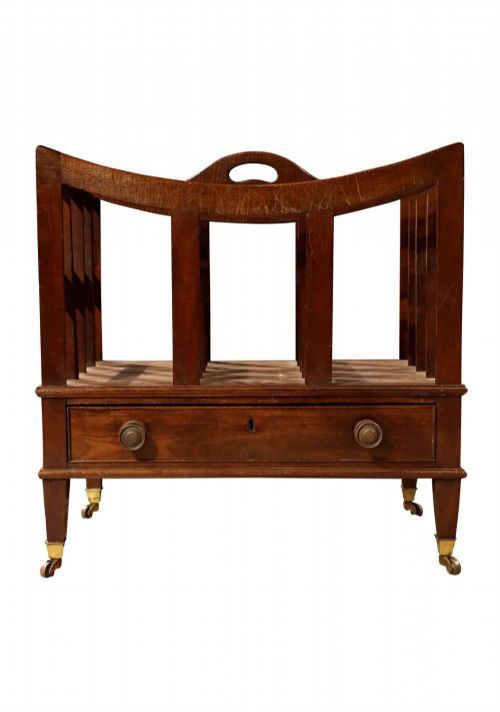
A brown mahogany music rack typically takes the form of a Canterbury, a specialised stand designed to hold sheet music, folios, and magazines. These pieces appear across several periods, most notably the Georgian, Regency, and Victorian eras, alongside Edwardian examples.
Originating in domestic parlours and music rooms, these items served to keep scores neat and close to the instrument. Today, buyers encounter them used equally for contemporary magazines and newspapers in a sitting room.
What varies in quality
The distinction between standard items and superior examples rests on the crispness of the cabinetwork and the refinement of the timber selection. Finely figured mahogany grain and precise inlay work elevate a piece above utilitarian workshop production.
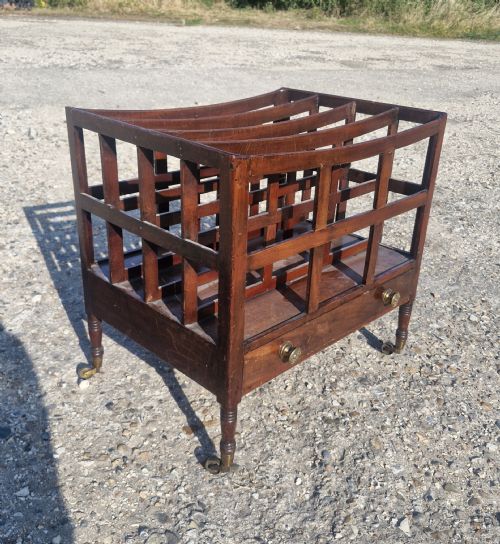
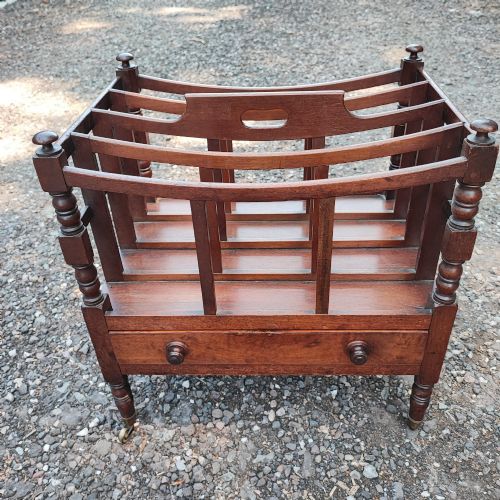
Proportion and structural integrity define the overall success of the design. Pieces retaining original castors, uncompromised slatted dividers, and crisp turned supports demonstrate superior craftsmanship from their period.
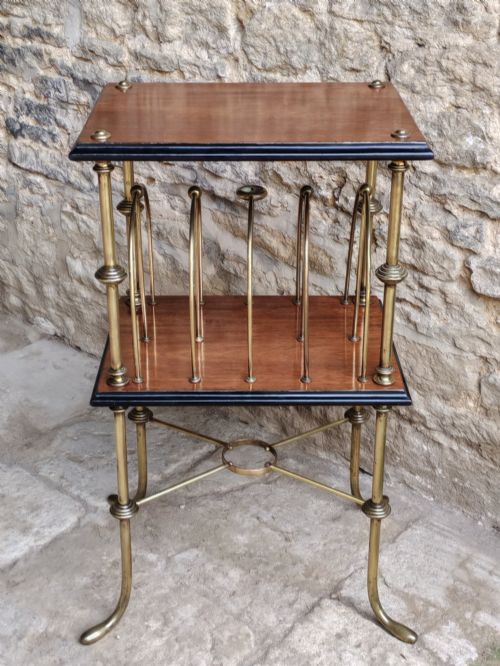
Listings feature mahogany structures enhanced with brass, boxwood, satinwood inlay, and ebony across Georgian, Regency, and Victorian periods.
Howard and Sons of London
The Brown Mahogany Music Rack Glossary
- Canterbury
- A low stand with partitioned vertical sections designed for holding sheet music or folios, often featuring a drawer below. This form became a staple of Regency and Victorian drawing rooms.
- Etagere
- A set of open shelves supported by pillars, used for displaying or holding small objects and books. Some variations incorporate rack storage for folios.
- Inlay
- A technique where pieces of contrasting wood like satinwood or boxwood are inserted into the mahogany surface to form decorative patterns. This ornament is typical of fine Georgian and Edwardian cabinetwork.
- Castor
- A small wheel attached to the legs of a piece of furniture to allow easy movement across carpets and floors. Many period stands retain their original brass examples.
Brown Mahogany Music Rack: Frequently Asked Questions
What is a brown mahogany music rack used for?
These pieces were originally built to hold sheet music, folios, and song books beside a piano or in a music room. They keep papers upright and separated through the use of wooden partitions.
Today, many owners use them beside a sofa or armchair to store magazines, newspapers, and daily reading material.
How do I identify a Regency music rack?
Regency examples display the classical restraint and architectural lines popular in the early nineteenth century. Look for boat-shaped frames, ebony banding, and delicate brass details.
They frequently feature ring-turned legs and original castors that allow the stand to be moved easily across the room.
Are music racks sturdy enough for modern magazines?
These stands were constructed from solid mahogany with traditional joinery designed to hold heavy bound music folios and books. They are inherently robust.
The vertical slats provide strong structural support that easily accommodates contemporary heavy periodicals and large format publications.
What is the difference between a Canterbury and an etagere?
A Canterbury is specifically partitioned into upright slots for holding sheet music and newspapers, usually sitting low to the ground on castors. Many include a shallow drawer at the base.
An etagere consists of open stacked shelves meant for displaying or holding various items, though some tall variants incorporate sections for folios.