

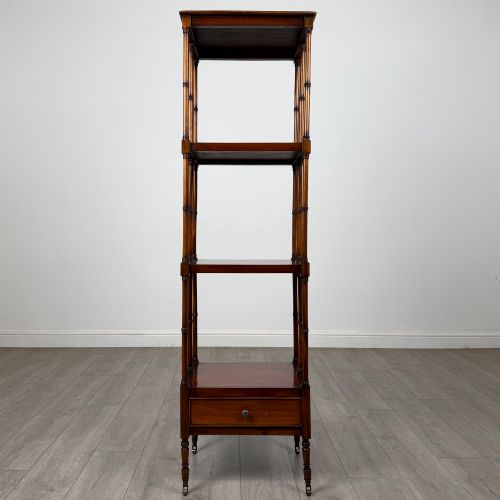
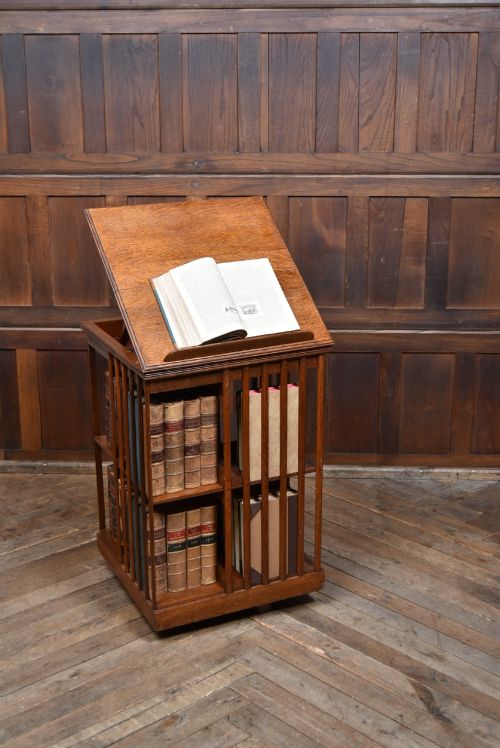
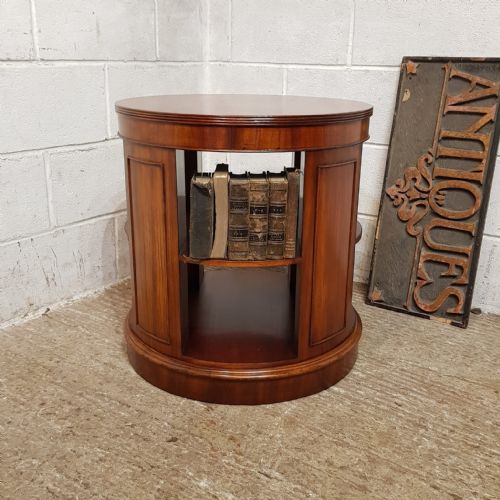
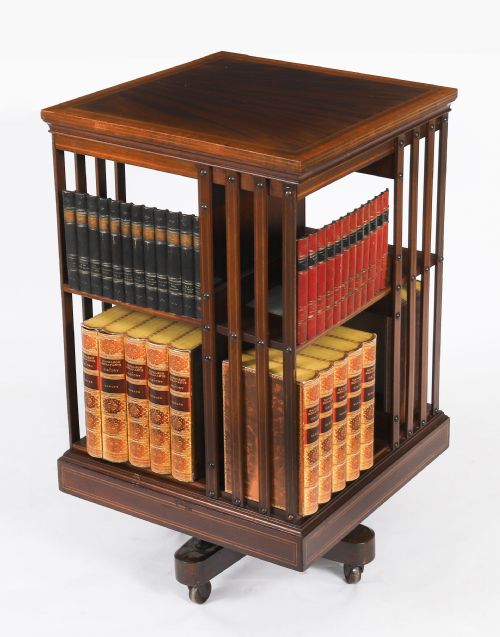


Brown Mahogany Bookstand
These brown mahogany bookstand pieces offer practical tabletop and floor storage for heavy volumes, combining rich timber with steady rotation.
Brown Mahogany Bookstand
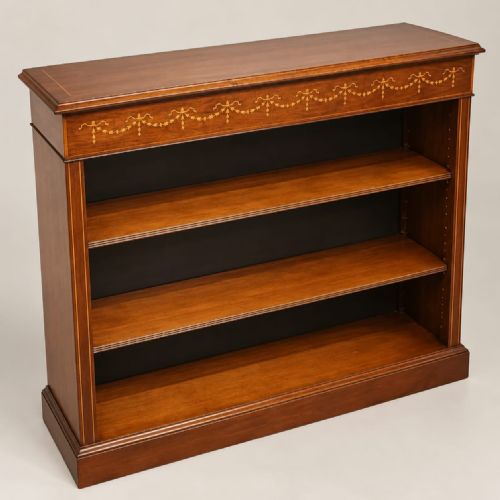
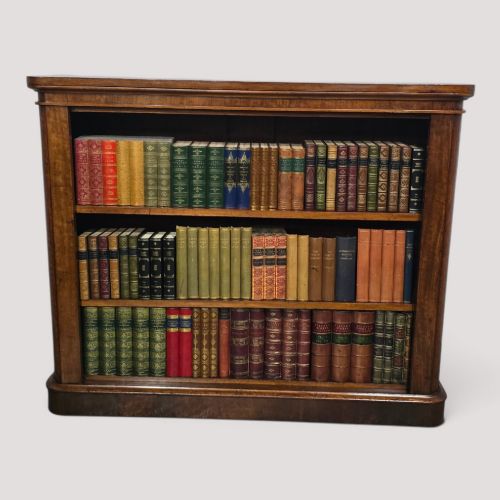
A brown mahogany bookstand brings together compact storage and easy access for volumes in daily use. When you search for a brown mahogany bookstand, you encounter revolving bookcase designs alongside static open shelves, table-top reading stands and occasional reading tables.
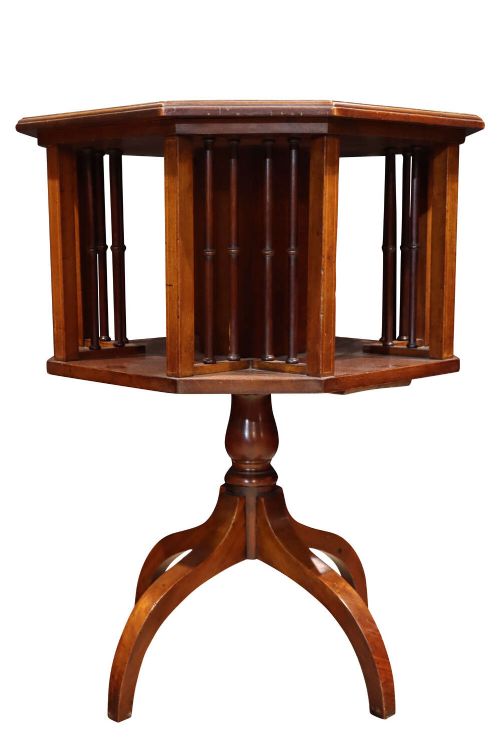
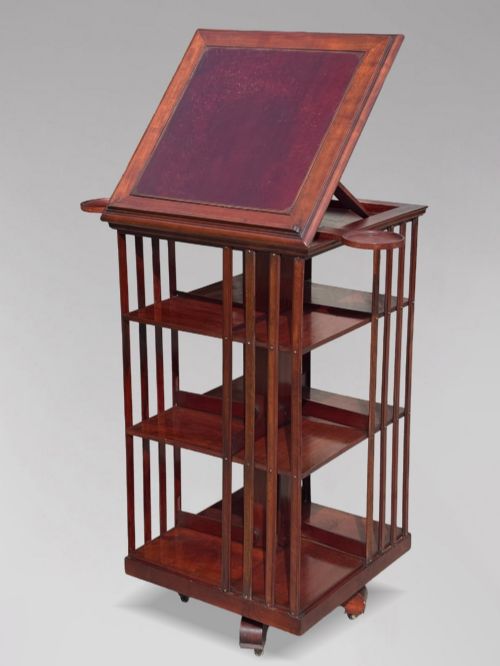
The selections span the 19th Century, Victorian, Edwardian and Regency periods. The revolving variants dominate the offerings, providing tiered wooden tiers that spin on circular bases to hold multiple volumes in a small footprint.
Materials and construction methods
Makers utilised solid mahogany and flame mahogany veneers over secondary timbers, occasionally incorporating oak or satinwood inlay for decorative contrast. Brass fittings, cast iron mechanisms and metal components support the turning actions of the revolving tiers and adjustable reading desks.
Joinery techniques include frame and panel construction for the vertical slats and sturdy pivoting spindles or ball-bearing mechanisms hidden beneath the bases. Inlaid panels employ fine stringing in satinwood to edge the book tiers and tabletops.
Brown Mahogany Bookstand Retail Price Guide 2026
Typical asking prices for brown mahogany bookstand among the pieces listed under this phrase on Sellingantiques today, from the lower quarter to the upper quarter. They describe what is for sale here now, not the wider market.
Some revolving stands spin so smoothly that a gentle flick sends them orbiting like tiny wooden planets.
Distinguishing quality across pieces
The depth of grain figure in the mahogany veneer and the crispness of any satinwood inlay separate standard examples from finer productions. Superior items display well-matched timber grains across the revolving tiers and retain smooth, silent turning action without wobble.
Proportion and structural integrity define the remaining differences, particularly in the joinery of the vertical divisions and the stability of the central axis. Finer examples show careful attention to internal framing that prevents the tiers from sagging under the weight of books.
The Brown Mahogany Bookstand Glossary
- Revolving bookcase
- A tiered wooden shelving unit mounted on a concealed rotating mechanism that allows the user to spin the entire case for access from a single seat.
- Flame mahogany
- A veneer cut from timber where the branch meets the trunk, producing a distinctive ripple pattern that resembles flickering flames across the surface.
- Campaign table top reading stand
- A portable wooden desk designed for travel or placement on existing furniture, often featuring adjustable ledges to hold books at an angle.
- Satinwood inlay
- Decorative contrasting woodwork using a pale yellow timber inserted into recesses within the darker mahogany surface to form geometric lines or motifs.
Brown Mahogany Bookstand: Frequently Asked Questions
How do revolving bookcases work?
These units rest upon a concealed central pivot or ball-bearing mechanism fixed to a heavy wooden base. This allows the tiered shelves to spin freely with gentle pressure.
Users can reach every stored volume from a stationary position by simply rotating the case until the required book comes to the front.
What is a campaign reading stand?
Campaign pieces were designed for portability, allowing owners to pack up and move their writing and reading setups easily. Table top reading stands provided an adjustable angle for heavy folios.
They often feature folding supports or portable frames suited for placing on desks or tables during the nineteenth century.
How do I care for mahogany furniture?
Mahogany responds well to regular dusting with a soft, dry cloth to prevent dirt accumulation on the polished grain. Avoid placing the timber near direct heat sources or strong sunlight.
Applying occasional natural wax helps nourish the wood and preserves the depth of the brown polish without sealing the surface.
How do I date an Edwardian bookstand?
Edwardian pieces date from the reign of Edward VII between 1901 and 1910, often displaying lighter construction and delicate satinwood inlay work. They frequently utilise mass-produced internal metal mechanisms alongside traditional cabinetmaking.
Comparing the timber finish and the style of inlay to known pieces from the early twentieth century helps confirm the period.