
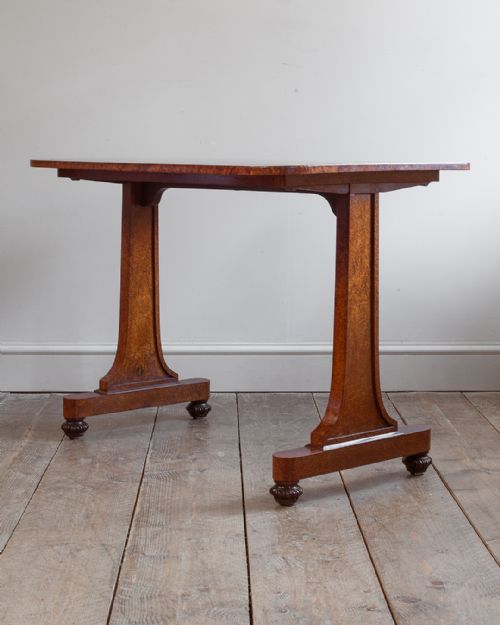
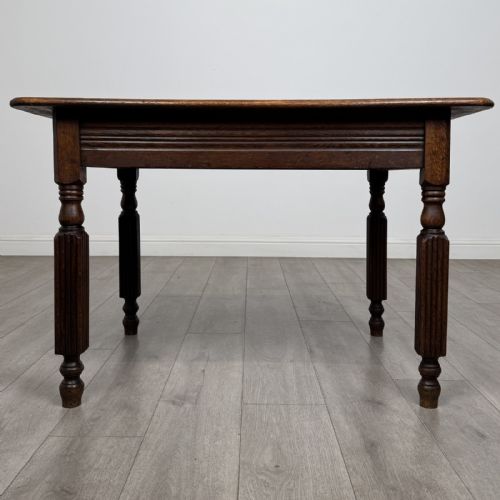
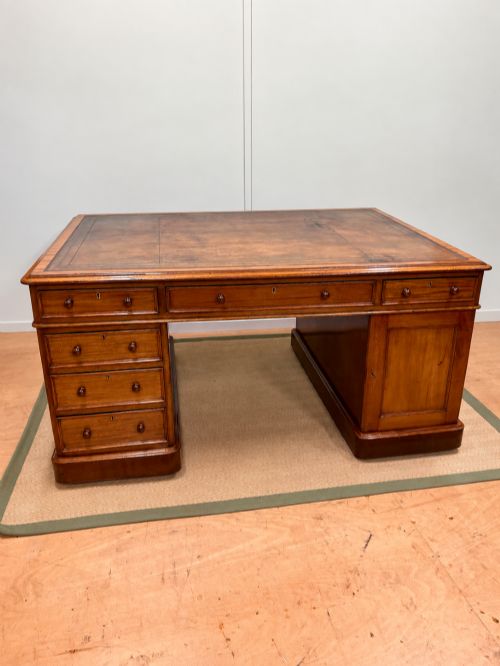
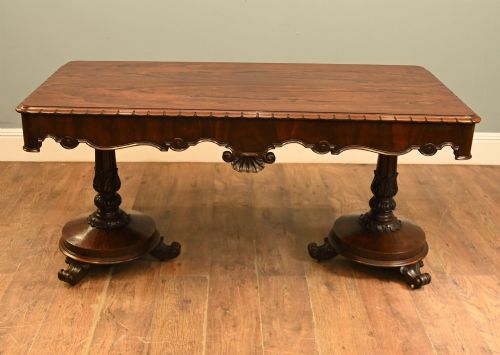
Brown Library Table
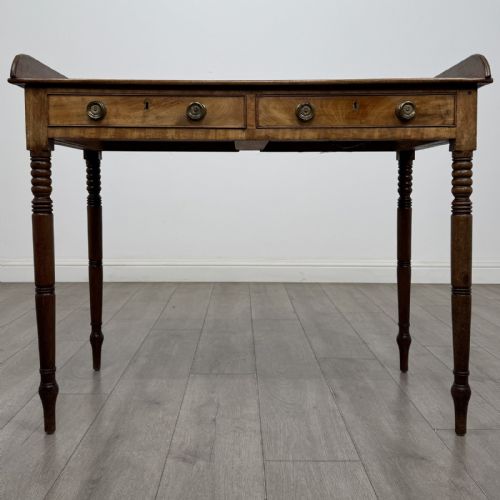
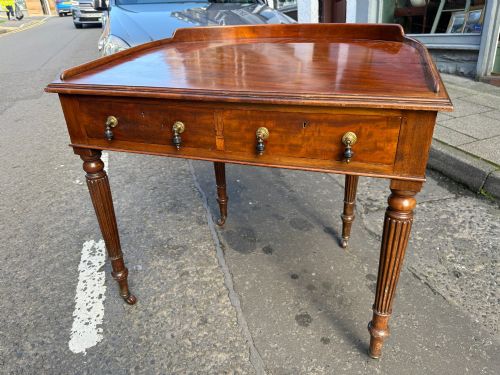
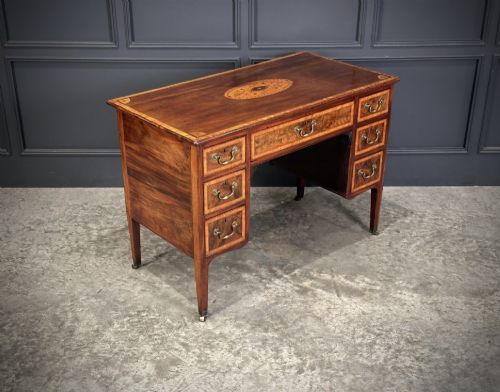
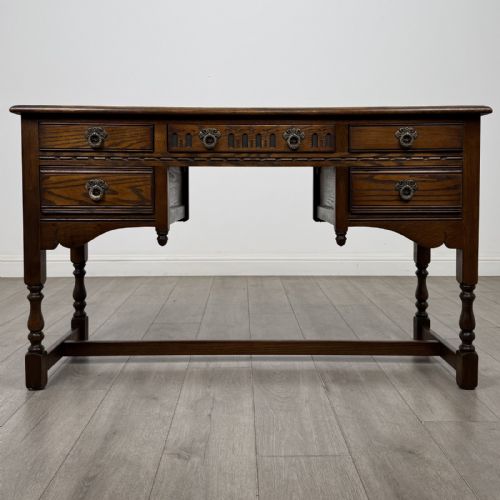
A brown library table anchors a room with solid timbers and a practical writing surface designed for serious study.
Brown Library Table
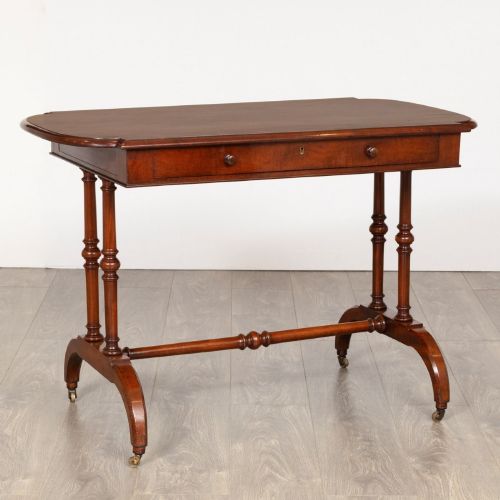
A brown library table provides a generous surface for reading and writing, often fitted with drawers for papers and books. These pieces span periods from the eighteenth century through the Edwardian era, reflecting shifting domestic tastes in wood selection and decorative carving.
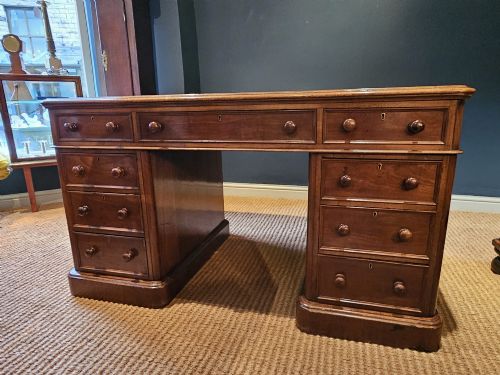
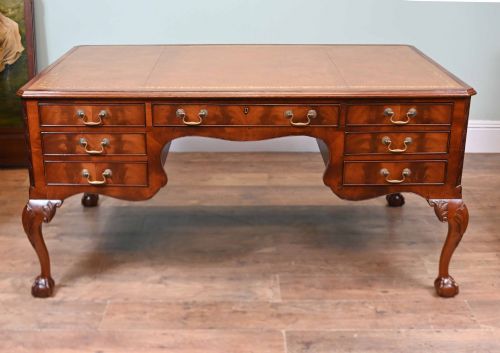
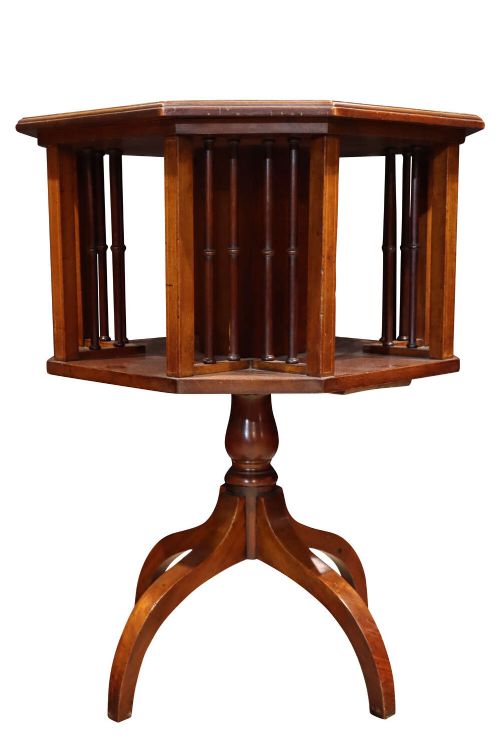
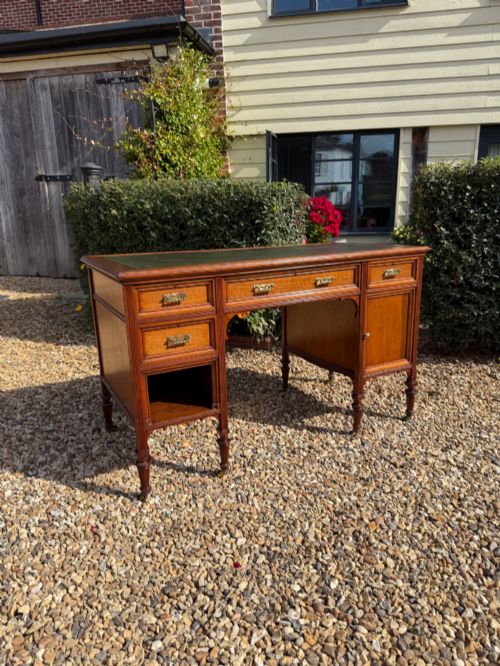
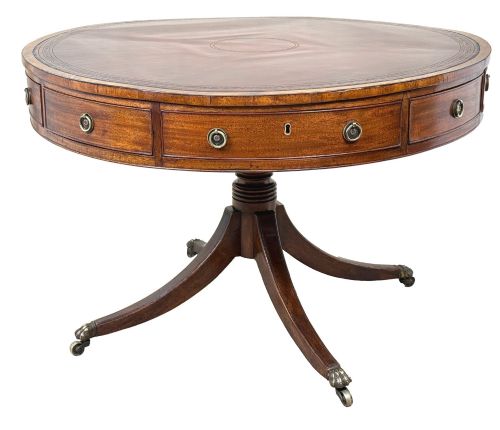
Mahogany and oak dominate the selection on this page, appearing in forms ranging from freestanding centre tables to large partners desks. Buyers encounter variations that include leather inset tops, drum shapes, and revolving bookcase attachments suited to functional spaces.
The most common versions on this page date from the Victorian and Edwardian periods, utilising rich grains and traditional joinery. They serve equally well as central display pieces or active workspaces in modern studies.
How they were made
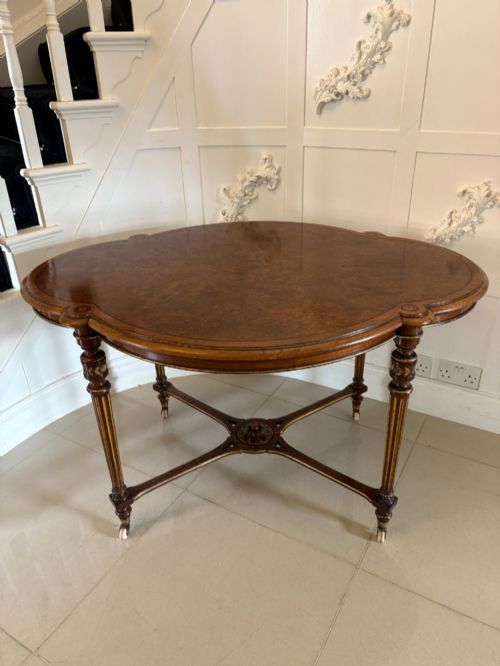
Cabinetmakers constructed these tables using dense hardwoods like mahogany, oak, and walnut, frequently selecting burr veneers to add figure to the tops. Solid timber framing ensures stability, while secondary softwoods often line the interiors of drawers.
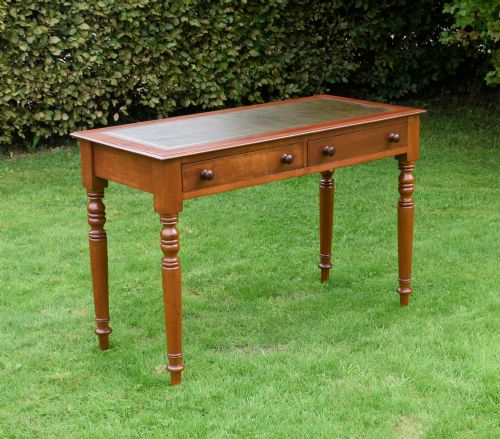
Tooled leather inserts provide a durable writing surface, bordered by blind tooling or gilt decoration. Brass hardware, from drop handles to casters, secures the functional mobility of heavier pedestal and drum forms.
Periods represented span from the 18th century George III era through Regency, Victorian, and Edwardian styles.
What varies in quality
The distinction between standard examples and top-tier pieces rests on the choice of timber and the crispness of the carving. Superior tables display carefully matched veneer grains and substantial secondary woods that indicate uncompromising workshop standards.
Hardware originality and secondary details, such as secret locking mechanisms or finely dovetailed drawer linings, elevate an example. Balance in proportions and restraint in decorative carving separate master cabinetmaker output from simpler provincial work.
Trollope & sons·Edwards & Roberts·François Linke·Charles Andrea Nosotti·CH. Jeanselme & Co
The Brown Library Table Glossary
- Partners desk
- A double-sided writing table designed for two people to work opposite one another, featuring banks of drawers on both pedestals.
- Drum table
- A circular library table with a rotating or stationary top surrounded by an apron containing alternating real and dummy drawers.
- Burr walnut
- A prized veneer taken from the excrescences of walnut trees, noted for swirling, highly decorative grain patterns.
- Satinwood
- A pale, hard exotic timber used for contrasting stringing and inlay work on late eighteenth and nineteenth-century furniture.
- Gueridon
- A small circular occasional table, often standing on a single central column or tripod base.
Brown Library Table: Frequently Asked Questions
What is a library table used for?
These tables served as large central workspaces for reading, writing, and sorting correspondence in domestic libraries or studies. Their freestanding design allowed placement in the middle of a room rather than against a wall.
Today, they function effectively as executive desks, large writing surfaces, or central display tables in spacious domestic and office interiors.
What is a drum table?
A drum table is a circular library table supported by a central pillar and tripod or pedestal base. The deep apron houses multiple drawers, which are often lined with leather or marbled paper.
Many examples feature a revolving mechanism that allows the user to access different drawers without moving around the table.
How should I care for a leather top?
Leather writing surfaces require gentle cleaning with a slightly damp cloth followed by a neutral leather cream to maintain flexibility. Avoid using harsh chemical cleaners or excessive water, which can stain or dry out the hide.
Keeping the surface out of direct sunlight prevents the leather from fading and preserves any surrounding gilt tooling.