

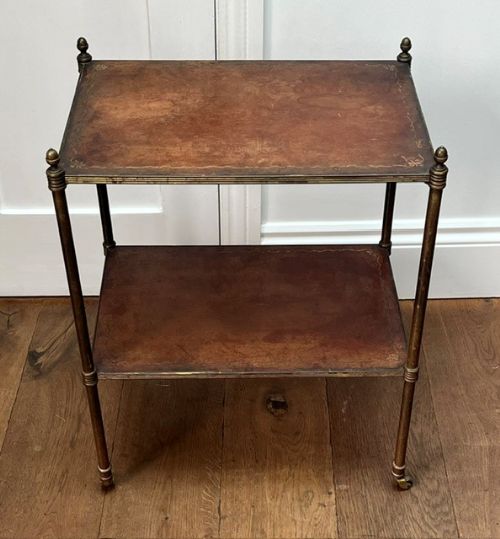


Brown Leather Table Lamp
These pieces sold as a brown leather table lamp bring warmth and utility to a room through dark hides and sturdy timber frames.
Brown Leather Table Lamp
When you search for a brown leather table lamp, you find small functional objects and occasional furniture with leather surfaces from various historical periods. The selection includes items such as a genuine antique leather book lamp dating to the early twentieth century alongside leather-topped tables used for lighting.
The objects span multiple eras from the nineteenth century through the early twentieth century, incorporating styles like Victorian, Edwardian, and Regency. These pieces serve practical purposes in domestic interiors while displaying traditional craftsmanship.
How they were made
Maker construction relies heavily on timbers such as mahogany and kingwood paired with fitted leather writing or display surfaces. Artisans incorporated brass mounts, gold leaf, and gilt metal details to accent the wooden frames.
Alternative materials like bamboo and rattan also appear in the evidence, showing lighter construction methods from firms such as Liberty and Co. Tooling on the leather surfaces adds decorative texture to the tops.
Brown Leather Table Lamp Retail Price Guide 2026
Typical asking prices for brown leather table lamp among the pieces listed under this phrase on Sellingantiques today, from the lower quarter to the upper quarter. They describe what is for sale here now, not the wider market.
A genuine antique book lamp hides its practical lighting function inside a deceptive leather-bound casing.
What varies in quality
Quality differences show in the selection of timber and the precision of the leather tooling and mounts. Pieces with gilt-metal mounts and marquetry display greater complexity in their joinery and decorative execution.
The handling of materials separates standard utilitarian items from finer examples associated with known retail houses. The integration of leather inserts into solid mahogany or kingwood frames dictates the overall grade of the piece.
Liberty and Co·Mallett of London
The Brown Leather Table Lamp Glossary
- Occasional table
- A small, movable table designed for a specific, intermittent use in a room. These items often feature leather inset tops suitable for holding lamps or books.
- Kingwood
- A dense, richly figured wood used in fine cabinet making during the eighteenth and nineteenth centuries. It frequently appears on French-influenced decorative tables.
- Marquetry
- The art of applying pieces of veneer to a structure to form decorative patterns. This technique decorates the surfaces of more elaborate nineteenth and twentieth-century tables.
- Gilt metal
- Metal that has been treated with a thin layer of gold or gold-coloured finish. It provides decorative mounts and accents on the frames of various side tables.
Brown Leather Table Lamp: Frequently Asked Questions
What periods do these pieces come from?
The items originate from various decades spanning the nineteenth and early twentieth centuries. Dates range from the early 1800s through the 1930s.
Styles shift across these decades from Georgian and William IV through Victorian and Edwardian to mid-century neoclassical interpretations.
What materials are used in construction?
Primary woods include mahogany, kingwood, and bamboo paired with natural leather surfaces. Metal elements involve brass, gold leaf, and gilt-metal mounts.
Combinations vary from traditional British mahogany frames to lighter bamboo structures associated with specific retailers.
How were these tables used originally?
These small tables served practical functions in domestic spaces for holding lamps, books, or decorative objects. Their portable size allowed them to be placed beside seating.
Leather surfaces provided durable tops that could withstand daily use in libraries, drawing rooms, and studies.
How do I identify different furniture styles?
Styles are recognised through specific design characteristics such as Regency proportions or Victorian timber choices. Details like gilt-metal mounts point toward French influences.
Comparing the primary wood and decorative accents helps place an object within its historical period of manufacture.