



Brown Leather Pocket Flask
These brown leather pocket flask pieces are sturdy companions for outdoor pursuits, combining practical glass and metal with tactile hides.
Brown Leather Pocket Flask
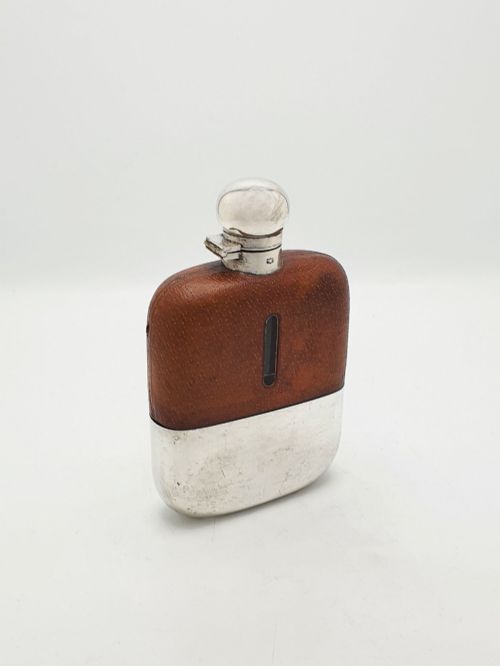
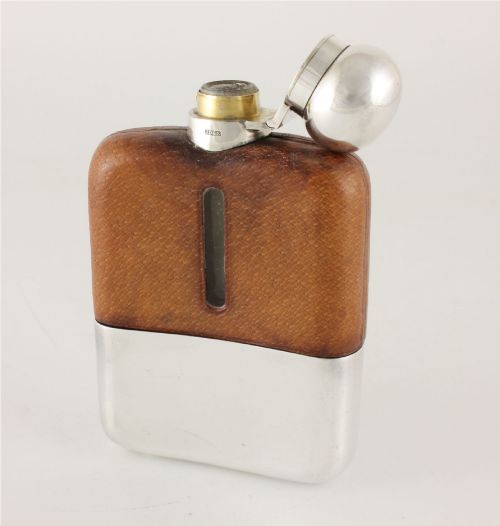
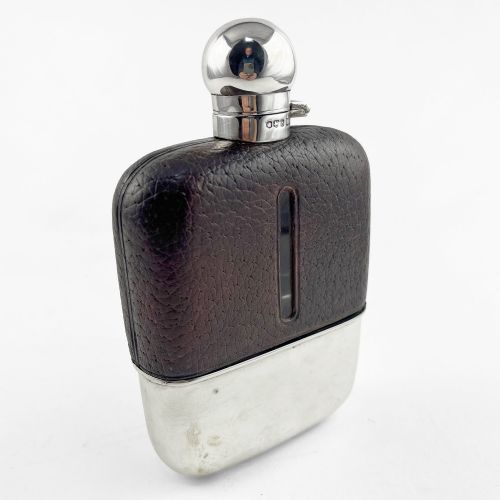
A brown leather pocket flask is a compact container designed for carrying spirits, typically shaped to fit comfortably against the body in a pocket. The examples found here span the Victorian, Edwardian, and Art Deco periods, bringing together practical utility and period craftsmanship.
Most pieces encountered on this page pair a glass body with a protective leather or exotic skin sleeve, often complemented by a captive cap and a removable silver-plated or sterling silver drinking cup. The forms range from plain leather bindings to textured crocodile skin coverings.
Origins stretch across the late nineteenth and early twentieth centuries, capturing shifts in design from robust Victorian mounts to sleek 1930s lines. Collectors encounter both solid silver and silver-plated hardware alongside various grades of hide.
Materials and construction
Makers formed the internal reservoirs from thick-walled glass to withstand daily use, then wrapped the upper portions in stitched leather or crocodile skin to improve grip. Sterling silver or silver-plated mounts protect the neck and provide a secure threaded closure.
Many specimens feature a detachable metal cup at the base, engineered to slide off smoothly while remaining securely locked in transit. Hallmarks stamped into the silver components reveal assay offices and dates, while stitching along the hide shows careful hand assembly.
Brown Leather Pocket Flask Retail Price Guide 2026
Typical asking prices for brown leather pocket flask among the pieces listed under this phrase on Sellingantiques today, from the lower quarter to the upper quarter. They describe what is for sale here now, not the wider market.
Materials recorded across the inventory include glass, sterling silver, silver plate, plain leather, and crocodile skin.
Assessing quality and condition
Quality rests in the weight of the metal mounts, the tightness of the leather stitching, and the clarity of the hallmarking on silver components. Thicker gauge silver and precisely fitted captive caps distinguish better workshops from standard commercial production.
The integrity of the hide matters greatly, with supple, well-preserved crocodile skin or plain leather representing superior survival compared to dry or cracked coverings. Original matching cups that slide smoothly onto the base also elevate a piece.
Hukin & Heath·James Dixon & Sons
The Brown Leather Pocket Flask Glossary
- Captive cap
- A drinking cap attached to the flask by a hinged arm so it cannot be misplaced outdoors. This mechanical arrangement prevents loss during use.
- Hallmark
- An official stamp struck into precious metals indicating purity, maker, and assay office. These marks confirm the silver standard.
- Silver plate
- A thin layer of silver fused to a base metal core such as copper or brass. It provided an affordable alternative to solid silver.
- Sterling silver
- An alloy of silver containing ninety-two point five percent pure silver and seven point five percent other metals. This standard ensures durability for functional items.
Brown Leather Pocket Flask: Frequently Asked Questions
What are these flasks made from?
These pieces combine glass interiors with protective leather or crocodile skin coverings. The mounts, caps, and detachable cups utilise sterling silver or silver plate.
Heavier specimens use thick silver sheet and solid glass, while others rely on plated base metals to achieve a similar appearance.
How do I date my flask?
Dating relies heavily on hallmarks stamped into the silver mounts, which indicate the assay office and year of testing. Stylistic clues such as Art Deco geometry or Victorian ornamentation also help narrow the period.
Makers' marks provide further confirmation when cross-referenced against historical trade records.
Were these flasks meant for daily use?
Original owners carried them during hunting, shooting, and travelling pursuits where a quick dram was welcomed. The curved profile allowed the container to sit discreetly inside a pocket.
Leather and skin coverings offered a secure grip in cold weather while protecting the glass body beneath.
How should I clean the leather?
Leather and crocodile skin require gentle maintenance to prevent the natural material from drying out over time. A dry cloth removes dust, while specialised leather balms help preserve the suppleness of the hide.
Moisture should be kept away from the stitching and metal mounts during cleaning.