



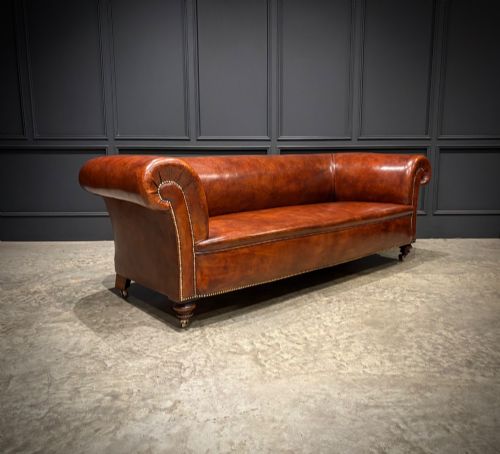


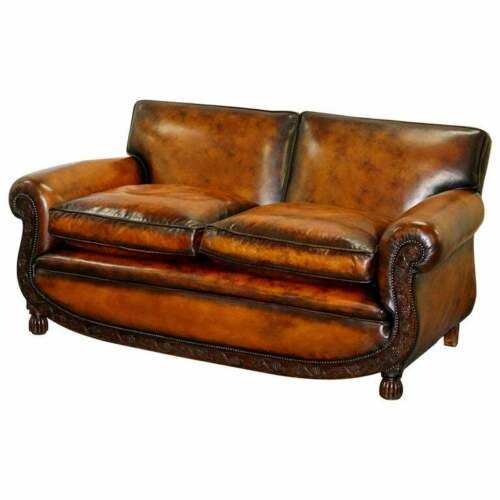
Brown Leather Club Sofa
A brown leather club sofa offers deep comfort and rich patination, grounding a room with enduring British character.
Brown Leather Club Sofa
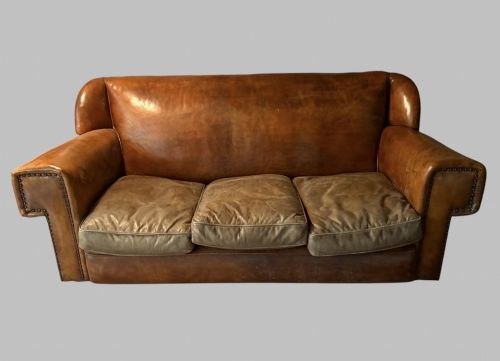
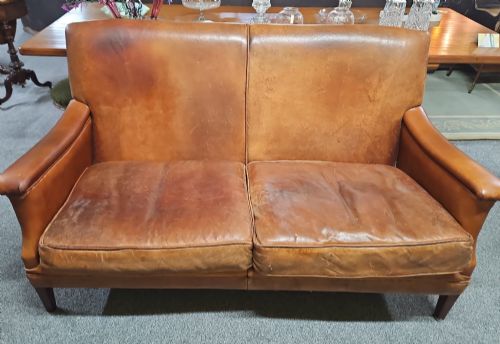
A brown leather club sofa combines sturdy timber frames with generous upholstery, designed for long hours of seating in studies, libraries and drawing rooms. When searching for a brown leather club sofa, buyers encounter substantial pieces built to endure decades of daily use.
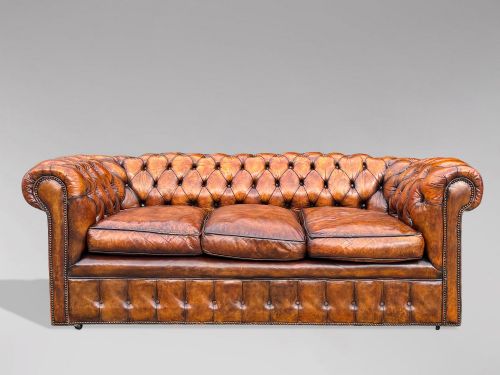
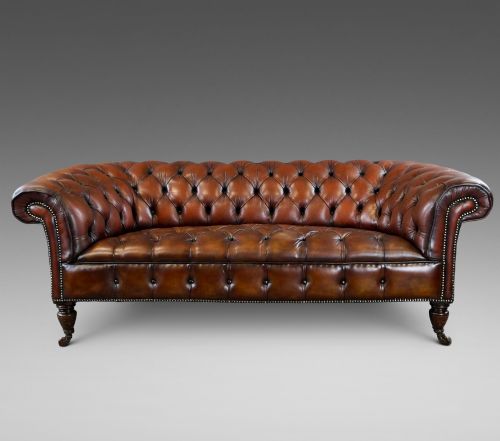
The selections span Victorian, Edwardian and Art Deco periods, encompassing traditional Chesterfields, button-backed corner units and drop-arm chaise lounges. Victorian examples frequently feature deep tufting and hand-carved details, while later pieces adopt streamlined Art Deco silhouettes or warm walnut and mahogany surrounds.
Originating primarily from 19th-century and early 20th-century English workshops, these sofas rely on traditional forms like the Chesterfield and the gentleman's club suite. Buyers meet everything from un-restored original patinated hides to fully restored hand-dyed whiskey leather finishes.
How they were made
Makers constructed these frames from hardwoods such as mahogany, walnut and general timber, providing a rigid skeletal foundation for heavy upholstery. Traditional stuffing materials included horsehair to maintain firm yet resilient padding within the seats and backs.
Upholsterers secured the leather hides using brass tacks and deep buttoning techniques, creating the characteristic tufted surface pattern. Wood elements often featured hand-carved floral motifs or smooth polished finishes that complemented the heavy hide upholstery.
Brown Leather Club Sofa Retail Price Guide 2026
Typical asking prices for brown leather club sofa among the pieces listed under this phrase on Sellingantiques today, from the lower quarter to the upper quarter. They describe what is for sale here now, not the wider market.
Snooker hall pub benches lurk among the refined drawing room Chesterfields, ready for a very different kind of Victorian relaxation.
What varies in quality
The depth of patination and the condition of the hide separate utilitarian seating from exceptional examples, as natural leather ages with distinct tonal variations. Hand-dyed finishes require careful handling to preserve the supple texture of the material over generations.
Frame construction integrity dictates longevity, with hand-carved solid hardwood details demonstrating superior craftsmanship compared to simpler timber builds. The presence of original horsehair fill and traditional buttoning depth further distinguishes finer workshop output.
Maple and Co
The Brown Leather Club Sofa Glossary
- Chesterfield
- A large upholstered sofa with arms and back of the same height, traditionally featuring deep button tufting. This form remains a staple of traditional English seating.
- Button-backed
- An upholstery style where buttons are pulled deep into the padding to create a diamond-shaped tufted pattern. It secures the internal stuffing while providing firm support.
- Horsehair fill
- Traditional stuffing material harvested from equine manes and tails, used to pack antique upholstery firmly. It offers resilient bounce and breathability.
- Patination
- The natural sheen and surface alteration developed on leather and wood through age and handling. Collectors prize a warm, uniform patination as evidence of genuine history.
- Drop-arm
- A sofa design featuring a hinged armrest that lowers to horizontal position. This mechanism allows the piece to function as a daybed or chaise lounge.
Brown Leather Club Sofa: Frequently Asked Questions
What is a brown leather club sofa?
A brown leather club sofa is a heavy, upholstered seating piece originating largely from Victorian and Edwardian periods, designed for studies and social rooms. These sofas utilise sturdy hardwood frames and thick leather hides to deliver lasting comfort.
They frequently appear as traditional Chesterfields or deep-buttoned settees, incorporating materials like mahogany, brass and horsehair fill. Their robust construction and rich patination make them central pieces in traditional English interiors.
How do I identify a Victorian sofa?
Victorian sofas are identified by their heavy timber frames, deep button tufting, and often hand-carved floral details in woods like mahogany. They typically feature robust proportions and traditional forms such as the Chesterfield or gentleman's club suite.
Earlier examples from this era rely on un-restored or hand-dyed leathers with visible grain and brass tack detailing. The combination of dense horsehair padding and sturdy hardwood defines the period's output.
How do I care for antique leather?
Antique leather requires gentle conditioning to maintain the suppleness of the hide and prevent drying or cracking over time. Keeping the surface clean from dust preserves the natural patination built up across decades.
Avoid placing these sofas near direct heat sources or strong sunlight, which can alter the hand-dyed whiskey or brown tones. Regular, careful maintenance protects both the leather and the underlying horsehair fill.
What styles are available?
The available styles span Victorian, Edwardian, Art Deco and Mid-Century designs, reflecting changing tastes from the nineteenth century onward. Traditional English Chesterfields sit alongside streamlined Art Deco suites and walnut-framed arrangements.
Buyers encounter variations including serpentine fronts, barrel backs, and moustache back gentleman's club configurations. Each style brings distinct woodwork and silhouette characteristics to the seating.