



Brown Hound Art
Brown hound art captures the enduring spirit of the hunt through centuries of canine portraiture and sporting scenes.
Brown Hound Art
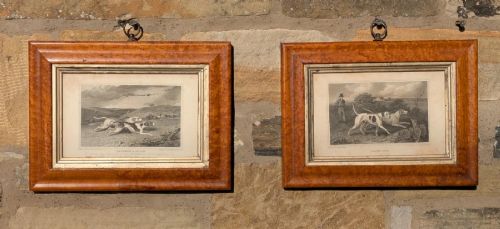
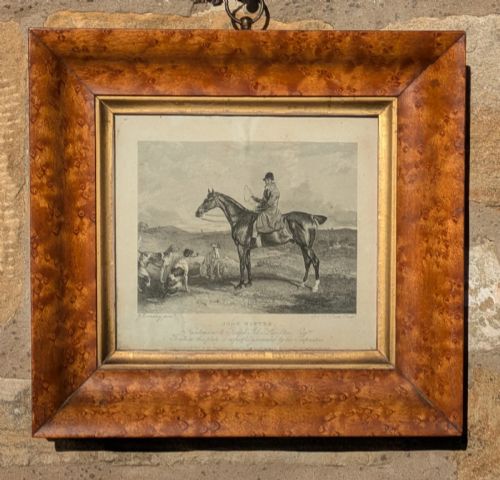
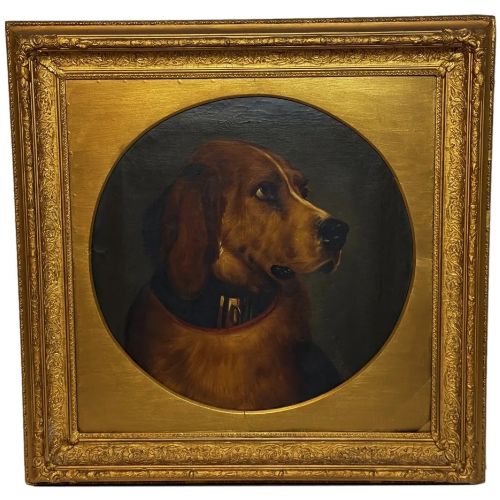
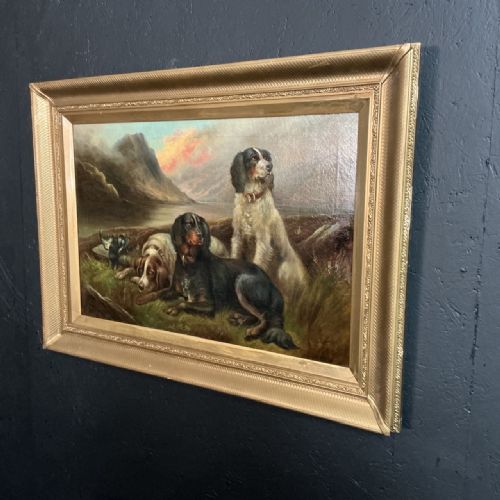
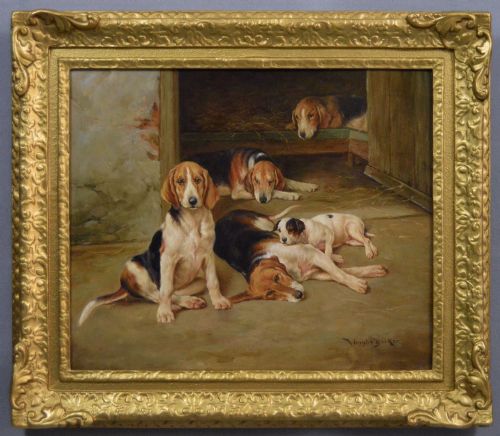
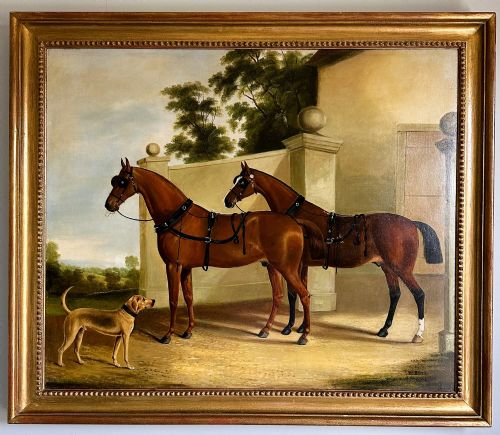
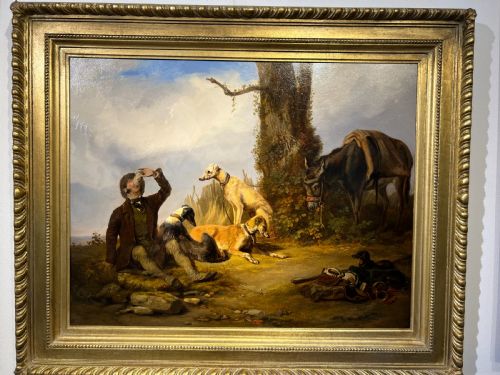
When you search for brown hound art, you encounter a specialised selection of canine portraiture and sporting scenes spanning the Georgian era through to the mid-twentieth century. The selection leans heavily into nineteenth-century oil paintings on canvas and panel, capturing hunting dogs, retrievers, and bloodhounds in various field settings.
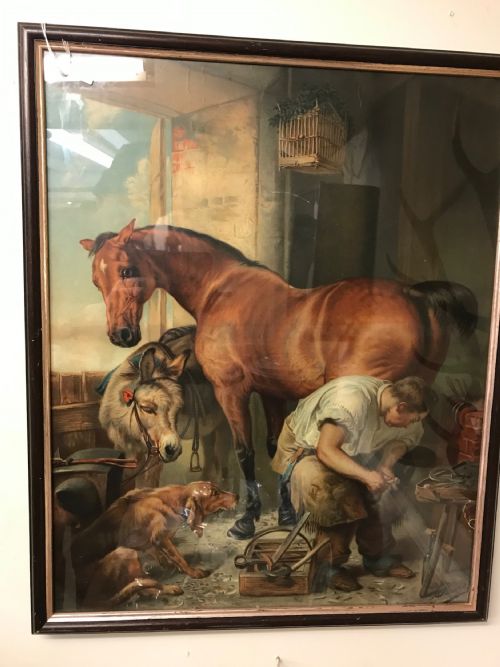
Most pieces on this page originate from British traditions, reflecting a long cultural fascination with sporting dogs and rural life. You will find framed oil paintings, watercolours, and occasional novelty pieces from the art deco period that maintain the canine theme.
Subjects range from individual character studies of named hounds to large narrative compositions of hunts in winter snow or tavern interiors. The variety demonstrates how deeply embedded the hunting dog was in visual culture over multiple centuries.
Materials and Construction
Painters relied primarily on oil paint applied to stretched canvas, wooden panels, or prepared paper to achieve depth and texture in animal coats. Brushwork varies from tight, realistic rendering of fur to looser, more atmospheric handling in later sporting watercolours.
Frames play a substantial role, with period giltwood mouldings frequently housing the oil paintings and watercolours. Alternative materials appear in smaller decorative objects, such as celluloid used for thirties novelty brooches and figures.
Brown Hound Art Retail Price Guide 2026
Typical asking prices for brown hound art among the pieces listed under this phrase on Sellingantiques today, from the lower quarter to the upper quarter. They describe what is for sale here now, not the wider market.
Periods represented span from eighteenth-century Georgian works through Victorian realism up to nineteen-sixties mid-century pieces.
Assessing Quality
The anatomical accuracy and expressive capability of the animal depiction separate standard decorative works from superior artistic achievements. Master painters convey the distinct weight, bone structure, and intelligent gaze of a hound far beyond mere photographic reproduction.
Provenance and attribution elevate certain pieces, particularly those linked directly to established animal artists or significant sporting painters of the nineteenth century. Condition of the underlying canvas and preservation of the original paint layer also influence the standing of any given work.
Sir Edwin Henry Landseer·Samuel Raven·Fannie Moody·Henri Schouten·Thomas Blinks·Philip Eustace Stretton·Henry Frederick Lucas-Lucas·Edward B Herberte
The Brown Hound Art Glossary
- Oil on Canvas
- Pigment mixed with drying oil applied to a woven fabric support stretched over a wooden frame. This medium allowed artists to build rich, layered textures particularly suited to depicting animal fur.
- Watercolour
- A paint consisting of colour suspended in a water-soluble binder, typically utilised on paper for lighter, more immediate sketches and finished sporting scenes.
- Giltwood
- Wood carved and treated with a thin layer of gold leaf or metallic gilt, commonly used for traditional picture frames housing nineteenth-century paintings.
- Sporting Art
- Genre of fine art depicting rural pursuits such as hunting, shooting, and the animals associated with them. It reached a peak of popularity during the Georgian and Victorian periods.
- Provenance
- The documented history of ownership of an antique object, which helps establish authenticity and historical context.
Brown Hound Art: Frequently Asked Questions
What periods do these pieces cover?
The selection spans from the Georgian era through the Victorian period and into the mid-twentieth century.
Most works cluster in the nineteenth century, reflecting the height of British sporting art production.
Are these works original paintings?
The listings include original oil paintings on canvas or wood, original watercolours, and occasional vintage prints after established masters.
Medium details appear in each specific listing title.
How should I hang heavy oil paintings?
Ensure your wall fixings are secured directly into wall studs or utilise appropriate heavy-duty cavity anchors.
Consider the weight of original giltwood frames when selecting hardware.
How do I care for antique watercolours?
Keep works on paper away from direct sunlight to prevent fading of the delicate pigments.
Display them in rooms with stable humidity levels to protect the paper and backing.