



Brown Glass Eye
A brown glass eye brings character and life to carved animals, earthenware figures, and desk accessories.
Brown Glass Eye
A brown glass eye brings immediate life to carved animals, ceramic figures, and utilitarian desk objects across several periods. When you search for a brown glass eye, you encounter figural sculptures and functional items that rely on inlaid or set optics to achieve realism.
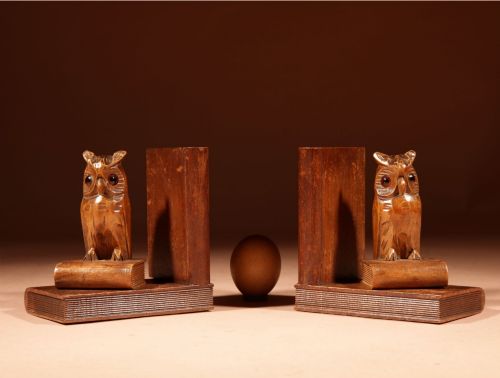
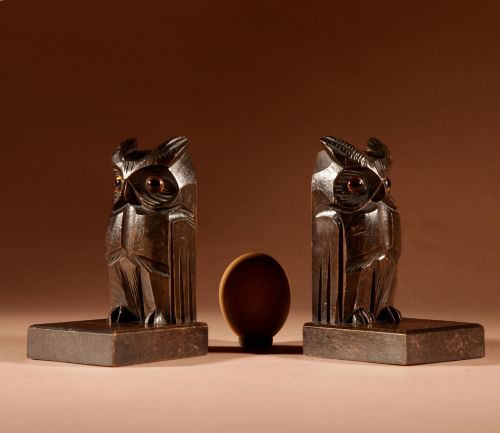
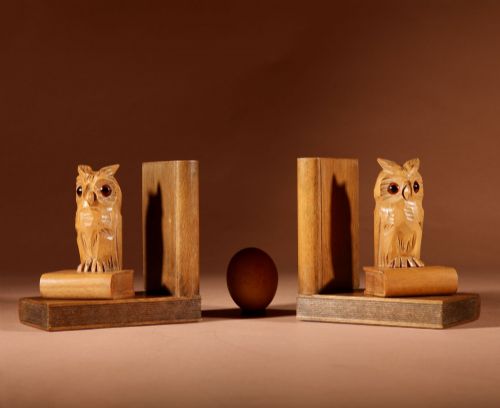
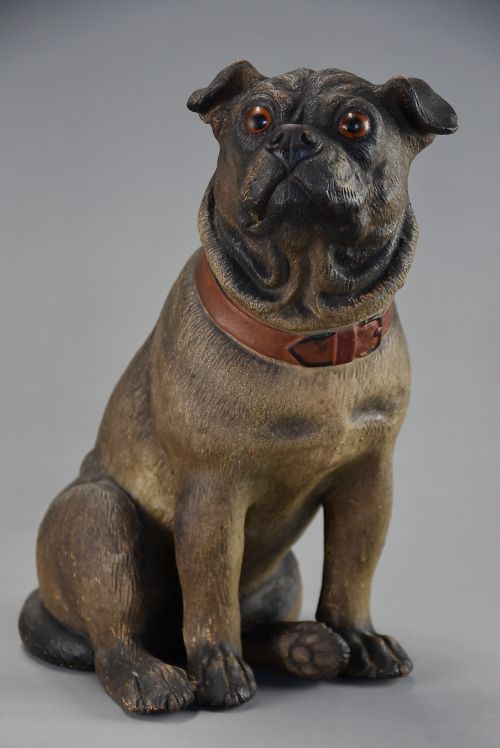
The pieces listed here lean heavily toward Victorian and Edwardian novelty items, particularly Black Forest carvings and Staffordshire ceramics. You find seated pugs, carved owls, and spaniel dogs designed to hold books or ink.
Beyond desk accessories, the selection includes barometers and personal items like lorgnettes that incorporate glass elements. These domestic objects span from the Regency era through to the early twentieth century.
How they were made
Makers shaped these items from natural materials such as linden wood, mahogany, terracotta, and earthenware, often applying a glaze or polish to the surface. Carvers worked with timber in the Black Forest tradition, while potteries utilised moulded clay for Staffordshire figures.
The glass eyes themselves were set carefully into sockets drilled or moulded into wood, bronze, or ceramic bodies. Artisans combined cast bronze, brass fittings, and tortoiseshell-style cellulose to complete the functional aspects of inkwells and lorgnettes.
Brown Glass Eye Retail Price Guide 2026
Typical asking prices for brown glass eye among the pieces listed under this phrase on Sellingantiques today, from the lower quarter to the upper quarter. They describe what is for sale here now, not the wider market.
A bronze monkey peers intently from an inkwell, reminding us that Victorian desk accessories had a distinct sense of humour.
What varies in quality
Quality rests in the precision of the carving or modelling and the lifelike placement of the glass inserts. A well-modelled terracotta pug or a finely detailed owl carving displays anatomical conviction rather than stiff symmetry.
The integration of the eye into the surrounding material marks the difference between standard production and superior craftsmanship. Secure settings with appropriate scale create an engaging expression, whereas careless placement disrupts the intended character of the piece.
The Brown Glass Eye Glossary
- Black Forest
- A style of wood carving originating in central Europe, noted for realistic animal figures and Black Forest furniture produced around the turn of the twentieth century. These carved pieces frequently incorporate glass eyes to enhance the realism of bears, dogs, and owls.
- Staffordshire
- Pottery manufactured in the Staffordshire region of England, famous for earthenware figures like spaniels and lions. Makers often finished these ceramic mantel and desk ornaments with painted details and inserted glass eyes.
- Terracotta
- Fired unglazed clay of a brownish-red colour, used extensively for sculptural figures and decorative objects. Artists modelled terracotta before firing, capturing fine textures in pieces such as seated pug dogs.
- Lorgnettes
- Spectacles held with a handle rather than fitted over the ears, popular as fashion accessories in the nineteenth and early twentieth centuries. They often folded into protective leather cases complete with neck lanyards.
- Inkwell
- A small jar or container for holding ink, often incorporated into desk tidies alongside pen trays and figural ornaments. Desk accessories of this type frequently featured novelty animal designs with inset glass eyes.
Brown Glass Eye: Frequently Asked Questions
What are brown glass eyes used for?
These glass components serve as realistic optics for carved wooden animals, ceramic dogs, and bronze desk novelties. They provide depth and expression to decorative sculptures across the Victorian and Edwardian periods.
Makers employed them in everything from Staffordshire lions to Black Forest owl bookends and monkey inkwells. Their presence transforms a static decorative object into a characterful piece with immediate visual engagement.
How do I date items with glass eyes?
Dating relies on the surrounding material, style, and manufacturing technique rather than the glass insert alone. Pieces range from Regency barometers to early twentieth-century lorgnettes and carved wooden novelties.
Examine the base materials, the style of the carving or pottery, and any hardware such as hinges or brass fittings. Victorian and Edwardian manufacturing methods leave distinct tool marks and construction details that establish the period.
Are these items functional?
Many pieces were created for practical daily use on nineteenth-century desks and dressing tables. Inkwells held writing fluid, lorgnettes aided vision, and barometers measured atmospheric pressure.
While you can still utilise sturdy bookends and desktop tidies, antique inkwells are generally kept for display rather than active writing. The glass eyes and delicate wooden mechanisms remain intact best when treated as decorative antiques.