




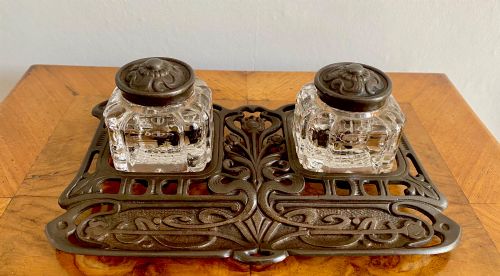


Brown Glass Bottle
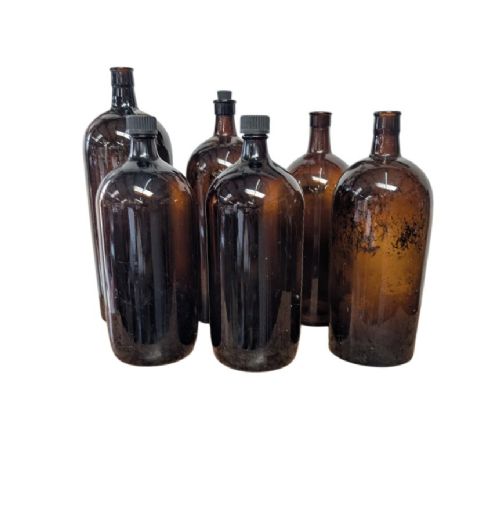
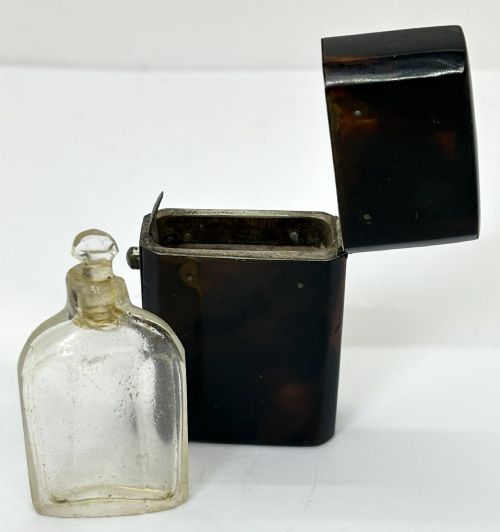
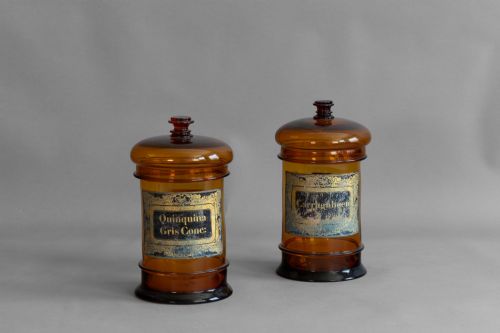
These brown glass bottle examples range from apothecary jars to saddle flasks, offering practical utility and period character for your interior.
Brown Glass Bottle
A brown glass bottle search brings together utilitarian vessels, fitted cases, and decorative containers spanning the eighteenth, nineteenth, and early twentieth centuries. You will most frequently encounter apothecary jars, spirit flasks, and decanters shaped by Victorian and Edwardian domestic or commercial needs.
The selection includes amber glass apothecary bottles from the nineteen-thirties, French jars from eighteen-seventy, and eighteenth-century liquid jars. Alongside plain utility glass, the category embraces fitted leather cases, silver-topped flasks, and nautical dioramas housed within glass boundaries.
Makers and owners adapted these vessels for travel, medicine, and barware use, resulting in diverse forms from simple Winchester bottles to elaborate campaign decanters and tantalus sets.
How they were made
Glass is the primary medium, appearing as hand-blown amber glass, cut glass, and standard dark utility vessels alongside occasional coloured variants. Production techniques range from early free-blown liquid jars to nineteenth-century moulded apothecary containers.
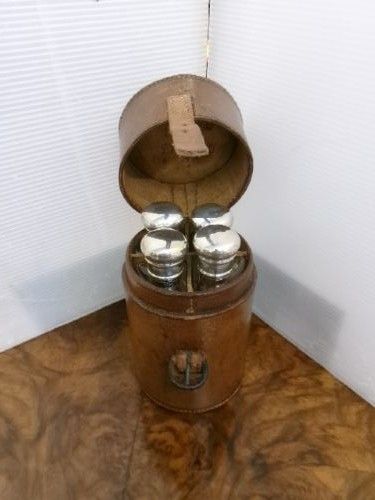
Complementary materials include leather for protective cases, brass mounts, and silver plate or sterling silver for bottle caps and mounts. Timber elements such as mahogany fitted boxes and wooden plinths support the glass components in travel sets and dioramas.
Brown Glass Bottle Retail Price Guide 2026
Typical asking prices for brown glass bottle among the pieces listed under this phrase on Sellingantiques today, from the lower quarter to the upper quarter. They describe what is for sale here now, not the wider market.
One intrepid mountaineer packed Walkers whisky bottles into a sturdy Victorian leather case for his alpine exploits.
What varies in quality
The standard of a brown glass bottle or associated set depends upon the integrity of its mounts, such as intact silver tops and sound leather cases. Original leather fittings, matching spirit bottles, and functional locks elevate pieces produced during the Victorian and Edwardian periods.
Craftsmanship in the glass itself, seen in early hand-blown bubbles and depth of colour, distinguishes basic utilitarian containers from superior apothecary jars and decanters. Completeness of original contents, stands, and boxes further determines the standing of each item.
The Brown Glass Bottle Glossary
- Apothecary jar
- A container utilised by chemists and pharmacists for storing medicinal substances, often produced in amber or dark glass to protect contents from light.
- Saddle flask
- A bottle designed to fit within a leather case for transport on horseback, commonly equipped with a secure metal cap.
- Tantalus
- A decorative frame holding decanters with a locking mechanism designed to prevent unauthorised access to the spirits inside.
- Diorama
- A three-dimensional scene enclosed within a protective space, occasionally constructed inside a glass bottle mounted on a wooden plinth.
- Campaign decanter
- A portable beverage bottle housed within a fitted wooden or leather case intended for travel during the eighteenth and nineteenth centuries.
Brown Glass Bottle: Frequently Asked Questions
What were brown glass bottles used for?
These vessels served various functions, primarily storing medicines, chemicals, and spirits safely. Their dark tint protected sensitive contents from light degradation.
They also functioned as travel gear in saddle flasks and campaign decanters, or as display items in maritime dioramas.
How do I date an antique glass bottle?
Dating relies on manufacturing marks, pontil marks from hand-blowing, and the context of any accompanying fitted leather cases or silver mounts. Eighteenth-century examples show different blowing techniques compared to nineteen-thirties Winchester bottles.
Associated materials and styles, such as Regency boxes or Art Nouveau stands, provide further chronological markers.
How should I clean antique glass?
Gentle washing with warm water and mild soap suits most glass items without damaging fragile surfaces or historic residue. Avoid abrasive scrubbing that can scratch the interior of hand-blown vessels.
Leather cases and silver tops require separate care appropriate to their respective materials.
Are these bottles safe for holding liquids?
While many vintage and antique bottles were made to contain liquids, historic glass and closures may degrade over time. It is wise to inspect the interior and seals before using them for consumption.
Many collectors prefer to display them dry or utilise them solely for decorative purposes.