



Brown Foldover Table
A brown foldover table is a versatile surface that transforms from a compact console into a card, tea or games table.
Brown Foldover Table
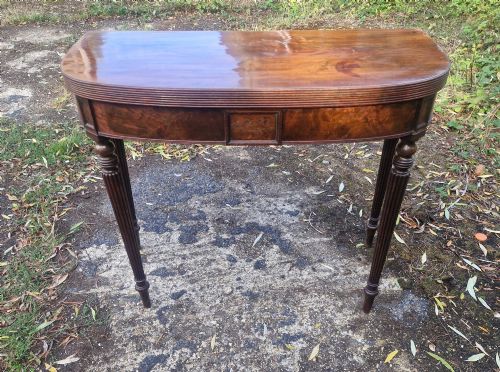
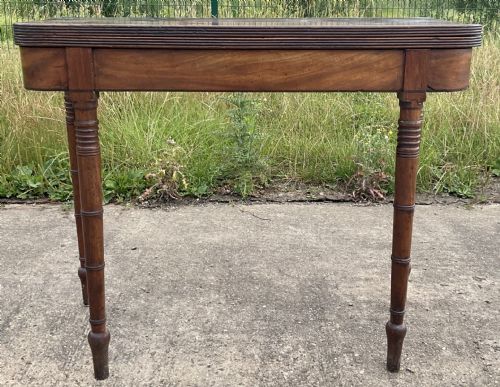
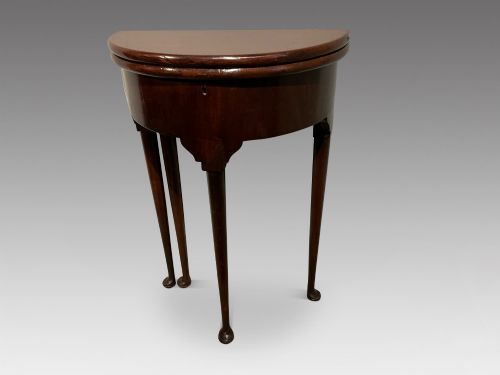
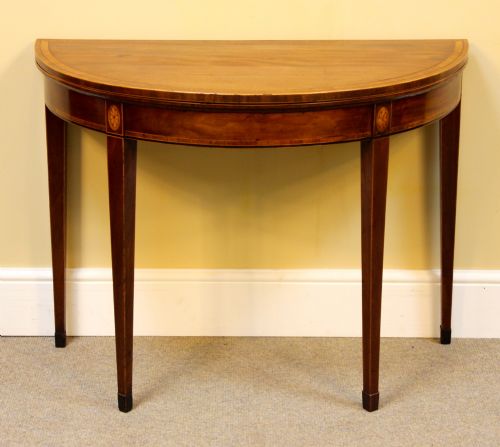
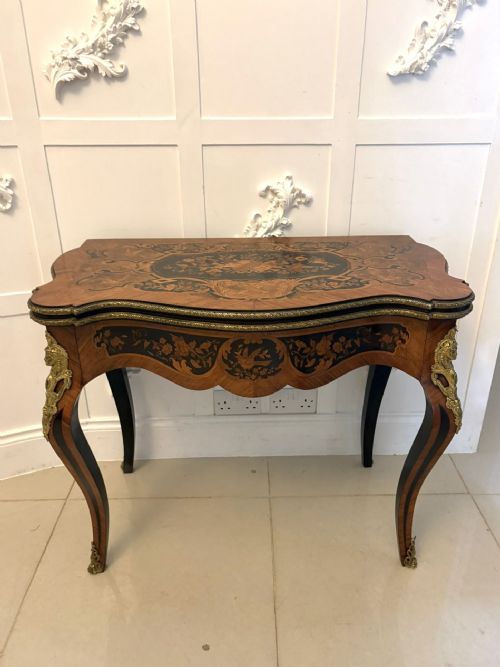
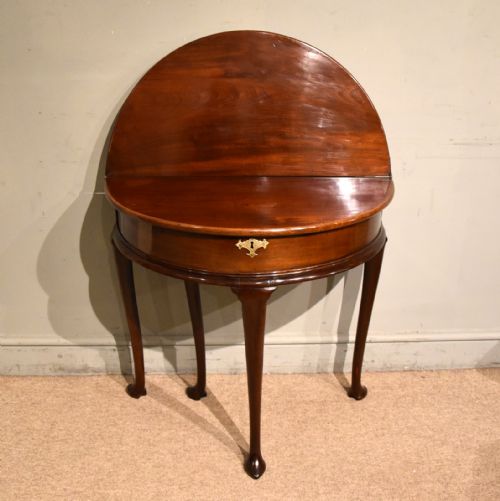
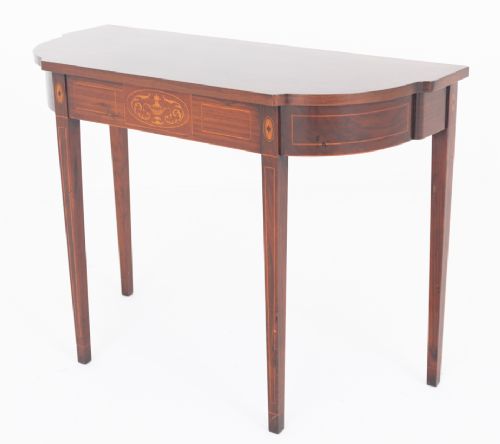
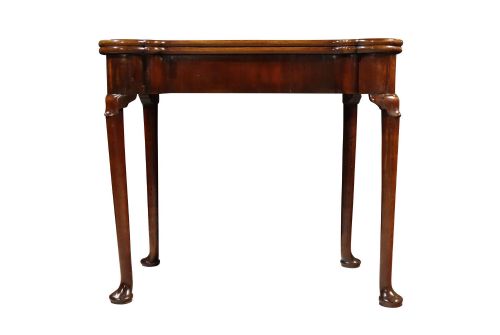
A brown foldover table serves multiple functions, appearing across periods from the eighteenth century to the Edwardian era in forms such as card tables, tea tables, and games tables. You meet these pieces most frequently in mahogany, walnut, and satinwood, constructed with demi-lune, D-shaped, or rectangular tops.
The evidence shows examples spanning Georgian, Regency, and Victorian styles, often featuring concertina actions or hinged leaves that reveal gaming wells and baize surfaces underneath.
Makers and designers referenced in the listings range from Giles Grendey to Edwards & Roberts, alongside distinct influences like Gillows and Sheraton Revival.
Materials and Construction
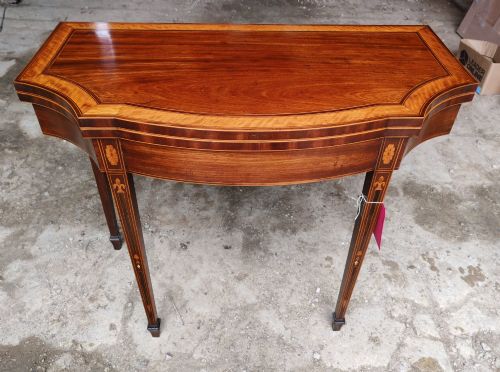
Cabinet makers utilised solid timbers and wood veneers including mahogany, walnut, burr walnut, rosewood, and kingwood, frequently accented with satinwood, boxwood, and brass mounts.
Inlay and marquetry feature prominently across eighteenth and nineteenth-century pieces, alongside ormolu mounts on French-influenced console tables.
Complex mechanical designs such as concertina actions allow the frame to expand safely when the top leaf unfolds.
Listings feature mahogany, walnut, satinwood, and rosewood across Georgian, Regency, and Victorian periods.
Judging Quality and Execution
Quality rests on the selection of timber veneers and the crispness of the inlay work, where figuring in the mahogany or burr walnut remains strong and consistent across the folded surfaces.
The engineering of the hinge mechanism and concertina action dictates how smoothly the table transitions between its closed console state and its fully open playing position.
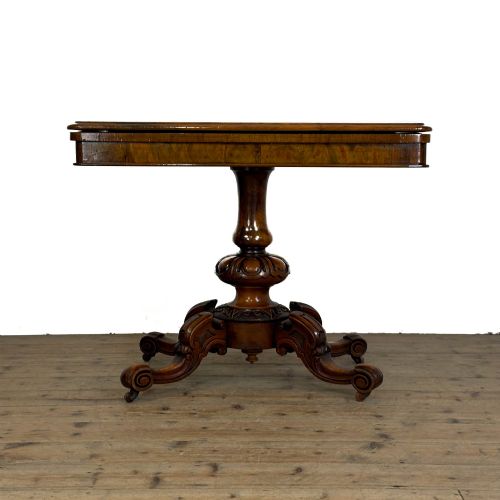
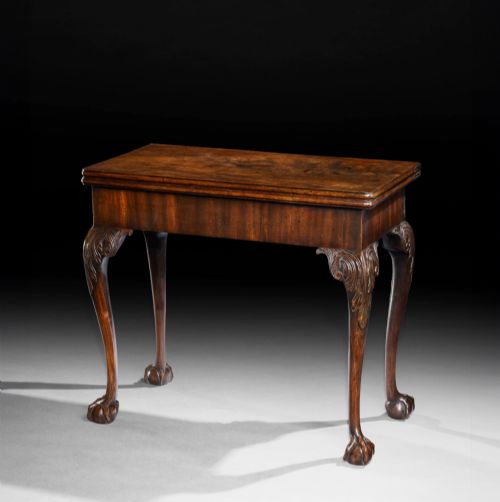
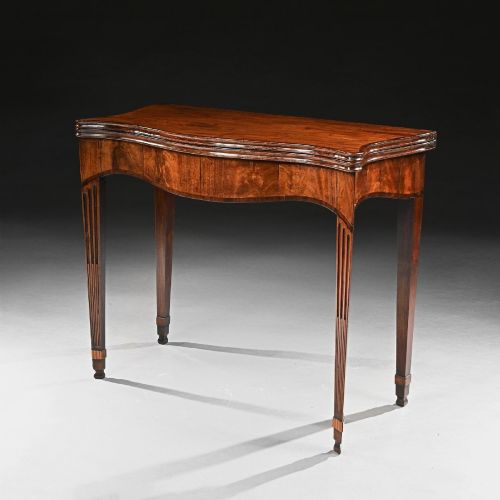
Proportion and leg execution, whether straight tapered legs, D-shaped profiles, or elaborately carved supports, separate standard cabinet work from exceptional examples.
Giles Grendey·Edwards and Roberts·Gillows
The Brown Foldover Table Glossary
- Concertina action
- An expanding frame mechanism that allows a card table to open evenly on all four legs, providing proper support for the unfolded top.
- Demi-lune
- A half-moon shape characteristic of side and card tables designed to sit flush against a wall when closed.
- Marquetry
- Decorative patterns formed by fitting together contrasting veneers of wood, sometimes incorporating boxwood and satinwood.
- Gaming well
- A recessed area beneath the folding top of a card table, frequently lined with baize or leather for playing games.
- Patination
- The surface sheen and deep colour developed by aged timber through decades of handling, exposure, and polishing.
Brown Foldover Table: Frequently Asked Questions
What is a brown foldover table used for?
These tables function primarily as space-saving console or side tables against a wall when closed. Opening the hinged leaf transforms the piece into a stable surface for card games, tea, or writing.
Many examples include internal wells for storing playing cards and counters, making them practical social furniture in period drawing rooms.
How do I tell a Georgian table from a Victorian one?
Georgian tables generally display restrained classical proportions, rectilinear or demi-lune shapes, and subtle mahogany grain or restrained inlay. Victorian versions often introduce heavier proportions, burr walnut veneers, and elaborate turning or carving.
Looking at the construction of the interior frame and the style of the legs usually clarifies the period of manufacture.
How do concertina action tables work?
A concertina action expands the wooden frame of the table outward as the top leaf unfolds, providing structural support directly beneath the corners. This mechanical design distributes weight evenly across all four legs.
Simpler pivot or swing-leg designs rely on a single rear leg pulling out to support the leaf.
Where should I place a foldover table at home?
These pieces suit entrance halls, living rooms, or dining areas where floor space varies. Placed flat against a wall as a console, they occupy minimal depth while offering a display surface for lamps or objects.
Opening the table creates an immediate focal point for games nights or occasional dining.