

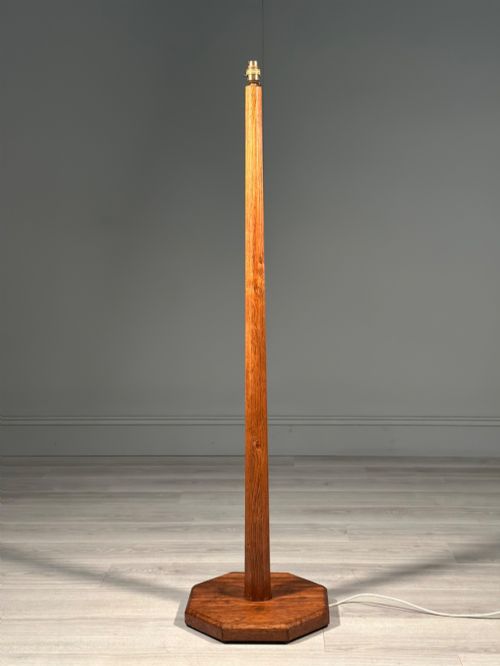
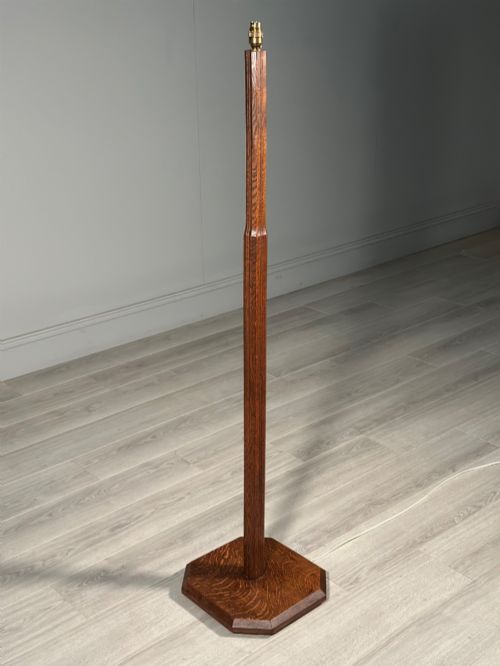
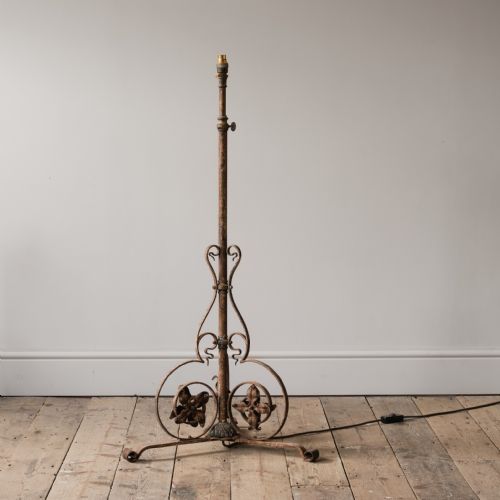
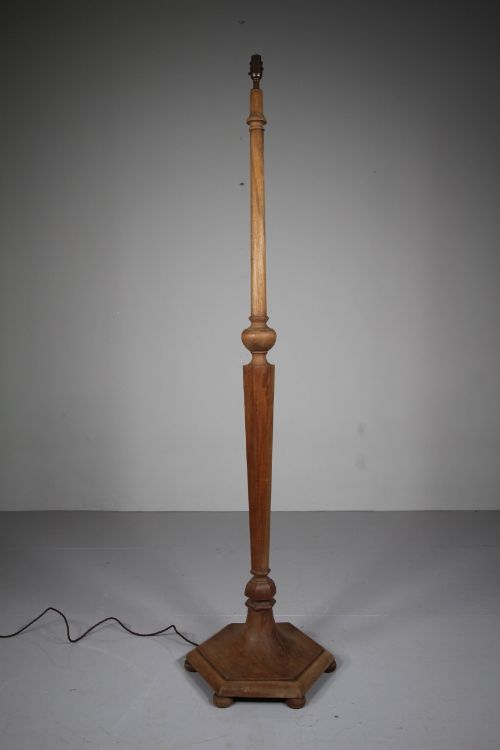



Brown Floor Light
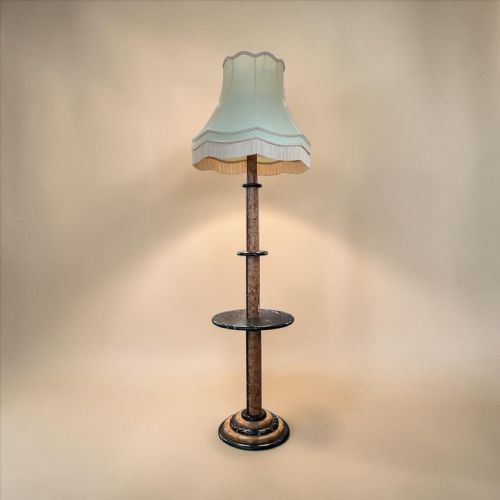
A brown floor light brings architectural presence and focused illumination to a room, ranging from Arts and Crafts oak to sleek Art Deco designs.
Brown Floor Light
When searching for a brown floor light, buyers encounter standard lamps and floor lamps spanning the nineteenth century through the mid twentieth century. These pieces appear in vernacular woods, dark patinated metals, and warm toned finishes.
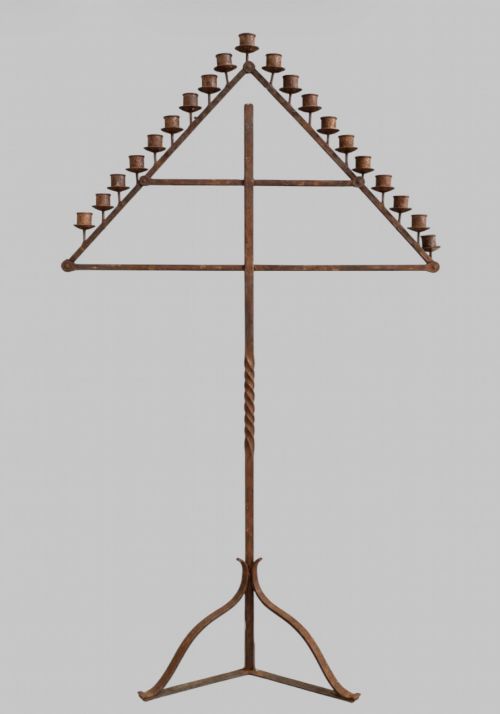
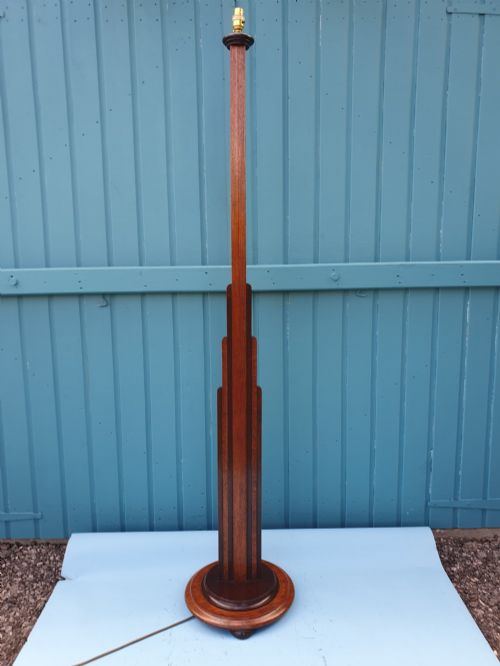
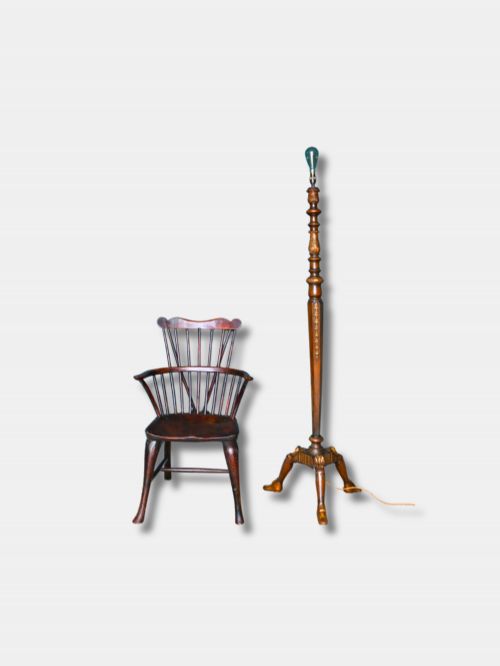
The selection here draws heavily from the early twentieth century and the nineteenth century, featuring styles such as Art Deco, Arts and Crafts, and Victorian revivals. Common formats include tripod bases, stepped columns, and adjustable blacksmith made iron standards.
Alongside traditional lamp standards, the category encompasses related lighting forms such as floor candelabras, lantern stands, and converted pole screens. These varied objects share a reliance on rich timber grains and dark metalwork.
Materials and construction
Makers utilised dense cabinet timbers like oak, walnut, mahogany, and rosewood, often turning, carving, or joining them to form sturdy shafts and weighted bases. Metal examples rely on forged iron, brass, gilt bronze, and cast iron, sometimes paired with marble or fabric elements.
Construction methods range from the hand-forged joinery of blacksmith made pieces to the refined cabinetmaking of the Cotswold School and commercial firms. Many lighting pieces incorporate structural adaptations from earlier items such as pole screens and candlesticks.
Brown Floor Light Retail Price Guide 2026
Typical asking prices for brown floor light among the pieces listed under this phrase on Sellingantiques today, from the lower quarter to the upper quarter. They describe what is for sale here now, not the wider market.
A carved wood Black Forest bear stands ready to hold a light, bringing woodland charm indoors.
Assessing quality and character
Quality in these standards rests on the integrity of the timber selection and the precision of the turning or forging. Superior examples display thoughtful proportions, balanced weight distribution, and honest construction without masking structural repairs.
Artistic ambition sets finer pieces apart, whether through crisp Art Deco geometric carving, careful Cotswold School joinery, or decorative metalwork details. The presence of original mounts, intact gilding, and period wiring adaptations further distinguishes the better examples.
Arthur Reynolds·Harry and Lou Epstein
The Brown Floor Light Glossary
- Standard lamp
- A tall freestanding floor lamp designed to illuminate a room from a standing position. These fixtures frequently feature weighted bases and tall timber or metal columns.
- Floor candelabrum
- A freestanding branched candelabra designed to hold multiple candles at floor or eye level. They often utilise heavy wrought iron or cast iron construction for stability.
- Pole screen
- A Victorian heating screen mounted on a vertical pole, allowing the shield to slide vertically to block fireplace heat. Many surviving examples are later converted to standard lamps.
- Tripod base
- A three-legged support structure used beneath lamp standards and tables to ensure stability on uneven floors. This configuration appears frequently on walnut and gilt pieces.
- Cotswold School
- An influential twentieth century woodworking movement rooted in the Arts and Crafts tradition. Works from this circle emphasise visible hand craftsmanship and simple oak construction.
Brown Floor Light: Frequently Asked Questions
How do I choose the right height for a floor lamp?
Consider the scale of your furniture and the height of your ceilings when selecting a standard lamp. Taller architectural columns work well in spacious rooms, while more compact designs suit modest corners.
Ensure the light source sits at a comfortable level relative to your seating to avoid glare. Adjustable mechanisms on metal standards also offer flexibility for directing illumination.
Are older floor lamps safe to use today?
Many vintage and antique lighting pieces require rewiring to meet modern electrical safety standards. Buyers should inspect the internal wiring and consult a qualified electrician before daily use.
Converted items, such as pole screen lamps, need careful examination to ensure the original antique fabric or wood remains secure around modern electrical fittings.
How do I date a wooden standard lamp?
Examine the timber species, turning style, and construction methods to establish a period. Oak and wrought iron often point to Arts and Crafts or Gothic Revival influences, while walnut and stepped profiles suggest Art Deco design.
Tool marks and assembly techniques provide additional clues, distinguishing hand-forged or hand-turned pieces from later twentieth century production.
Can I mix different wood tones in a room?
Dark woods like oak, walnut, and mahogany share warm undertones that anchor a traditional or eclectic interior. Pairing a walnut floor lamp with similar timber furniture creates visual continuity.
Variations in grain and patina add depth to a living space, preventing a room from looking too uniform or matched.