
Brown Equestrian Artwork
Brown equestrian artwork captures the enduring power and grace of horses through centuries of traditional painting, drawing and sporting art.
Brown Equestrian Artwork
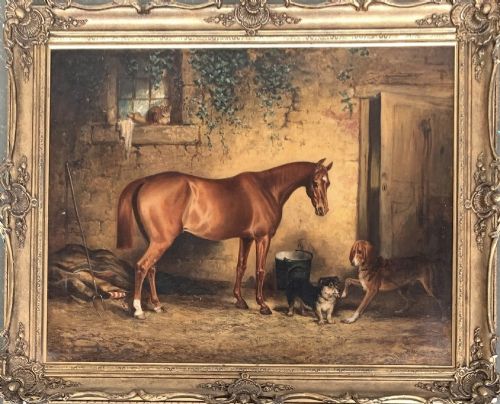
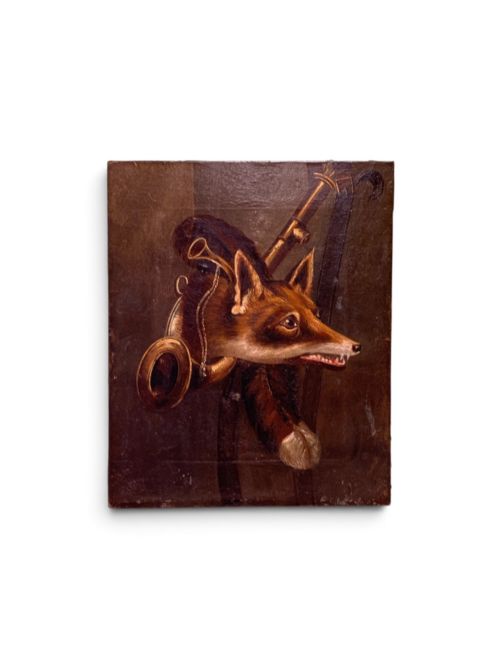
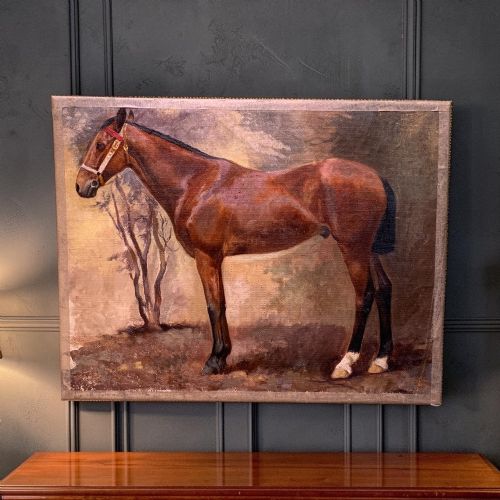
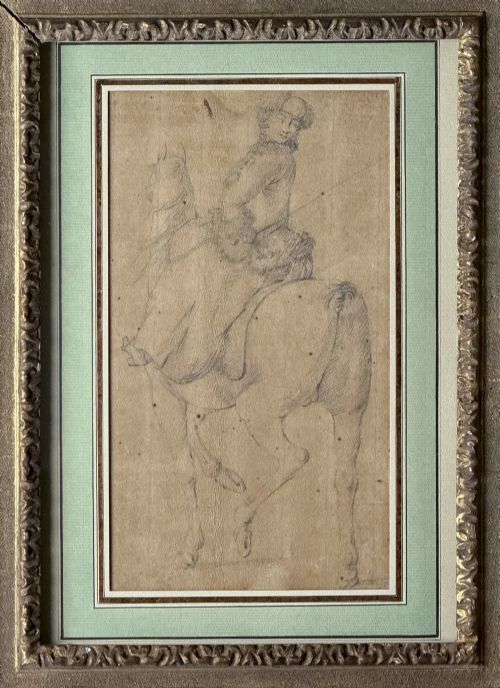
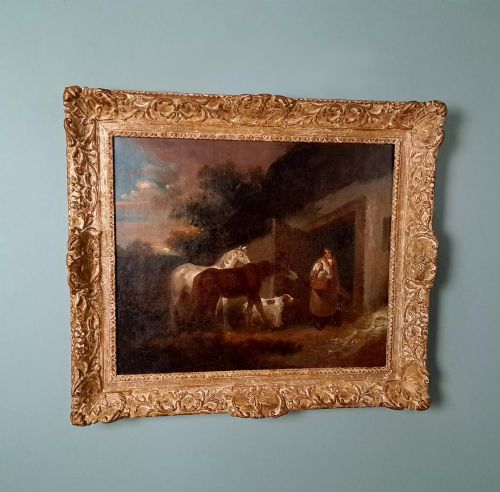
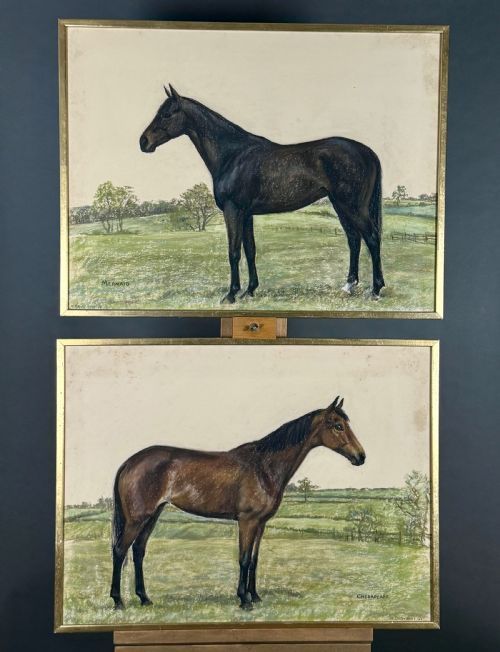
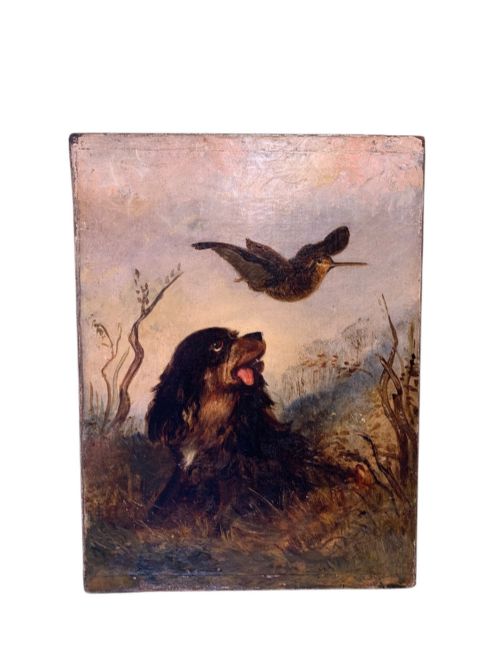
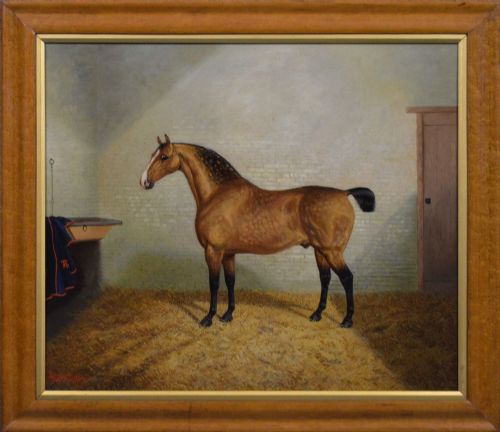
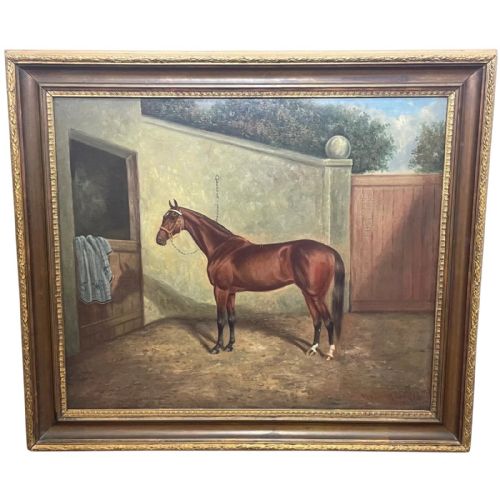
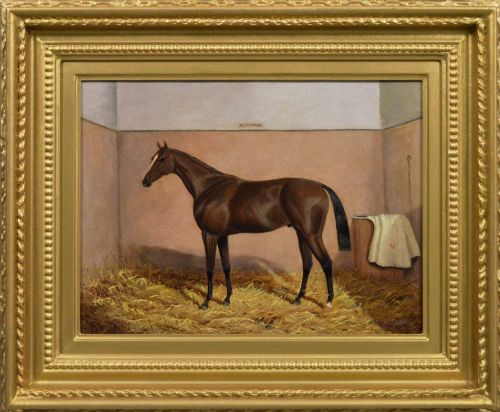
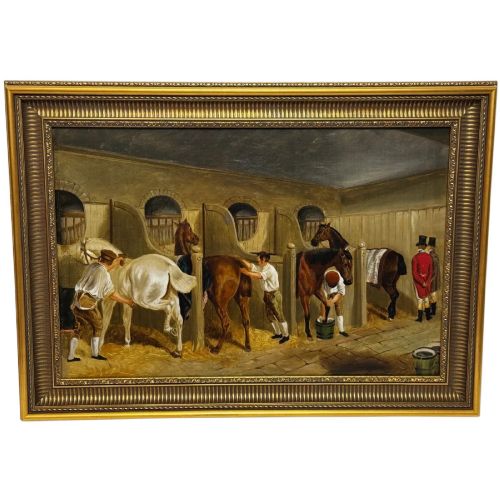
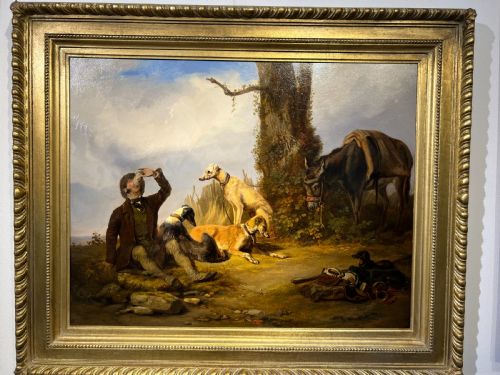
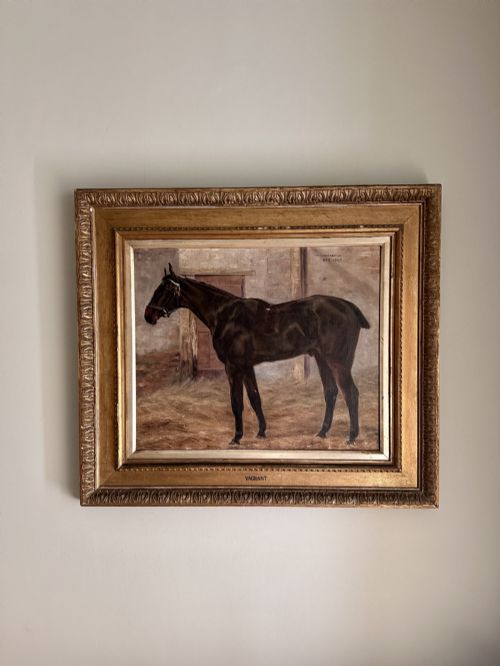
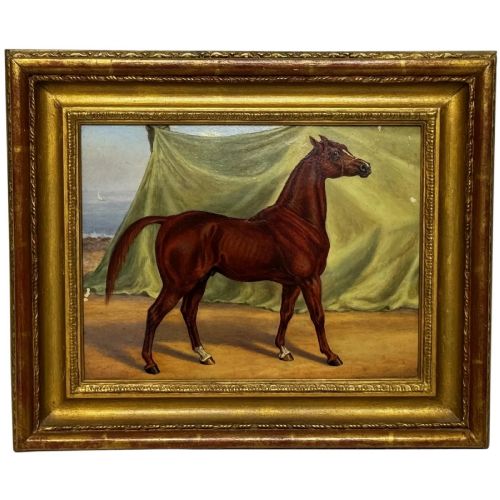
Brown equestrian artwork covers oil paintings, watercolours, pastels and drawings dedicated to horses, racing and rural sporting life. You will encounter nineteenth-century oil portraits of hunters and racehorses alongside early twentieth-century paddock scenes and mid-century pastels.
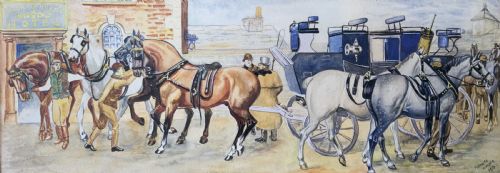
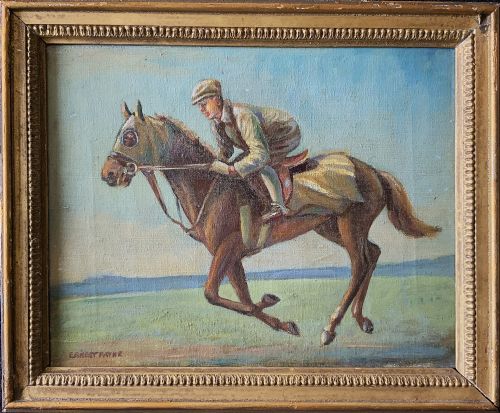
The dominant forms on this page include detailed equine portraits in oil, framed watercolour studies of coaching scenes, and lively chalk or gouache racing sketches. These pieces span Georgian, Victorian, Edwardian and mid-century periods, reflecting the shifting tastes in British and European sporting art.
How They Were Made
Artists worked primarily in oil paint on canvas or panel, and on paper using watercolour, pastel, gouache or chalk. Canvases and drawings were frequently housed in period wooden frames, often incorporating gilt or walnut mouldings.
Techniques ranged from tightly rendered academic oil portraits showing individual horses in stables to looser pastel or chalk sketches capturing the motion of racehorses and working animals.
Several pieces preserve the exact names of nineteenth-century equine stars, ensuring legendary racehorses still gaze out from their original frames.
What Varies in Quality
Quality rests upon the artist's anatomical precision in rendering the horse, the expressiveness of the brushwork or handling of medium, and the preservation of the surface. Works by documented painters command attention for their confident handling of light and muscular definition.
Framing and provenance further distinguish the selection, as original period gilt or wooden frames and documented attribution to known sporting artists elevate the historical interest of a piece.
William Joseph Shayer Senior·Albert Clark·Frederick Albert Clark·Sir Edwin Henry Landseer·Fred Fitzpatrick·Ernest Payne·John Alfred Wheeler·John Frederick Herring Snr·Herman S Melville·John Ferneley Senior·Alfred Munnings·John Rattenbury Skeaping·Cecil Charles Windsor Aldin·Harry Freckleton·Raimond Louis Lecourt
The Brown Equestrian Artwork Glossary
- Sporting art
- Depictions of rural sports, particularly horse racing, hunting, shooting and canine subjects. This genre flourished in British art throughout the eighteenth and nineteenth centuries.
- Equine portrait
- A painting or drawing focused on an individual horse, often recording its name, owner or racing achievements. These works were commissioned by owners to document prized animals.
- Gouache
- An opaque water-based paint that dries to a matte finish, allowing artists to build flat areas of solid colour alongside watercolour washes.
- Pastel
- A dry drawing medium composed of powdered pigment and a binder, shaped into sticks. It permits rapid blending of earthy tones suited to rendering animal coats.
Brown Equestrian Artwork: Frequently Asked Questions
What is brown equestrian artwork?
It is a category of historical fine art centred on horses, utilising natural earth tones, rich umbers and warm browns. These pieces celebrate equine subjects through traditional painting and drawing mediums.
Subjects range from individual portraits of named racehorses and hunters to coaching scenes and dynamic racing moments captured by period artists.
How were these pieces displayed?
Historically, equestrian art was commissioned to decorate country houses, stables and estate reception rooms. Owners proudly displayed portraits of their winning racehorses or favourite hunters.
Today, they are typically framed in period wood or gilt mouldings and hung in studies, hallways or living spaces to bring a classic sporting aesthetic into modern interiors.
How do I date a piece?
Dating relies on stylistic markers, framing, artist signatures and biographical records. Georgian and Victorian works often feature formal compositions and traditional oil varnishes, while mid-century pieces display looser, modernist line work.
Examining the canvas preparation, paper type and framing materials also helps establish the era in which the artwork was created.
Who painted these works?
Many pieces are created by specialist nineteenth and twentieth-century animal painters and sporting artists. Some bear signatures or attributions to notable practitioners of equine portraiture.
Others stem from European schools or anonymous hands working within established regional traditions of animal painting.