


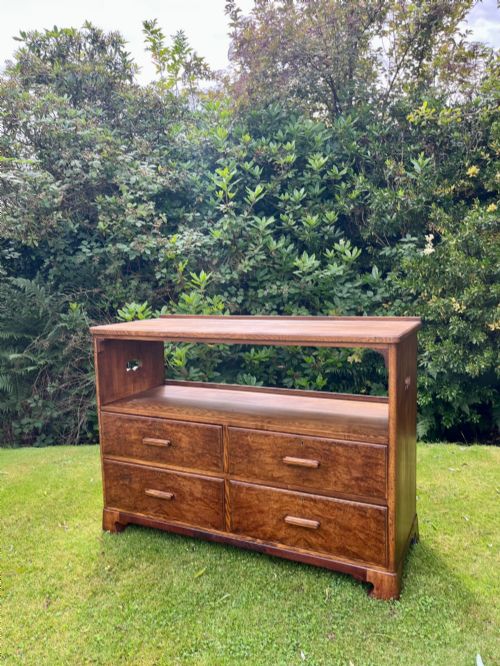
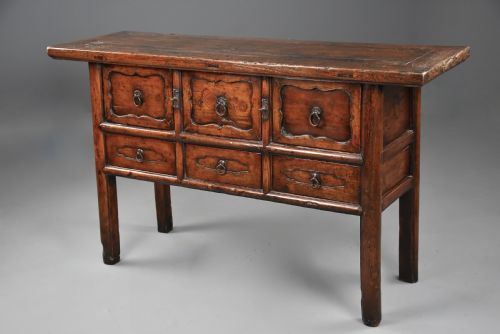

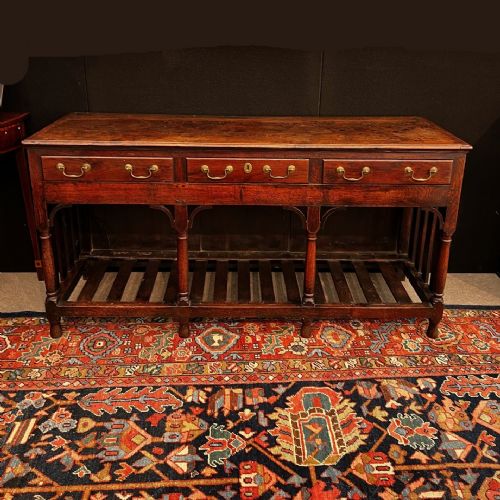


Brown Elm Sideboard
A brown elm sideboard offers a rich, figured timber surface that brings character and warmth to a room.
Brown Elm Sideboard
A brown elm sideboard encompasses various low storage and serving furniture pieces built from timber such as plain elm, burr elm, and Chinese elm. These items emerge from periods ranging from the eighteenth century through to the early twentieth century, spanning English vernacular workshops and Chinese provincial studios.
The most common examples on this page include dresser bases, side cabinets, and console tables that combine elm with secondary woods like oak. Makers from different traditions utilise the timber's characteristic grain pattern to create functional surfaces for dining rooms and hallways.
Buyers encounter regional variations, from Georgian English country pieces featuring brass hardware to nineteenth century Chinese provincial cabinets and side tables. Each form displays distinct construction methods appropriate to its origin, yet all share the resilient qualities of elm.
Materials and construction
Makers construct these pieces primarily from solid elm, burr elm, and locust wood varieties, frequently combining them with oak or iron fittings. Wood inlay and marquetry occasionally appear on refined commodes and dresser bases from the Georgian period.
Craftsmen shape the tough timber using traditional joinery, accommodating the wood's tendency to twist by selecting figured sections for prominent door panels and drawer fronts. Brass handles, escutcheons, and hinges provide functional contrast to the dark brown tones of the wood.
Brown Elm Sideboard Retail Price Guide 2026
Typical asking prices for brown elm sideboard among the pieces listed under this phrase on Sellingantiques today, from the lower quarter to the upper quarter. They describe what is for sale here now, not the wider market.
Listings feature periods spanning the eighteenth century, nineteenth century, and early twentieth century, alongside styles like Georgian, Chinese Provincial, and Arts and Crafts.
Assessing quality and finish
Quality rests upon the selection of timber, particularly where burr elm or intricate marquetry enhances the visual depth of the grain. Pieces displaying a fine, unforced patina reflect careful handling and historical polish accumulation over centuries.
Structural integrity and the survival of original hardware distinguish superior examples from heavily restored ones. The skill in matching drawer timbers and aligning panels dictates the long-term stability and visual harmony of the sideboard.
Whytock and Reid·Augustus Pugin
The Brown Elm Sideboard Glossary
- Burr Elm
- A growth deformity on the elm tree that produces highly figured, swirling wood grain used for decorative veneer. Cabinetmakers prize this timber for high-status commodes and drawer fronts.
- Dresser Base
- A low rectangular cabinet fitted with drawers and occasionally cupboards below a solid wooden top. These serve as practical storage units in dining spaces.
- Marquetry
- The art of applying small pieces of wood veneer to a structure to form decorative patterns and pictures. It appears on eighteenth and nineteenth-century case furniture.
- Provincial
- Describing furniture made in regional areas outside metropolitan centres, often featuring robust construction and local timbers. Chinese provincial pieces display distinct regional joinery traditions.
- Patina
- The surface sheen and colour developed by wood over years of use, exposure to light, and waxing. A deep patina indicates age and gentle maintenance.
Brown Elm Sideboard: Frequently Asked Questions
What is a brown elm sideboard?
A brown elm sideboard is a storage piece constructed primarily from elm wood, encompassing forms like dresser bases, side cabinets, and console tables. These items date from the eighteenth century to the early twentieth century.
They reflect diverse regional styles, including English vernacular pieces and Chinese provincial cabinets, united by the use of durable elm timber.
How do I care for elm furniture?
Elm responds well to regular dusting with a soft, dry cloth and occasional application of appropriate beeswax to nourish the wood. Avoid placing the furniture near direct heat sources or strong sunlight.
Maintaining stable room humidity prevents the solid timber from drying out or splitting over time.
How do I date a brown elm sideboard?
Dating relies on examining construction techniques, hardware, timber preparation, and the overall style of the piece, such as Georgian vernacular or Arts and Crafts. Secondary woods like oak also offer clues to the period and region of manufacture.
Comparing joinery methods helps distinguish eighteenth-century examples from later nineteenth-century interpretations.
Where were these sideboards used?
Historically, these pieces served practical storage and serving functions in dining rooms, kitchens, and hallways of homes across England, Europe, and China. They held tableware, linens, and provisions.
Today, they adapt easily to modern living spaces as decorative console tables or media storage cabinets.