




Brown Corner Whatnot
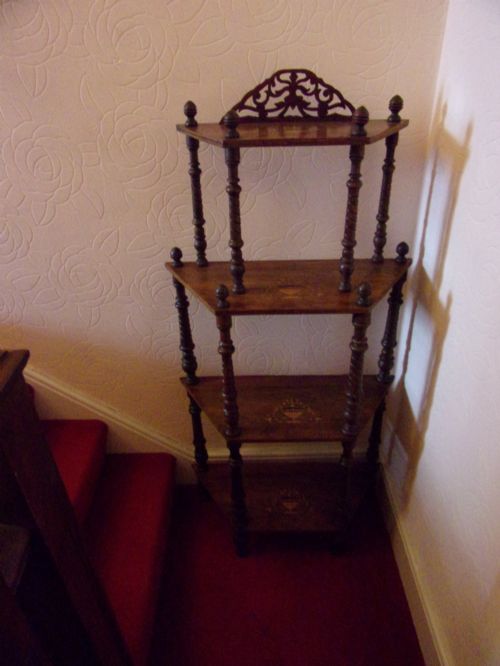
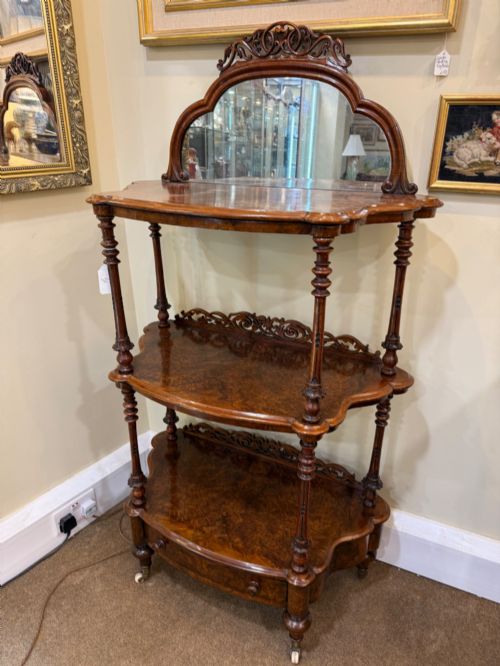
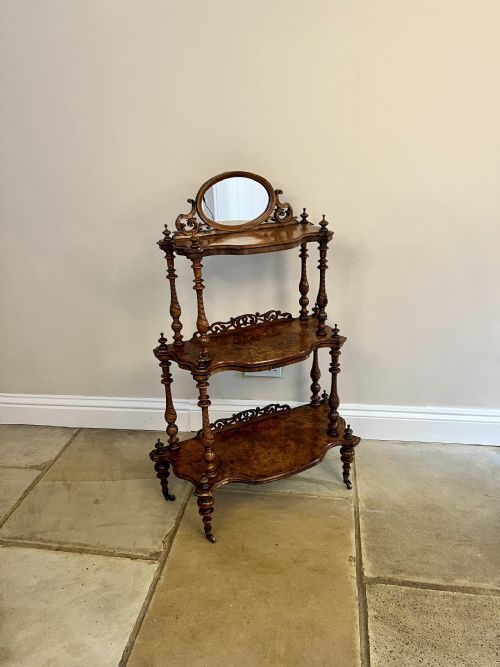
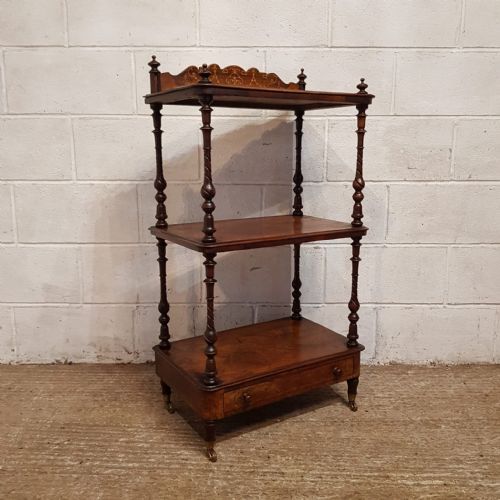
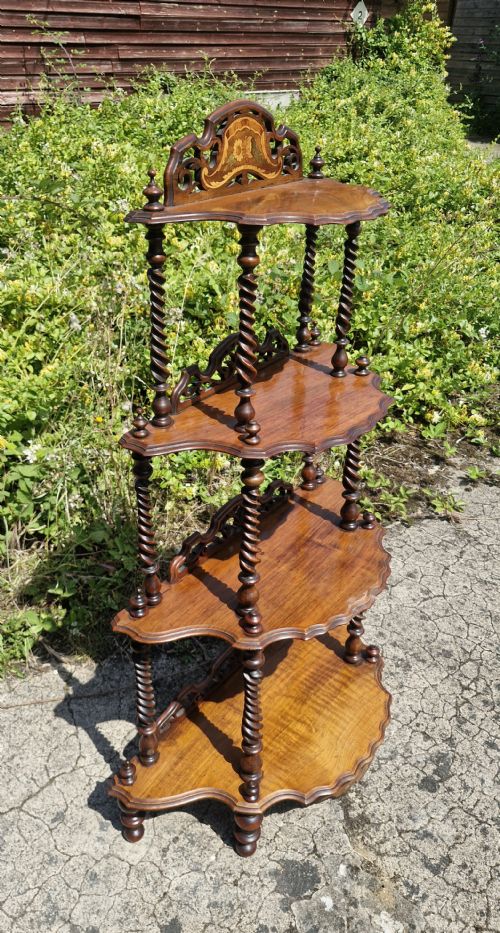
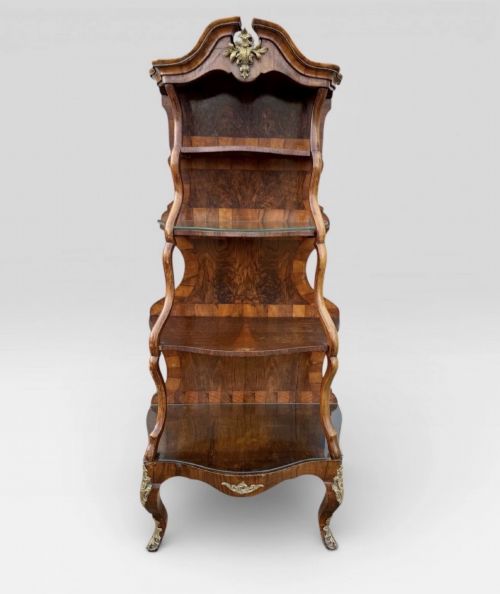
A brown corner whatnot makes use of awkward angles, offering tiered open shelving built in rich timber to hold books or display ceramics.
Brown Corner Whatnot
A brown corner whatnot provides multi-tiered shelving specifically designed to fit snugly into the intersection of two walls. This page centres on pieces that utilise dark woods like mahogany and walnut to solve storage challenges in tight domestic spaces.
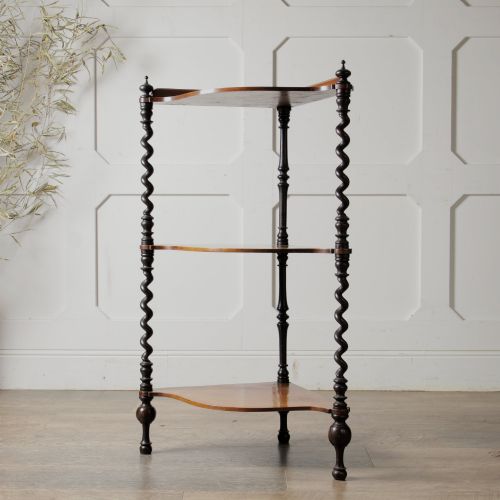
Most examples you encounter here date from the Victorian era, alongside earlier Regency and Georgian interpretations. These sturdy pieces offer multiple open tiers supported by turned columns, corner uprights, or barley twist supports.
The form functions primarily as an etagere or display stand for ornaments, books, and small personal possessions. Corner configurations allow the furniture to utilise vertical space without obstructing room circulation.
Materials and construction
Cabinet makers constructed these brown corner whatnot pieces using solid mahogany and walnut, frequently applying burr walnut veneers to display dramatic grain patterns. Workshops also incorporated boxwood inlay and marquetry to decorate the shelf edges and friezes.
Structural support comes from turned wooden columns or decorative barley twist uprights, occasionally accented with brass mounts or gilt metal details. Some variants include glass elements, ceramic components, or marble tops for added durability and surface contrast.
Brown Corner Whatnot Retail Price Guide 2026
Typical asking prices for brown corner whatnot among the pieces listed under this phrase on Sellingantiques today, from the lower quarter to the upper quarter. They describe what is for sale here now, not the wider market.
Some uprights twist like confectionary, giving your favourite teapot a very posh spiral staircase.
Judging the quality
Quality rests on the selection of timber veneer, particularly the symmetry and depth of burr walnut figures used on the shelves. Superior examples show crisp, precise boxwood inlay and well-defined turnings on the supporting columns rather than plain, unadorned members.
Structural integrity and proportion distinguish the finest items, where tiers remain level and secure without excessive wobble in the uprights. Finer pieces maintain original surface patination and precise joinery at the wall junction.
The Brown Corner Whatnot Glossary
- Whatnot
- A piece of furniture consisting of a set of open shelves for displaying ornaments or holding books. They typically range from three to six tiers.
- Etagere
- A piece of furniture with a set of open shelves for displaying small objects or ornaments. The term is often used interchangeably with a whatnot.
- Barley twist
- A type of turning resembling the spiral twist of a barley sugar stick, popular on vertical supports. This decorative technique appears frequently on nineteenth-century shelf uprights.
- Burr walnut
- Wood taken from a walnut tree growth where the grain has swirled and tumbled in a knotty pattern. Cabinet makers prize this material for its highly decorative figuring.
- Marquetry
- Decorative veneer applied to a structure in patterns using different woods, metals, or other materials. This technique adorns the surfaces of various inlaid stands.
Brown Corner Whatnot: Frequently Asked Questions
What is a corner whatnot?
A corner whatnot is a tiered open shelving unit designed specifically to tuck into room angles. It provides vertical display space while keeping floor footprints small.
These pieces typically feature three to six shelves held by wooden columns or turned supports. They suit small rooms and awkward corners where standard cabinets would prove too bulky.
How were these stands used originally?
Victorian and Georgian households used these tiered stands to display ceramics, silver, and treasured books. They served as prominent decorative furniture in drawing rooms and parlours.
Owners placed them in corners to draw the eye upward and utilise dead space. The open tiers ensured that collected objects remained visible from multiple angles.
How do I date a brown corner whatnot?
Dating relies on observing timber choices, joinery methods, and decorative motifs like inlay or turning styles. Georgian and Regency examples tend to feature linear mahogany construction, while Victorian pieces often display burr walnut and barley twist uprights.
Examining the shelf edges and the fixing methods underneath provides clues regarding manufacturing period. Edge inlays and serpentine fronts also help align pieces with specific nineteenth-century design revivals.
How do I style a whatnot at home?
Styling involves balancing weight across the tiers by placing heavier books on lower shelves and lighter ceramics above. Leaving some space empty prevents visual clutter and highlights the timber frame.
Position the stand in an unused corner to anchor the room and add vertical interest. Grouping objects by material or colour helps create a cohesive display.