





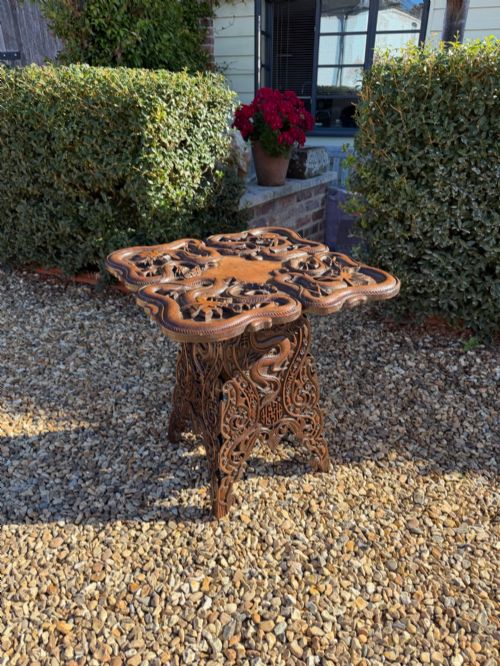

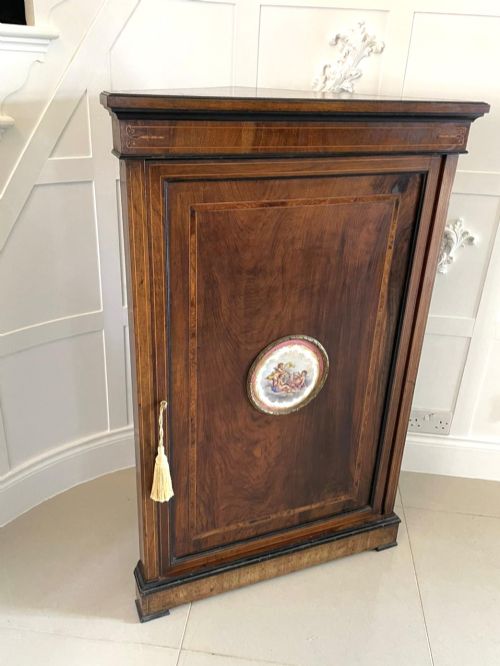
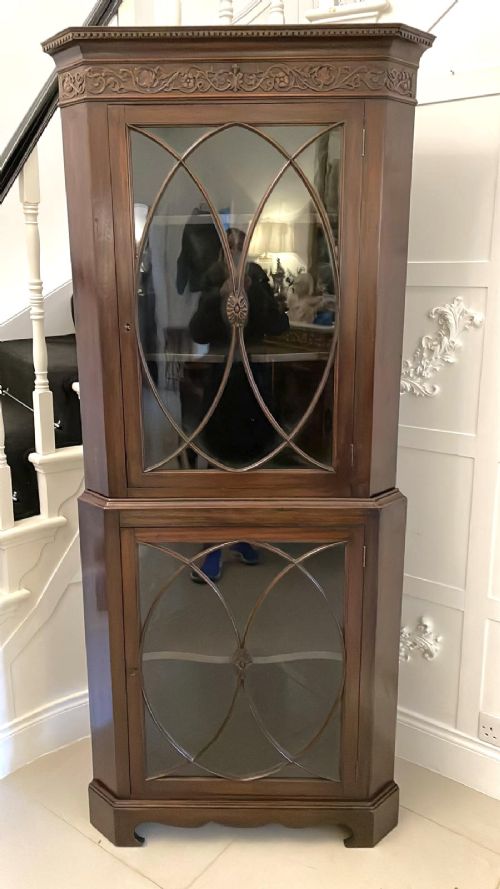
Brown Corner Display
A brown corner display solves room geometry by turning neglected angles into fitted storage for china or books.
Brown Corner Display
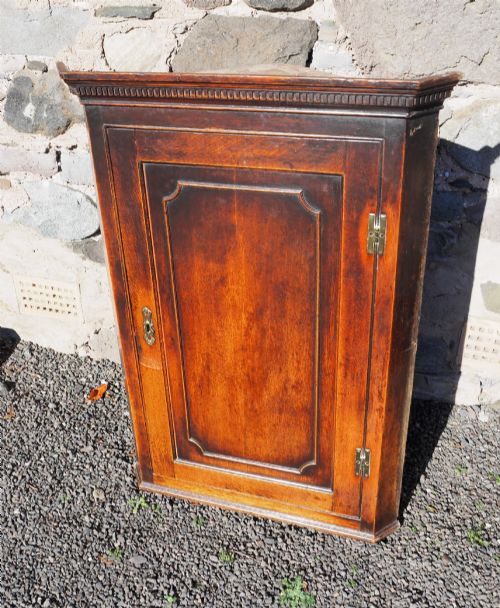
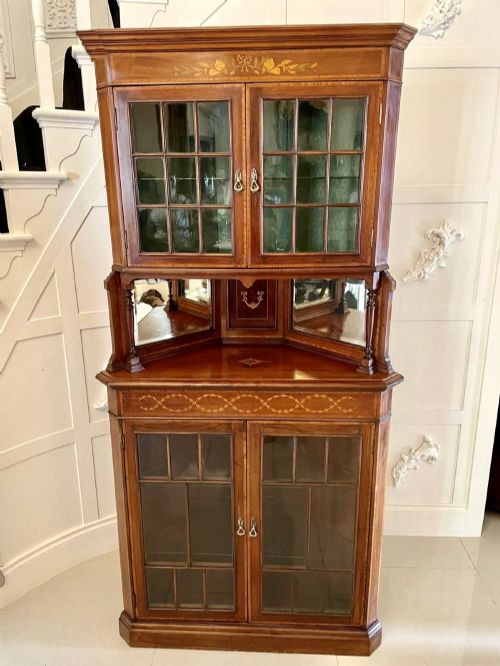
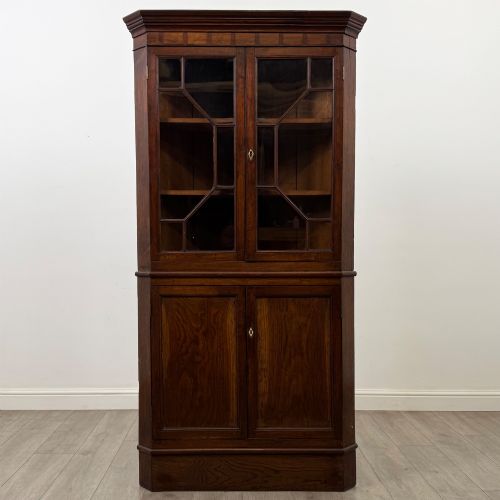
A brown corner display generally takes the form of a cabinet, cupboard, or whatnot designed to fit snugly into a right angle. These pieces utilise woods such as mahogany, oak, and walnut, ranging from Georgian floor-standing examples to Edwardian and later glass-fronted variants.
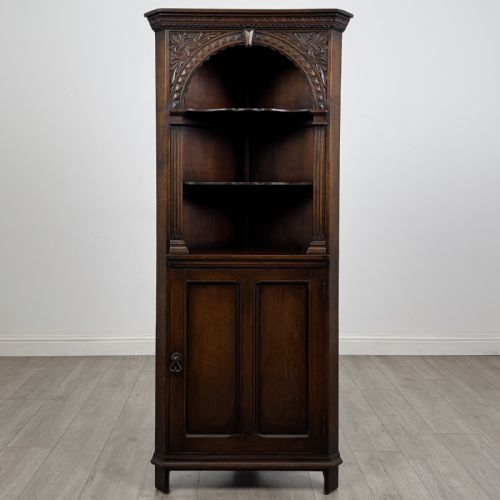
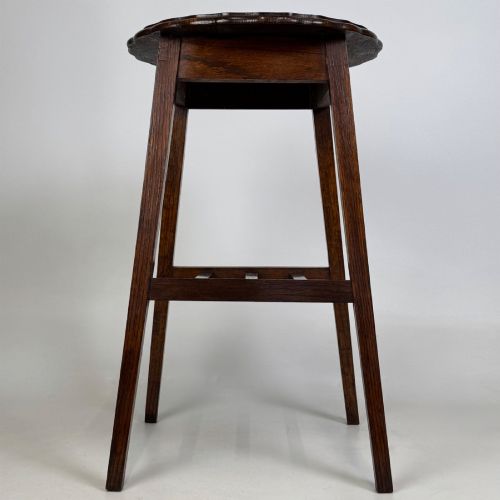
The selection on this page centres heavily on British brown wood furniture, particularly mahogany and oak pieces from the eighteenth and nineteenth centuries. Alongside standing corner cupboards, buyers encounter glazed display cabinets, open corner shelves, and tiered whatnots.
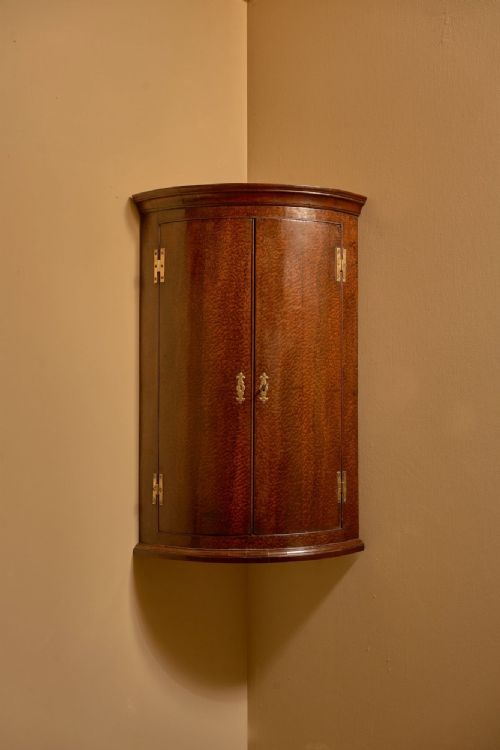
Makers and workshops produced these to maximise small spaces in domestic interiors, employing single-door arched alcoves, bow fronts, and two-part constructions. Styles stretch from plain Georgian oak to Sheraton Revival and Jacobean Revival revivals.
Materials and Construction
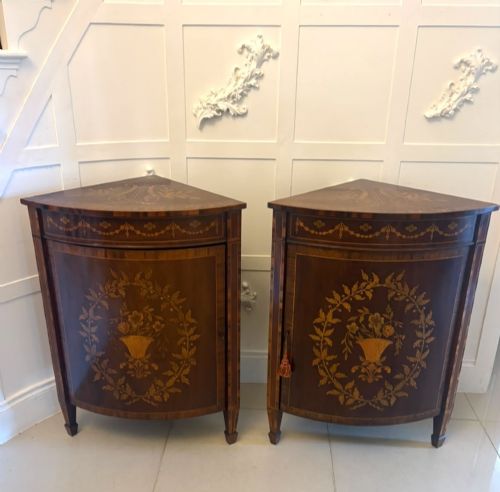
Cabinet makers built these brown corner displays predominantly using solid and veneered timbers including mahogany, oak, walnut, and burr walnut. Inlays of satinwood, marquetry, and gilt metal details frequently ornament the surfaces of Victorian and Edwardian pieces.
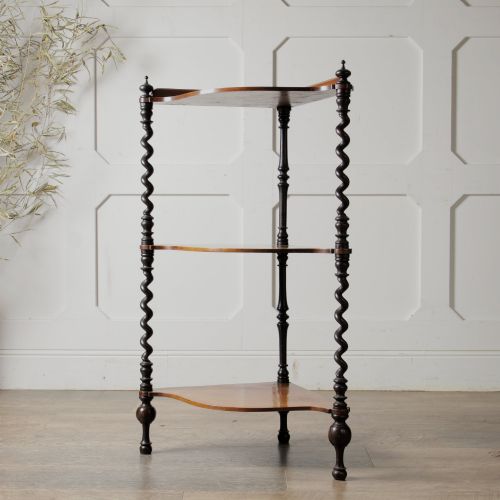
Glazing takes the form of astragal bars framing glass panels on display doors, whilst interiors often incorporate shaped wooden shelves. Stands, barley twist supports, and raised galleries utilise brass hardware and turned wood elements to complete the structure.
Brown Corner Display Retail Price Guide 2026
Typical asking prices for brown corner display among the pieces listed under this phrase on Sellingantiques today, from the lower quarter to the upper quarter. They describe what is for sale here now, not the wider market.
Listings feature mahogany, oak, walnut, and satinwood across Georgian, Victorian, and Edwardian periods.
Judging Quality
Quality rests in the choice of timber and the crispness of execution, such as figured mahogany grain or finely cut satinwood inlay. Pieces displaying architectural cornices, original keys, and uncompromised structural timber sit at the upper end of the scale.
Simpler regional pieces in oak or deal contrast with high-style metropolitan cabinets featuring detailed astragal glazing and sophisticated cross-banding. The integrity of the wood and the subtlety of decorative marquetry dictate the distinction between utilitarian storage and refined craftsmanship.
The Brown Corner Display Glossary
- Astragal glazed
- Glass doors divided by thin wooden bars into small panes. This technique allows light to enter the cabinet while keeping contents secure.
- Bow front
- A convex curved cabinet front popular in Georgian and later designs. It softens the room angle and increases interior depth.
- Whatnot
- A set of open shelves on legs used for displaying ornaments and books. Victorian examples often feature tiered wooden platforms.
- Burr walnut
- Timber taken from walnut tree growths showing intricate swirling grain patterns. Cabinet makers prized it for decorative veneering.
- Marquetry
- Inlaid patterns created with different coloured wood veneers. Craftsmen applied these to door panels and friezes.
Brown Corner Display: Frequently Asked Questions
What is a brown corner display cabinet?
A brown corner display cabinet is a wooden storage or display unit built specifically to fit into the ninety-degree junction of two walls.
These pieces utilise dark hardwoods like mahogany, oak, and walnut to showcase ceramics, glass, or books while occupying minimal floor space.
How do I date an antique corner cupboard?
Dating relies on timber selection, construction methods, and stylistic details such as cornices, hinges, and glazing bars.
Georgian pieces often feature solid oak or mahogany with architectural mouldings, whereas Victorian and Edwardian examples frequently incorporate machine-cut veneers, marquetry, and glass doors.
Are corner cabinets difficult to place in a modern room?
These cabinets fit easily into modern rooms because they utilise the dead space found in corners.
Their triangular footprint anchors a room layout, providing vertical storage without crowding central floor areas.
What is the difference between a cupboard and a whatnot?
A corner cupboard encloses its contents behind solid or glass doors to keep out dust and secure items.
A whatnot consists of open tiered shelves supported by vertical posts, designed entirely for visible display rather than concealed storage.