

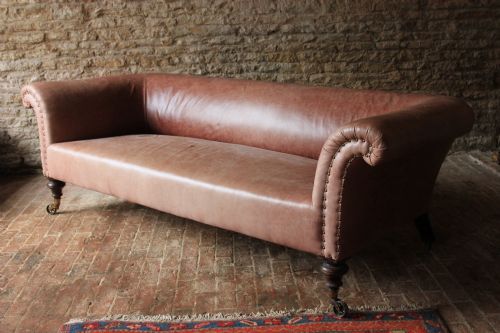
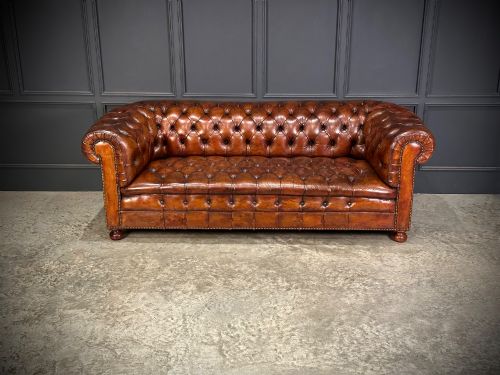
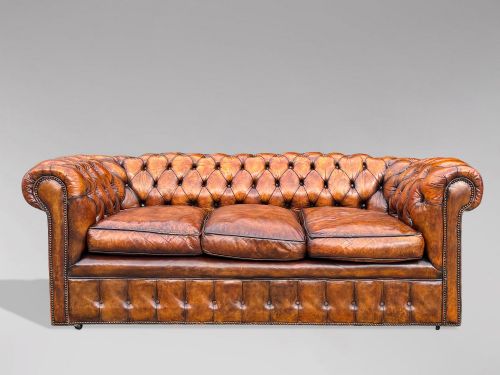
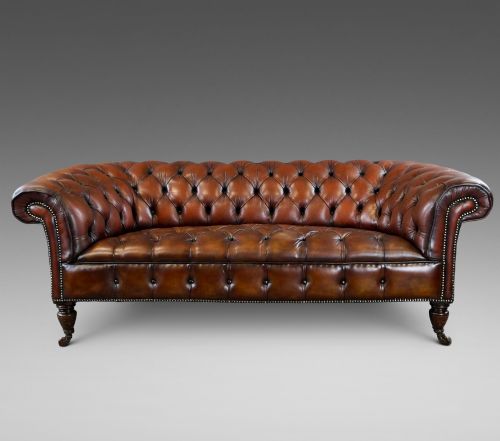






Brown Chesterfield Sofa
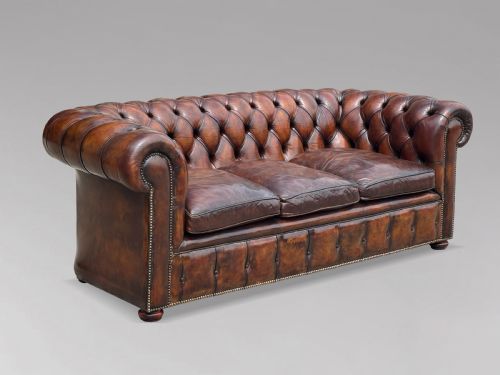
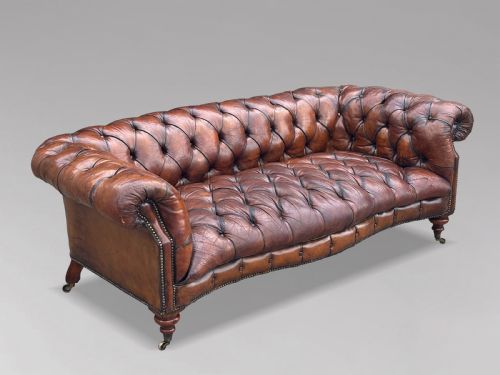
A brown chesterfield sofa offers deep buttoning and rolled arms, grounding a room with rich leather and traditional English seating.
Brown Chesterfield Sofa
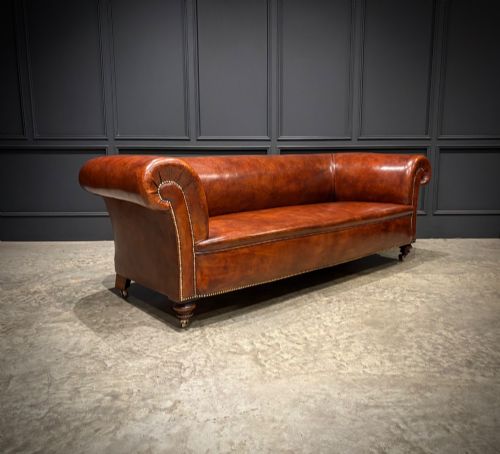
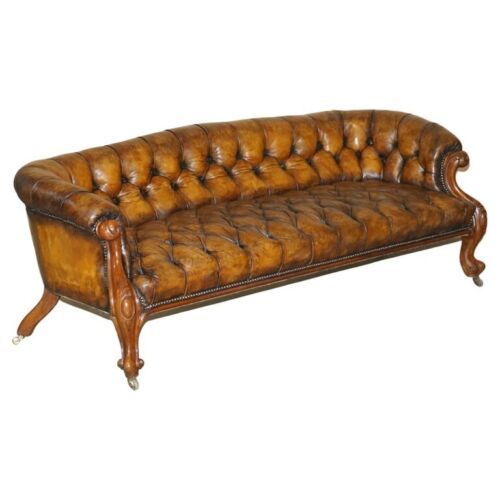
A brown chesterfield sofa brings together low-backed seating, scroll arms, and deep buttoning in leather, spanning periods from the Regency era through the Victorian period and into the early twentieth century. These pieces appear in forms such as three-seater sofas, corner sofas, snooker hall benches, and chaise longues.
The version most commonly met on this page is the Victorian brown leather chesterfield, often dated around eighteen eighty or built during the nineteenth century. These items utilise traditional frames of mahogany, walnut, timber, or hardwood, paired with characteristic leather upholstery.
How they were made
Makers built these pieces using solid hardwood, mahogany, or walnut frames to support heavy loads and complex seating forms. Frame construction often incorporated carved wood show frames, brass details, and sturdy internal timber bracing.
Upholstery relied on traditional stuffing methods, utilising horse hair filling and coil springing beneath hand-dyed or original leather. Artisans secured the leather with deep buttoning techniques to create the signature tufted surface.
Brown Chesterfield Sofa Retail Price Guide 2026
Typical asking prices for brown chesterfield sofa among the pieces listed under this phrase on Sellingantiques today, from the lower quarter to the upper quarter. They describe what is for sale here now, not the wider market.
One Victorian example survived inside a snooker hall, bearing the stout character of decades of public smoke and chalk.
What varies in quality
The standard of a brown chesterfield sofa rests on the integrity of its wooden frame and the depth of its original upholstery work. Pieces featuring carved walnut or mahogany show frames and period coil springing demonstrate superior foundational craftsmanship.
The condition and treatment of the leather also divide the range, separating untouched original hides from later hand-dyed surfaces. Subtle variations in the depth of the buttoning and the precision of the horse hair stuffing mark the distinction between standard workshop production and finer maker pieces.
Howard & Sons·Hampton & Sons of Pall Mall
The Brown Chesterfield Sofa Glossary
- Chesterfield
- A style of upholstered sofa distinguished by rolled arms of the same height as the back and deep button-tufted leather. This form has remained a staple of traditional English seating since the nineteenth century.
- Button back
- An upholstery method where buttons are pulled deep into the padding to create a diamond pattern across the leather surface. This technique secures the internal horse hair stuffing.
- Show frame
- A visible wooden structural framework, often carved from walnut or mahogany, that surrounds the upholstered portions of the sofa. It exposes the craftsmanship of the woodworker.
- Coil springing
- A system of interconnected metal coil springs tied within the seat base to provide support and resilience. This method replaced simpler stuffing techniques in many nineteenth-century pieces.
- Chaise longue
- An upholstered seating form combining a chair with an extended footrest for reclining. Examples often share the rolled arms and leather upholstery of standard chesterfields.
Brown Chesterfield Sofa: Frequently Asked Questions
What is a brown chesterfield sofa?
A brown chesterfield sofa is a traditional English seat defined by low rolled arms and deep buttoned leather upholstery. These pieces date primarily from the nineteenth and early twentieth centuries.
They appear in various forms including three-seaters, corner sofas, and chaise longues, constructed on hardwood frames with leather and horse hair stuffing.
How do I date a chesterfield sofa?
Dating relies on observing structural materials, wood types, and upholstery techniques recorded in the piece. Victorian examples often utilise mahogany or walnut frames alongside coil springing and hand-dyed leather.
Earlier pieces from the Regency period feature carved wooden frames, whilst twentieth-century versions display modified hand-dyed finishes and distinct internal padding methods.
Where were these sofas used?
These sofas served as heavy-duty seating in formal drawing rooms, libraries, and clubs throughout the nineteenth century. Their robust construction also suited commercial spaces like public houses and snooker halls.
Today, they function as central seating elements in living spaces, pairing traditional leather textures with varied interior styles.
What materials make up these sofas?
The primary materials include leather upholstery, brass accents, and internal stuffing of horse hair over coil springs. Frames consist of timbers such as mahogany, walnut, hardwood, and general wood.
Show frames expose carved wood elements, while the leather surfaces range from un-restored original hides to hand-dyed finishes.