

Brown Captain Chair
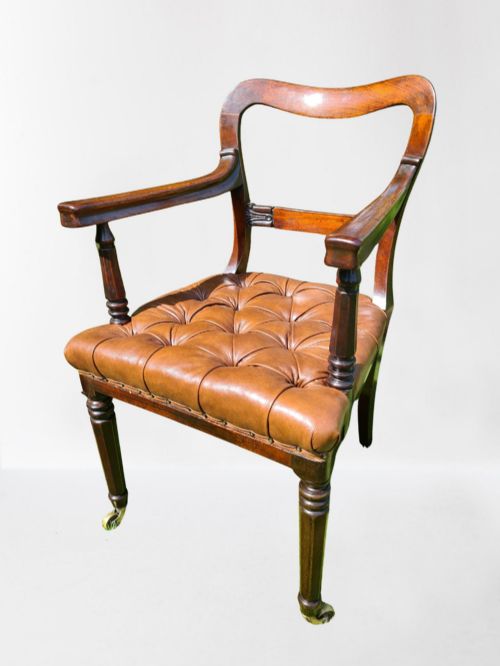
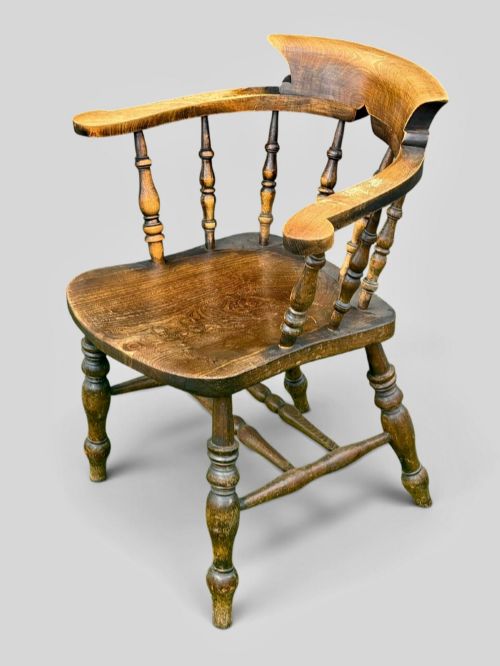
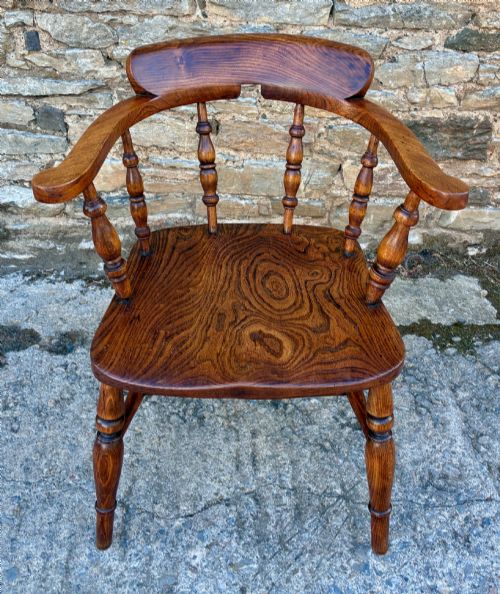
A brown captain chair provides sturdy seating for a study or desk, bringing traditional timber frames and leather upholstery into daily use.
Brown Captain Chair
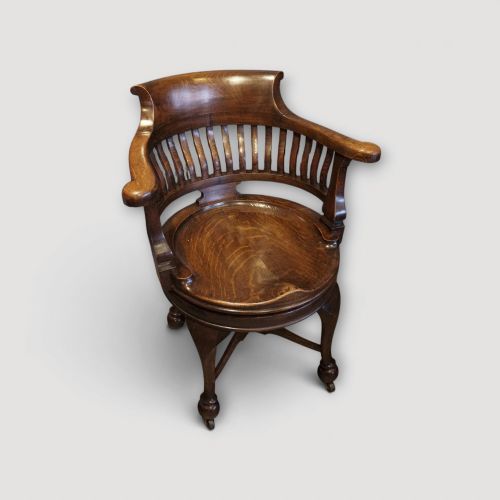
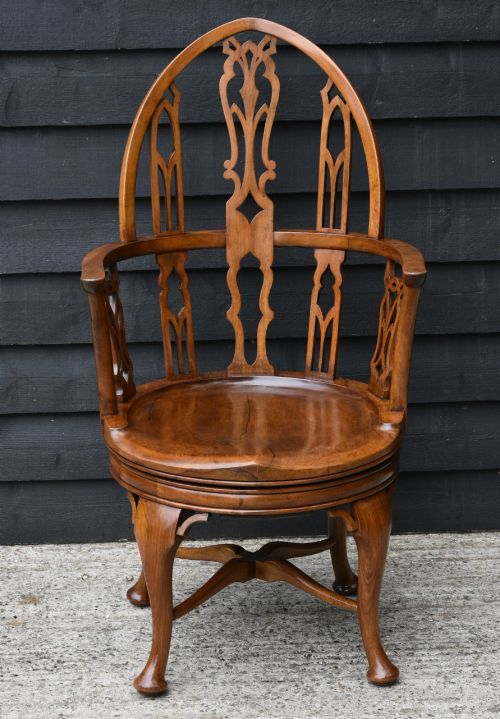
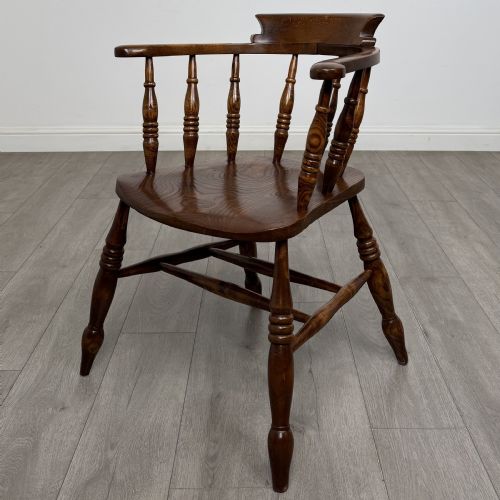
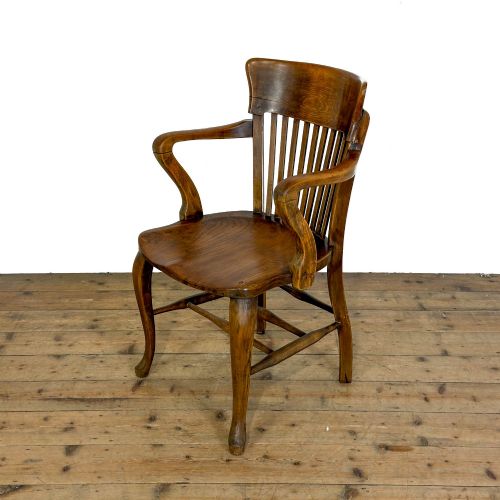
A brown captain chair is a sturdy low-backed armchair designed for a desk, study, or library. When you search for this phrase, you will find Victorian and Edwardian examples alongside pieces from the early twentieth century.
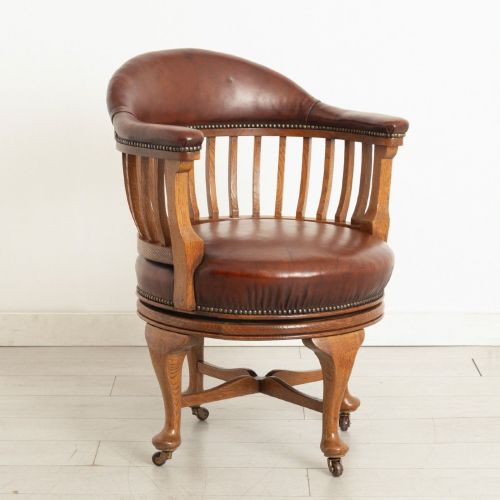
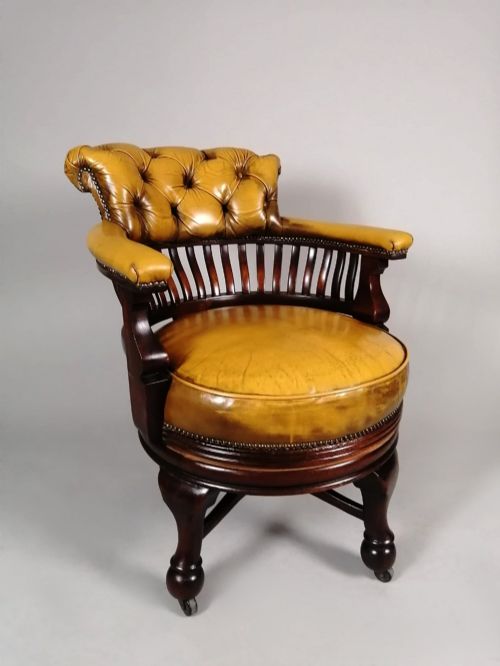
The most common versions on this page combine timber frames in elm, oak, beech, or mahogany with leather upholstery. Many incorporate revolving swivels or castors for movement at a desk.
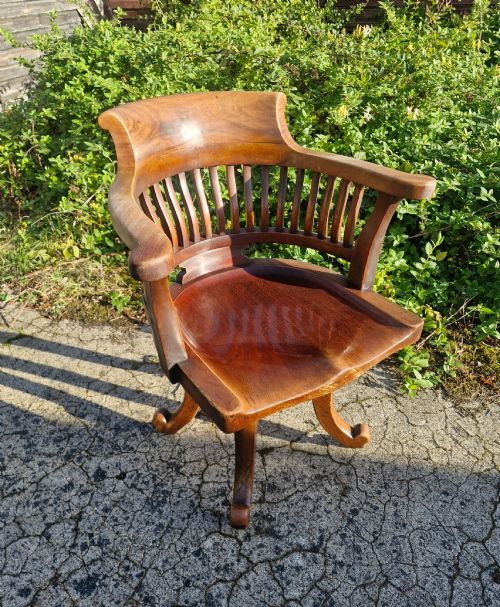
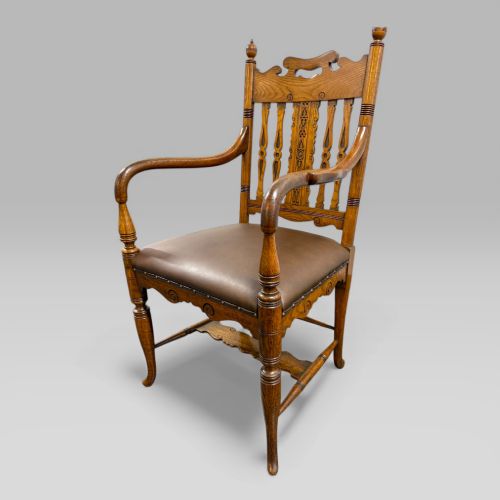
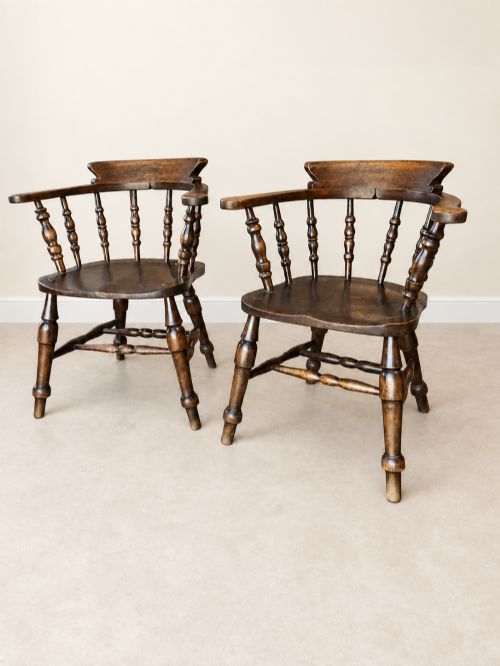
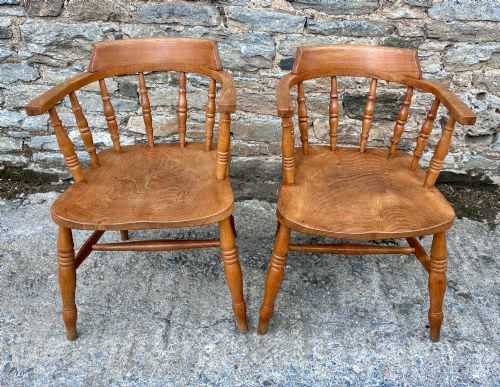
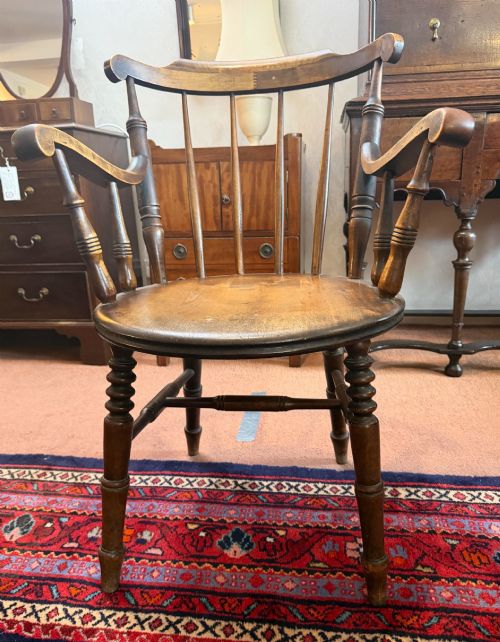
The form spans straightforward country Windsor smoker's bows and formal library desk chairs with carved details. Origins range across the nineteenth century through to the Edwardian period and nineteen-twenty.
Materials and construction
Frames rely on native and imported timbers including solid oak, mahogany, elm, beech, birch, and walnut. These woods are turned, bent, or carved into curved backrests and supporting arm supports.
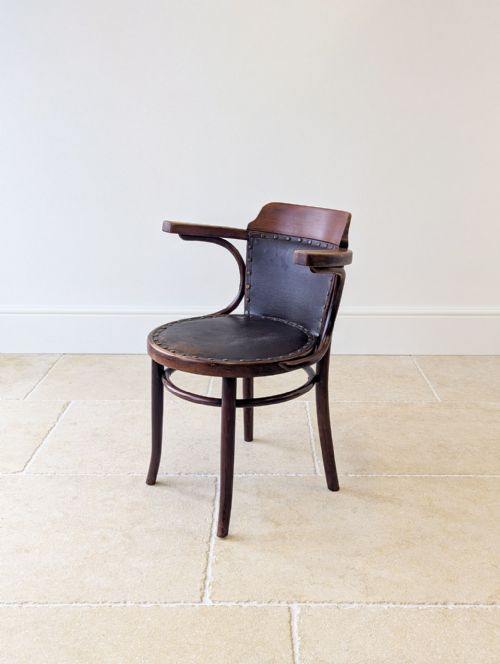
Upholstered versions use leather secured with brass studs or buttons. Base assemblies frequently integrate iron mechanisms, brass castors, and revolving swivels for functional office use.
Smokers enjoyed these sturdy low-backed wooden bows so thoroughly that the chair shape took their name for generations.
Judging the range
The quality of a brown captain chair rests on the selection of timber and the integrity of the joinery in the curved back and arm rails. Solid mahogany and figured oak represent the upper end of the material scale compared to simpler beech or mixed timber frames.
Details such as hand-carving, buttoned leather upholstery, and original brass castors separate standard utility seating from finer library and office armchairs. The depth of the patina on the wood and leather also marks the distinction between ordinary examples and exceptional ones.
Gillows·Bruce James Talbert
The Brown Captain Chair Glossary
- Smoker's Bow
- A low-backed wooden armchair related to the Windsor tradition, commonly built from elm and beech. These chairs serve as a primary regional form for the captain chair style.
- Revolving Desk Chair
- An office armchair fitted with a central pivot mechanism allowing rotation. Many examples from the Victorian and Edwardian periods include this swivel function.
- Cast Brass Castors
- Small wheel attachments fitted to the base of chair legs to ease movement across floors. They appear frequently on nineteenth-century library and desk chairs.
- Patina
- The surface sheen and colour developed by wood and leather through age and handling. A deep patina indicates decades of regular use and care.
Brown Captain Chair: Frequently Asked Questions
What is a brown captain chair?
A brown captain chair is a sturdy wooden armchair with a low curved back, traditionally used at a desk or in a library. These chairs often combine timber frames in oak, mahogany, or elm with brown leather upholstery.
They evolved from traditional Windsor and smoker's bow forms into revolving office chairs during the nineteenth century.
How do I date a captain chair?
Dating relies on identifying the timber, turning styles, and mechanical hardware such as iron swivel mechanisms. Victorian and Edwardian examples often feature specific carved details or manufacturer markings.
Simpler elm and beech country chairs without swivels typically follow traditional Windsor construction methods spanning the mid nineteenth to early twentieth centuries.
Were these chairs used only by captains?
The name originates from shipboard seating but the form adapted primarily into domestic and institutional office furniture on land. They became standard seating for studies, libraries, and counting houses.
By the Victorian era, the design was widely produced for everyday desk and dining use across Britain.
How do I care for leather and wood?
Keep wooden frames clean with a dry cloth and apply occasional wax nourishment to maintain the finish. Leather upholstery benefits from gentle conditioning to preserve the surface and prevent drying.
Position chairs away from direct heat sources to protect both the timber joints and the leather hide.