

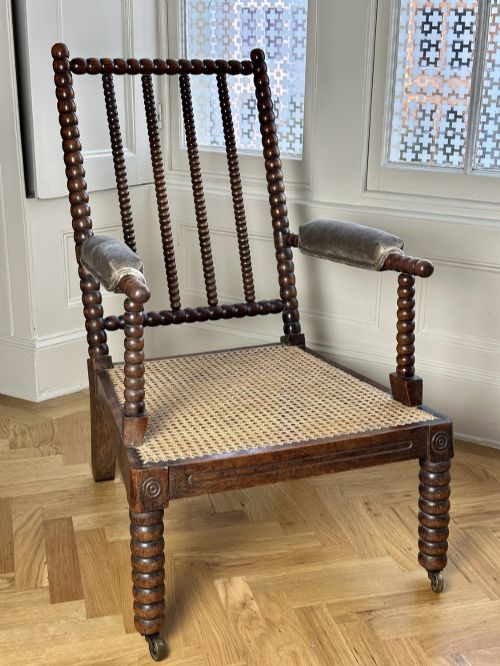
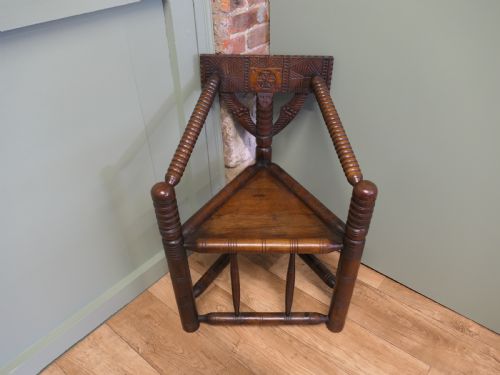

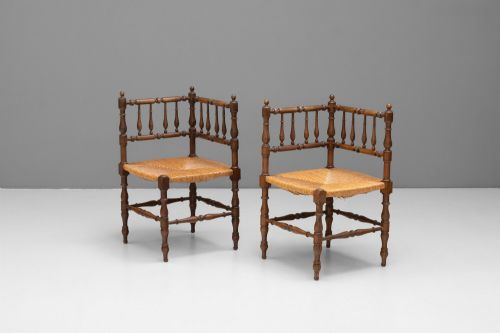
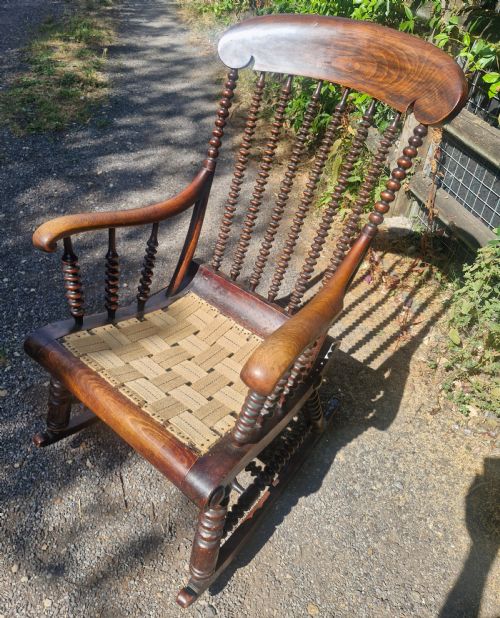


Brown Bobbin Chair
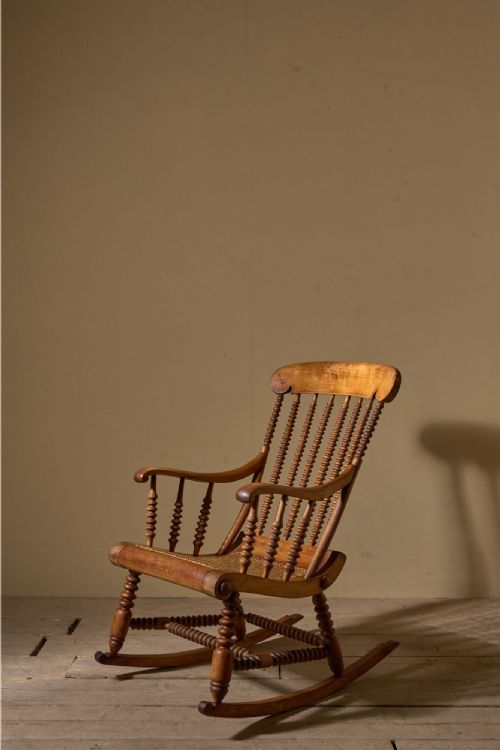
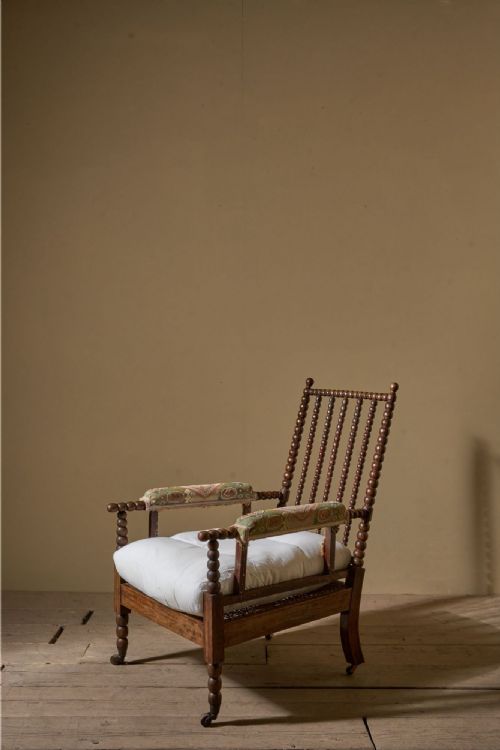
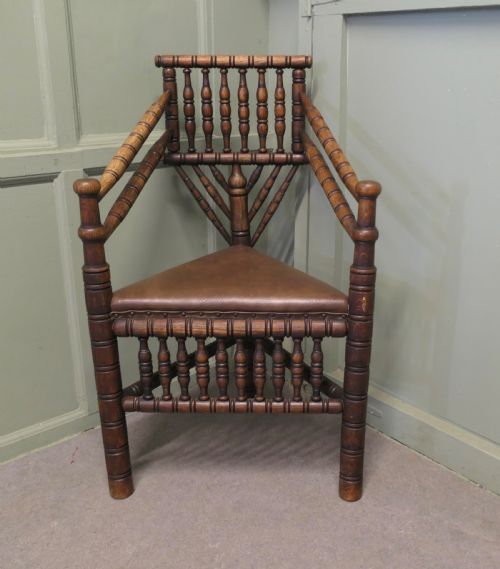
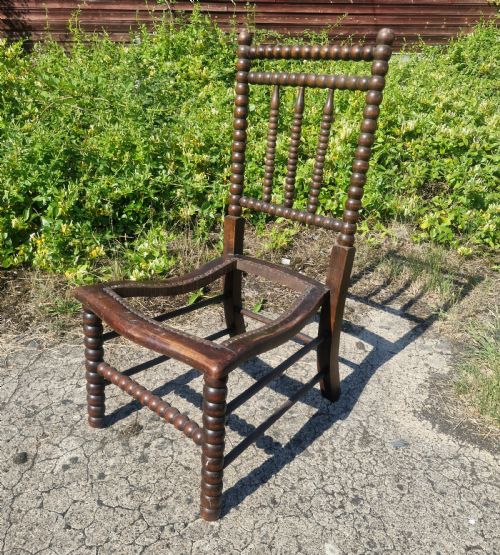
These brown bobbin chairs bring centuries of turned woodwork into modern rooms through repetitive, spool-shaped turnings.
How they were made
Turners shaped the characteristic spool motifs on a lathe using solid timbers like oak, beech, walnut, and elm. Individual bobbin sections were turned end-to-end to create uniform profiles before being joined into sturdy frames.
Joinery relied on traditional mortise and tenon construction to lock the turned stretchers and uprights firmly together. Many examples incorporated rush, cane, or leather pads to form the seats, secured directly into the wooden framework.
What varies in quality
The crispness of the turning on the spool elements determines much of the visual merit, separating sharp, deeply cut profiles from soft, worn details. The choice of primary timber also dictates longevity, with dense oaks and walnuts holding finer turned edges than softer woods.
Structural integrity depends on the tightness of the original joints and the survival of the turning without excessive replacement parts. Original upholstery materials or intact rush and cane seating elevate the historical integrity of the piece.
Brown Bobbin Chair Retail Price Guide 2026
Typical asking prices for brown bobbin chair among the pieces listed under this phrase on Sellingantiques today, from the lower quarter to the upper quarter. They describe what is for sale here now, not the wider market.
Listings feature oak, beech, walnut, and elm timbers across nineteenth and seventeenth-century periods.
The Brown Bobbin Chair Glossary
- Bobbin turning
- A form of woodturning that creates a series of rounded, spool-like shapes along the length of a spindle. This decorative technique defines the entire framework of the chair.
- Turners chair
- A heavy, three-legged or four-legged armchair constructed entirely from turned wooden members. These seats date back to early vernacular traditions.
- Wainscot chair
- A heavy wooden armchair featuring panelled backrests and solid construction typical of the seventeenth century. They represent early domestic seating luxury.
- Stretchers
- Horizontal wooden rods connecting the legs of a chair to provide structural rigidity. On these pieces, the stretchers carry the primary bobbin turnings.
- Elbow seat
- A traditional term used to describe an armchair with low armrests designed for relaxed seating. They appear frequently in nineteenth-century revival groups.
Brown Bobbin Chair: Frequently Asked Questions
Are these chairs comfortable?
Most of these chairs feature upright wooden frames designed for formal sitting rather than deep lounging. Models equipped with upholstered pads or rocking mechanisms offer a softer seated experience.
Adding a loose cushion can increase daily comfort without altering the historic framework. The upright posture encourages proper support when placed at a desk or fireside.
How do I date a bobbin chair?
Dating relies on examining the timber species, joinery methods, and the exact profile of the turnings. Earlier seventeenth-century examples tend to use heavy oak with hand-split components.
Later nineteenth-century revival pieces often employ walnut, beech, or simulated rosewood finishes with machine-smoothed turnings. Comparing the wear patterns around the footings and stretchers also aids chronological placement.
Where should I place one?
These chairs work effectively as accent pieces in hallways, bedrooms, or studies where their rhythmic woodwork stands out against plain walls. Rocking variants suit quiet corners or living spaces.
Avoid placing them in direct sunlight or beside intense heat sources to protect the dry timber and cane or rush seats. Their modest scale allows them to fit easily into smaller interior spaces.
How do I care for the wood?
Maintain the timber by dusting regularly with a dry cloth and applying occasional coats of beeswax to nourish the surface. Avoid using liquid polishes that contain silicone.
Keep indoor humidity stable to prevent the wood from shrinking and loosening the turned joints. Gentle care preserves the original patina built up over generations of use.