
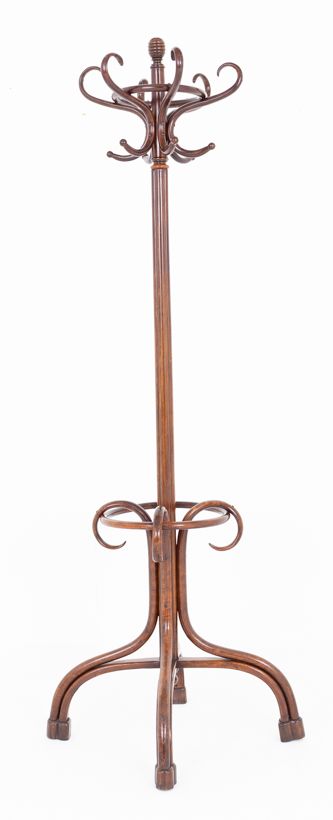
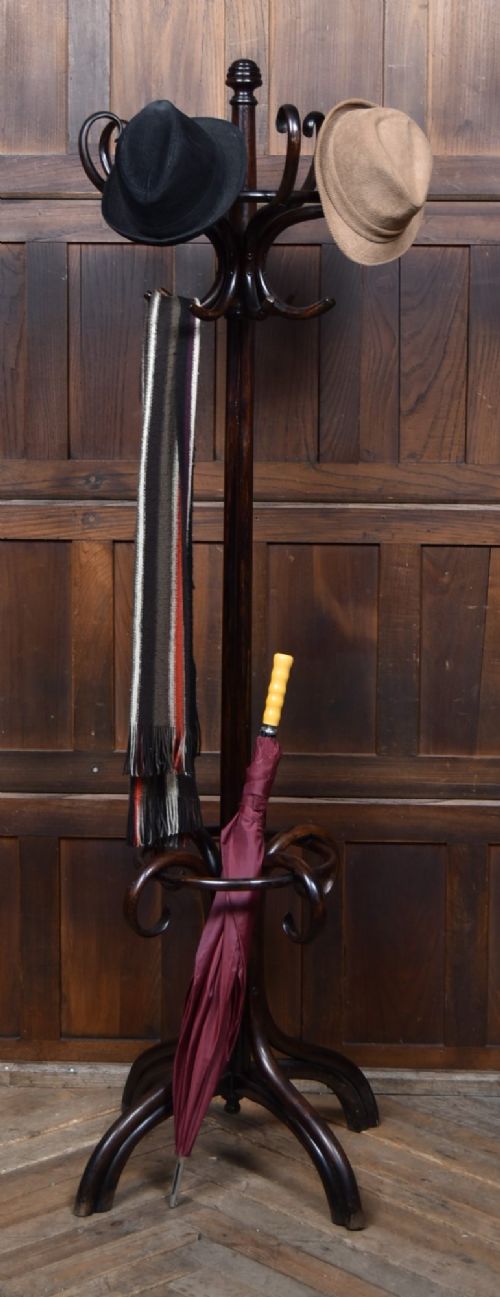
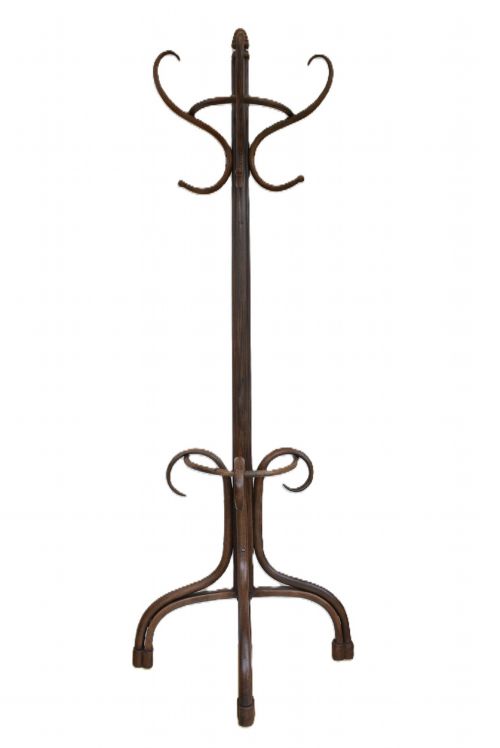
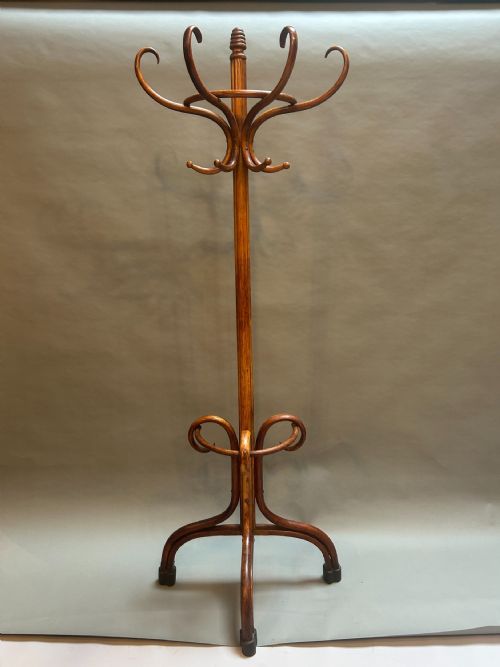


Brown Bentwood Coat Rack
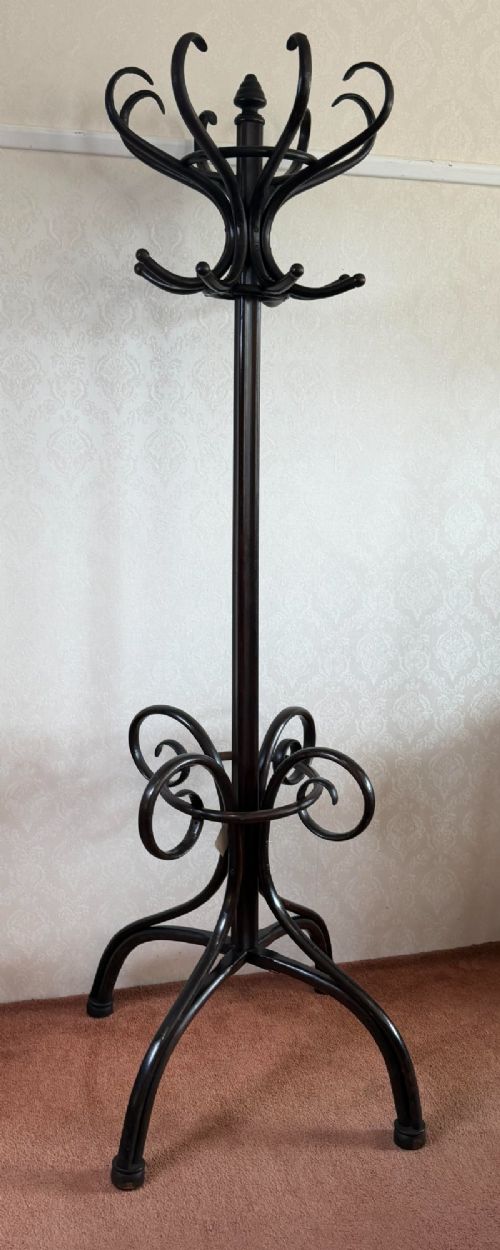
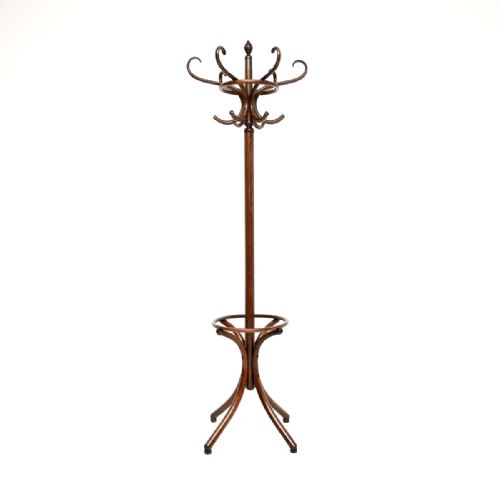
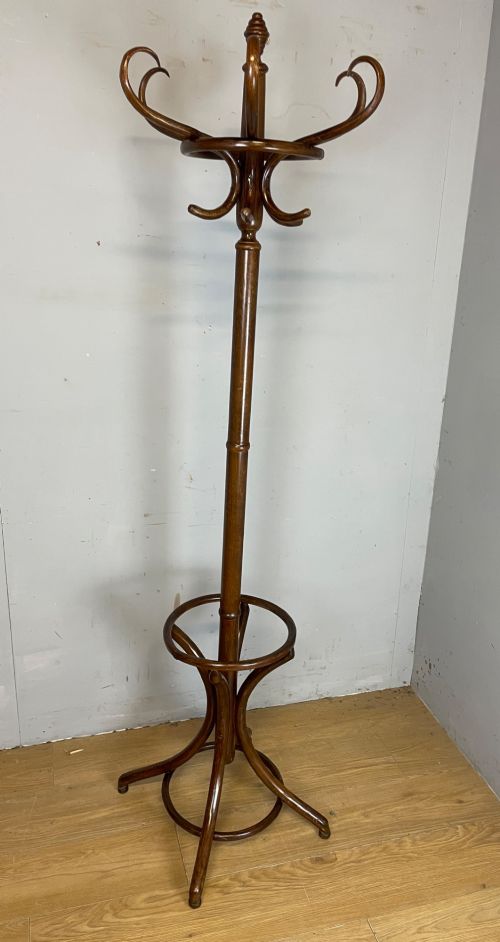
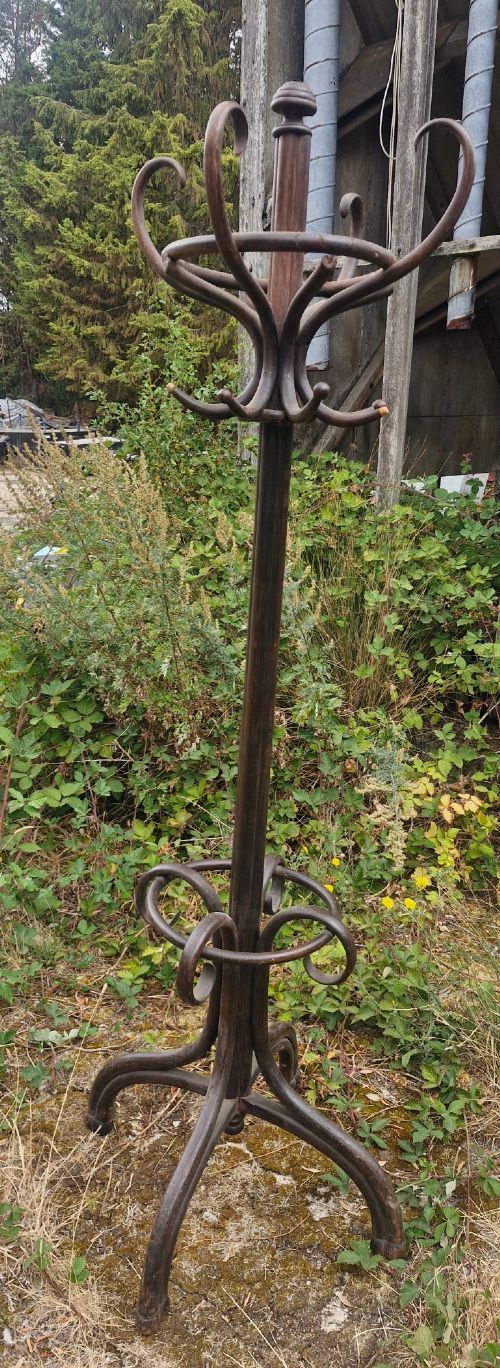
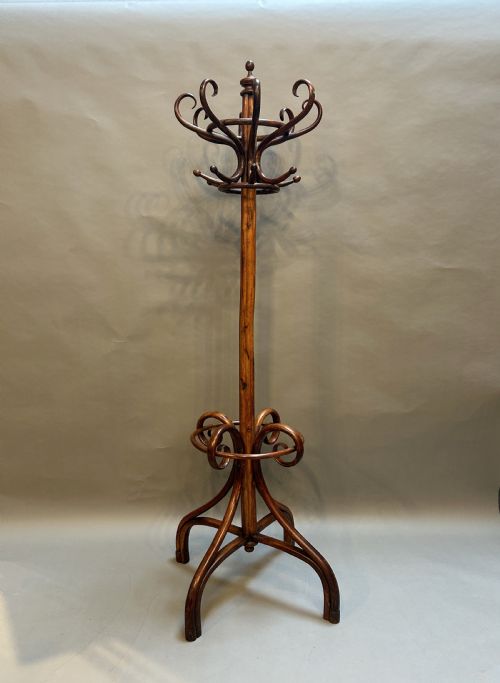
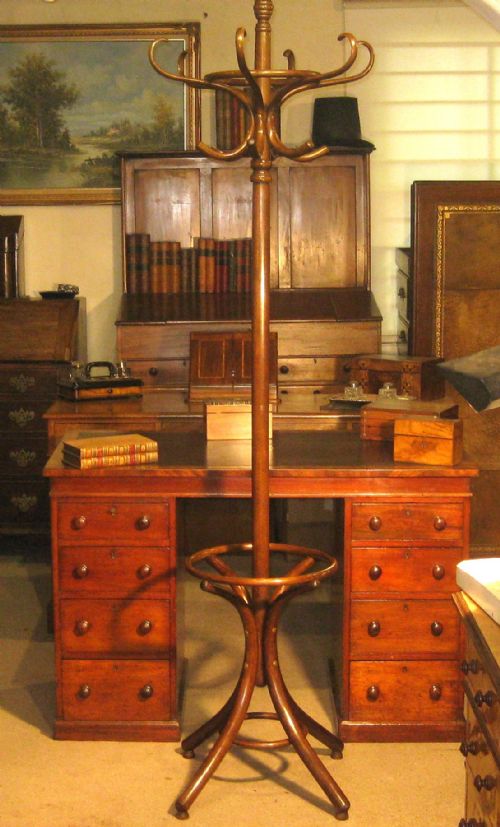
A brown bentwood coat rack offers fluid, steam-bent curves and practical upright storage for hats and coats.
Brown Bentwood Coat Rack
A brown bentwood coat rack stands as a quintessential piece of hallway furniture originating largely from the late nineteenth and early twentieth centuries, including Edwardian examples. Buyers seeking this phrase encounter vertical hat and coat stands alongside wall-hanging racks designed to hold garments efficiently in domestic spaces.
The dominant forms present on this page include tall revolving stands, demi-lune hall stands, and floor-standing designs featuring multiple tiered hooks. These objects reflect the commercial output of Austrian bentwood workshops and Thonet-style manufacturing traditions spanning the decades from eighteen ninety up to nineteen thirty.
How they were made
Makers utilised solid beech, beechwood, and steam-bent wood to construct these items, subjecting timber to moisture and heat until it became pliable enough to shape into graceful arches. This method allowed craftsmen to create sweeping, continuous curves without relying on heavy joinery.
Finished surfaces typically display wood stain applied to the bentwood frames, occasionally complemented by glass elements. The inherent elasticity of steam-bent wood provided structural strength while maintaining a surprisingly lightweight profile.
Some tall stands feature a revolving top so you can spin your hat collection until you find the right one.
What varies in quality
Distinction across the range relies on the complexity of the frame and the presence of specialised configurations such as double tops or revolving mechanisms. Simpler wall-hanging racks contrast with large, multi-tiered floor stands that demand greater engineering skill to remain stable under heavy loads.
The finesse of the curved scrolls and the depth of the applied wood stain also separate standard workshop output from finer examples produced during the peak of the bentwood industry.
Fischel
The Brown Bentwood Coat Rack Glossary
- Bentwood
- Wood that has been heated with steam and bent into curved shapes. This technique defines the aesthetic of late nineteenth-century hall stands.
- Demi Lune
- A half-round shape used for hall stands designed to sit flat against a wall. Such configurations save floor space in narrow corridors.
- Revolving top
- A rotating upper section on a hatstand that allows easy access to hanging garments. This mechanical feature appears on Edwardian pieces.
- Steamed beechwood
- Timber treated with steam to achieve high flexibility before being pressed into moulds. It serves as the primary material for these stands.
- Thonet style
- Furniture manufactured using the curving methods pioneered by the renowned Austrian workshop. Pieces in this tradition emphasise minimal decoration and fluid lines.
Brown Bentwood Coat Rack: Frequently Asked Questions
How do I date a bentwood coat rack?
Dating relies on stylistic clues and construction methods associated with periods like the Edwardian era and the early twentieth century. Pieces from eighteen ninety often display heavier turned components compared to later variants.
Makers working around nineteen thirty utilised similar steam-bending techniques but adapted proportions to changing interior fashions. Examining the base design and hook configuration helps narrow the production decade.
Were these stands made for hallways?
Most floor-standing designs functioned as hall stands, positioned near entranceways to accommodate hats, coats, and walking sticks. Their vertical footprint suited narrow Victorian and Edwardian corridors.
Wall-hanging versions offered an alternative for compact spaces where floor area was limited. Both types served the domestic need for organised outerwear storage.
How do I care for steam bent wood?
Maintaining bentwood furniture involves keeping pieces away from direct heat sources and excessive moisture. Stable indoor humidity prevents the dry wood from contracting and straining the glued joints.
Routine dusting with a dry cloth preserves the wood stain finish. Avoiding harsh chemical polishes protects the original surface sheen.