
Brown Drawers
These brown antique drawers span Georgian, Victorian, and Edwardian periods, offering timeless timber storage in mahogany, oak, and walnut.
Brown Drawers
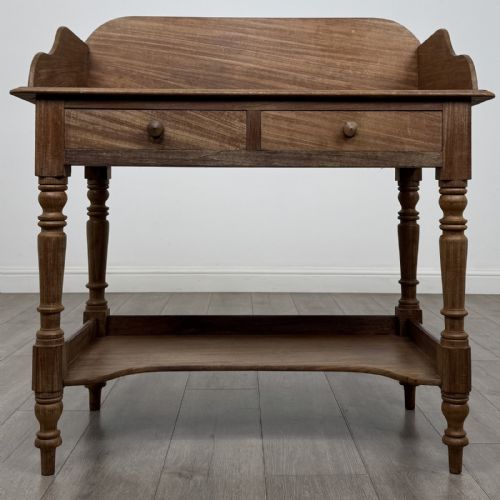
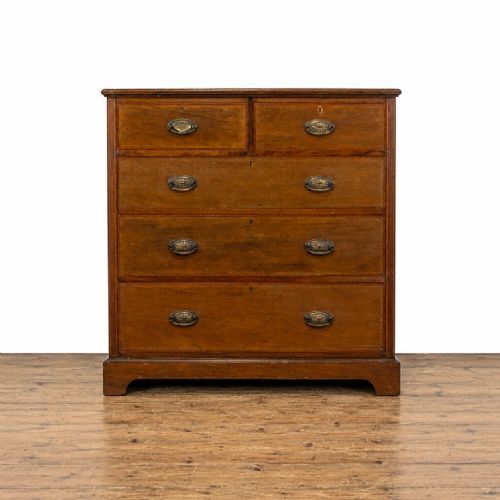
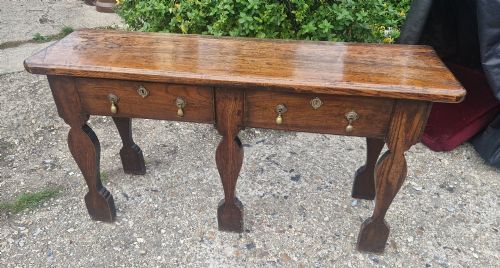
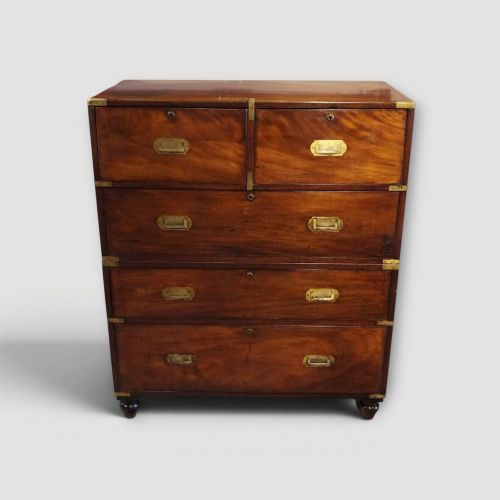
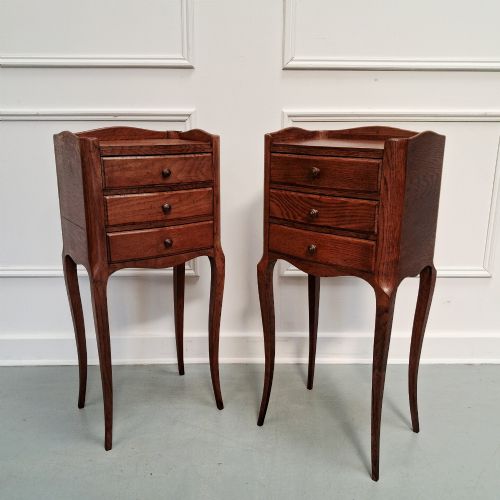
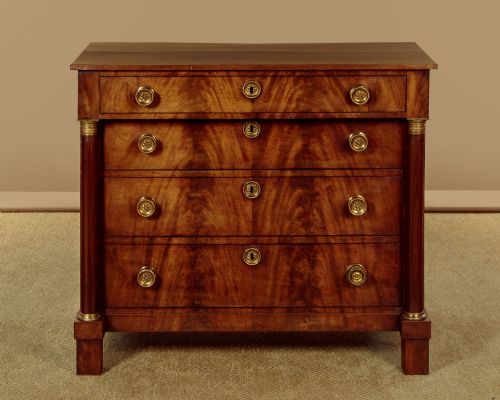
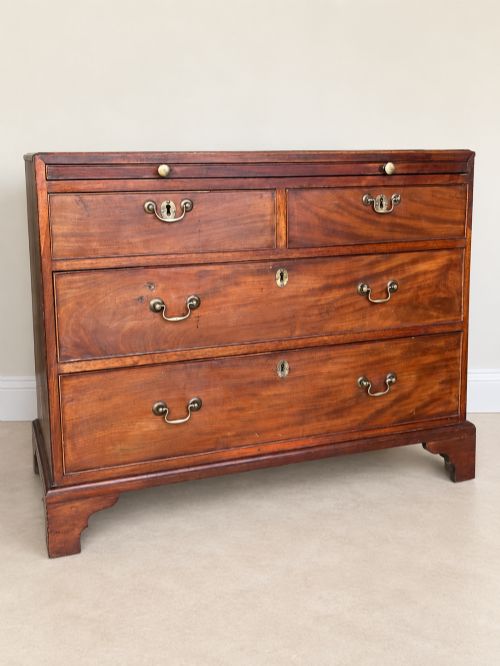
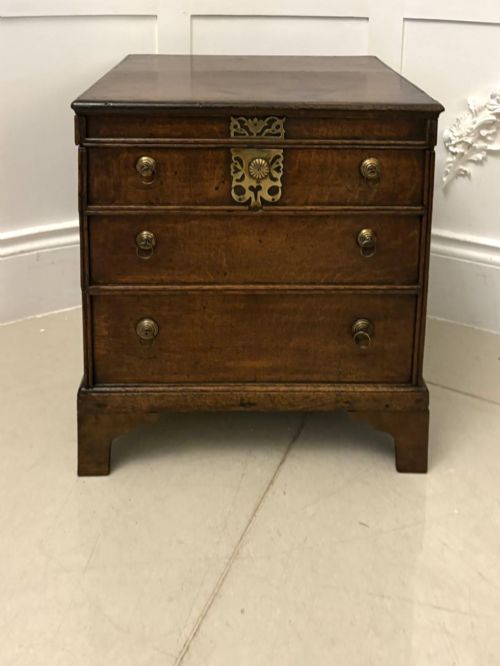
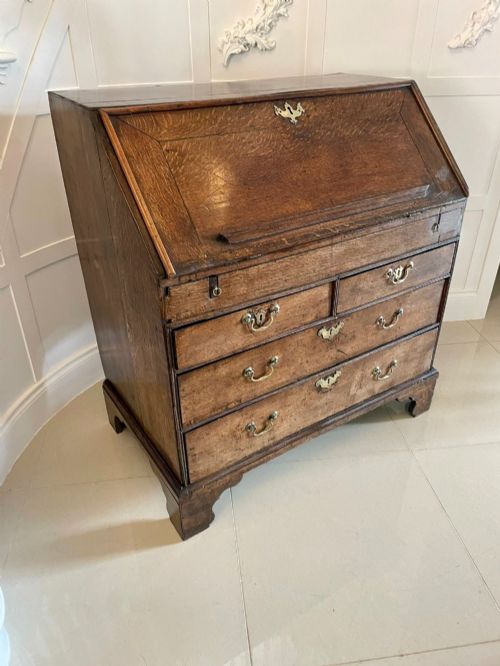
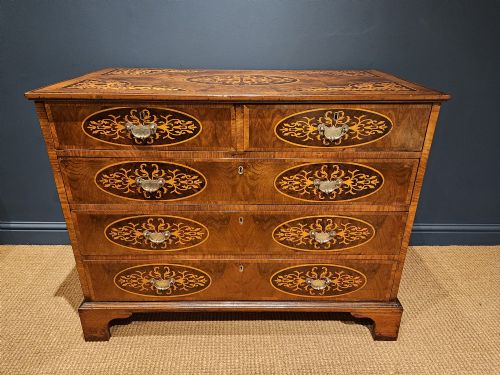
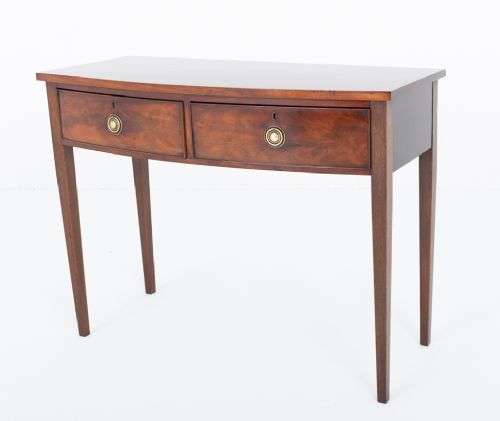
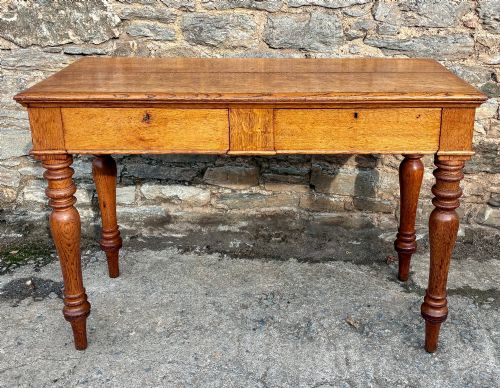
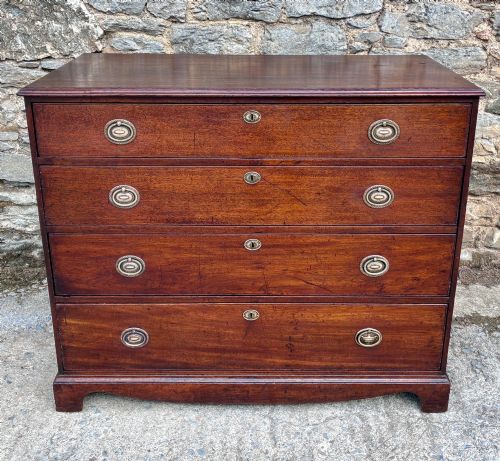
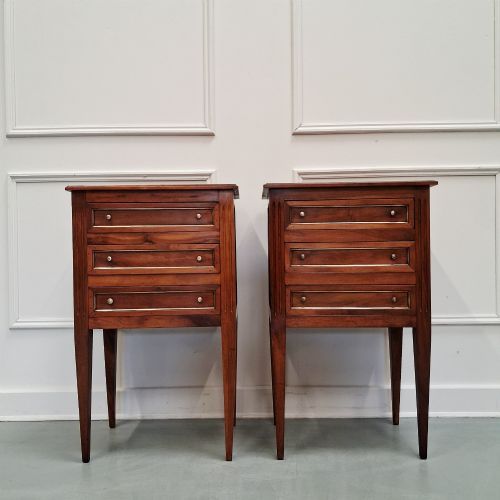
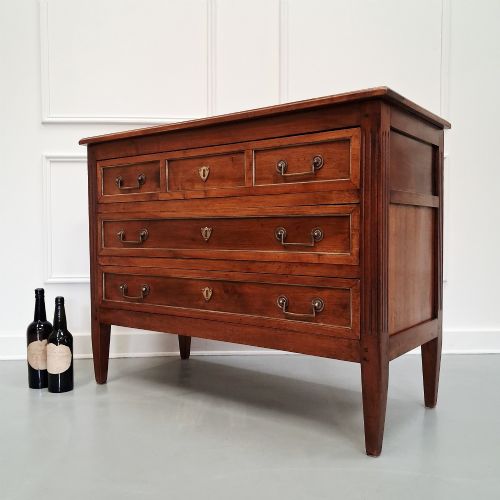
When searching for brown antique drawers, buyers encounter a diverse selection of storage furniture primarily comprising chests of drawers, side tables, desks, and writing tables. These pieces emerge from periods such as the Georgian, Victorian, and Edwardian eras, alongside pieces dating to the 18th and 19th centuries.
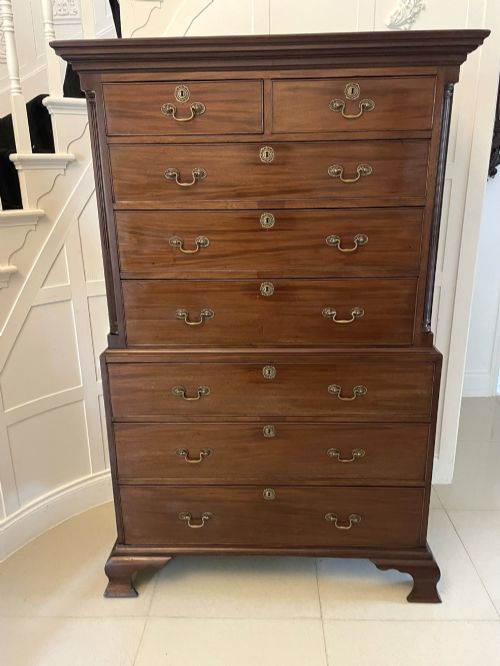
The assortment on this page most frequently presents classic mahogany and oak chests of drawers, alongside smaller side tables and writing desks fitted with functional storage compartments. Forms range from compact bow-front designs to substantial chest on chest configurations and Wellington chests.
Originating across British and continental workshops, these items utilise traditional timbers including walnut, burr walnut, elm, and cherry. Stylistic influences span from Queen Anne and George III styles to Regency, Jacobean Revival, and Georgian Revival interpretations.
How they were made
Cabinet makers constructed these brown antique drawers using solid hardwoods such as mahogany, oak, and walnut, frequently applying wood veneer or burr walnut on prominent surfaces. Frames and drawer linings often incorporate secondary timbers like pine or elm.
Construction techniques rely on traditional joinery, supported by brass handles, escutcheons, and inlaid detailing. Certain pieces feature carved knees, cabriole legs, or raised galleries, while surface treatments utilise marquetry inlay or polish to highlight the natural grain of the wood.
A tiny apprentice piece miniature chest of drawers sits alongside monumental eleven-drawer architect plan chests.
What varies in quality
The standard of these brown antique drawers depends upon the selection of timber figures, such as matching burr walnut or dense mahogany grains, and the precision of the underlying joinery. Superior examples display careful attention to drawer construction, including graduated depths and well-fitted internal compartments.
Refinement in decorative elements, such as crisp carving on cabriole legs, restrained marquetry inlay, and original brass hardware, distinguishes finer workshop output from simpler utilitarian pieces.
W. Walker and Sons London
The Brown Drawers Glossary
- Bow front
- A convex curved front facade commonly found on chests of drawers and side tables dating from the Georgian and Regency periods. This curved shape softens the profile of large storage furniture.
- Wellington chest
- A tall, narrow chest of drawers typically featuring seven or eight graduated drawers secured by a hinged locking stile on one side. Originating in the 19th century, this form maximises vertical storage.
- Chest on chest
- A tall storage unit comprising a smaller chest stacked directly upon a larger base chest, frequently seen in 18th-century mahogany. This configuration provides substantial capacity within a contained footprint.
- Gallery
- A raised wooden or brass rail positioned around the top edge of a table, desk, or dressing table to prevent items from sliding off. Galleries appear frequently on Edwardian and Regency pieces.
Brown Drawers: Frequently Asked Questions
What periods do these brown antique drawers cover?
These items span several historical periods, including the Georgian, Victorian, and Edwardian eras, alongside pieces from the 18th and 19th centuries.
Craftsmanship styles also reflect revivals such as the Queen Anne and Jacobean styles.
Which woods are most common?
Mahogany, oak, and walnut form the primary timber choices across the collection, often enhanced by burr walnut veneers or elm.
Secondary materials like brass provide handles, hinges, and decorative keyhole escutcheons.
How were writing desks used?
Desks and writing tables served as dedicated surfaces for correspondence, bookkeeping, and document storage in period homes.
Many incorporate fitted drawers for paperwork, inkwells, and writing implements.