
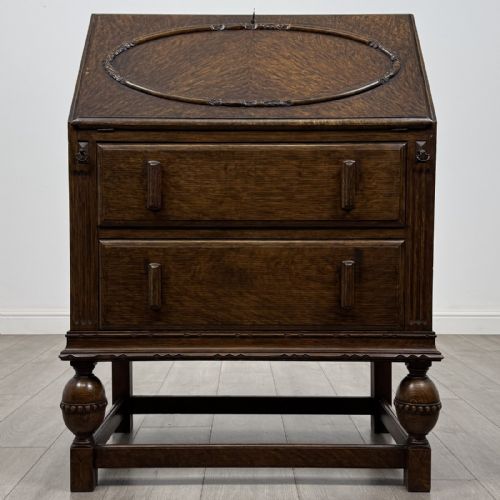
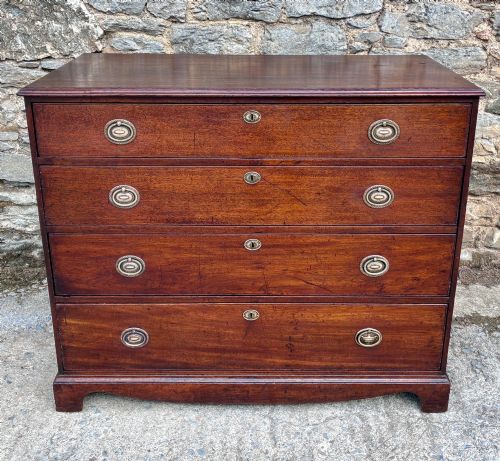
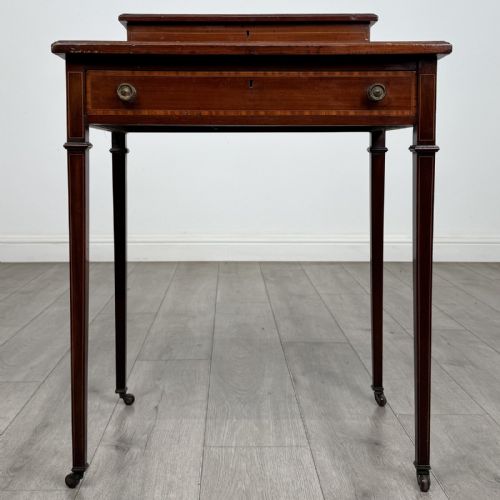
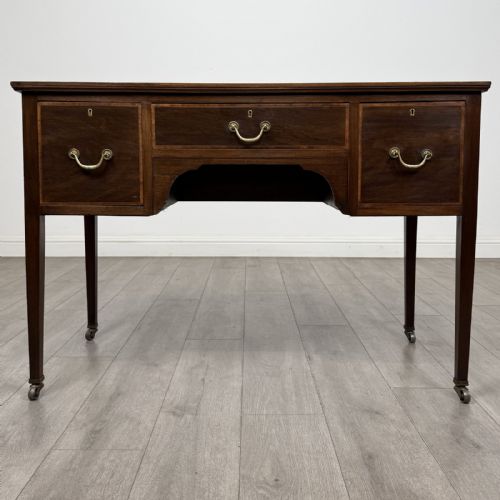
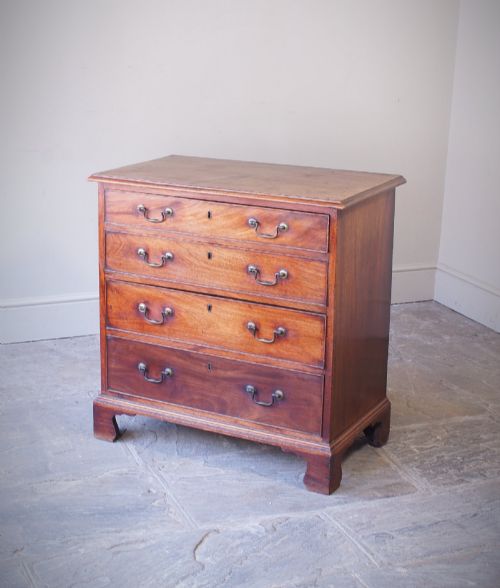
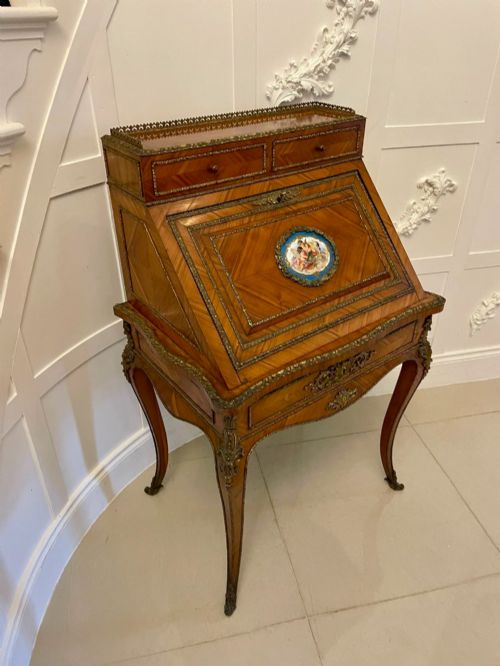
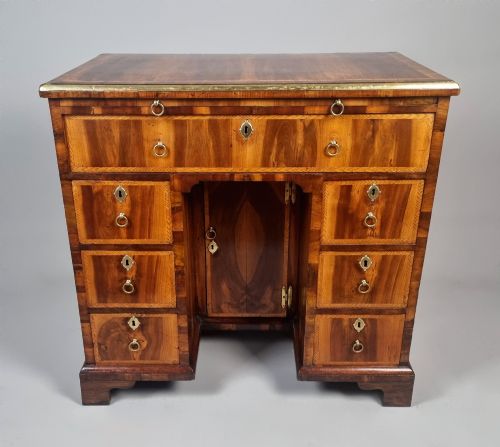
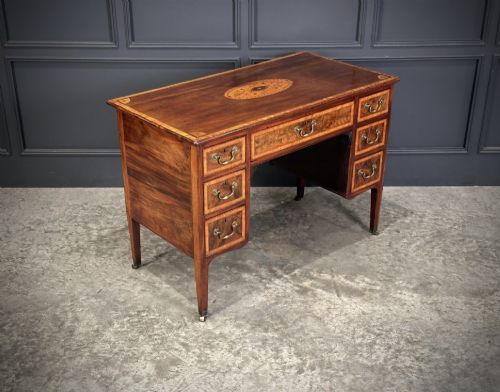
Brown Bureau
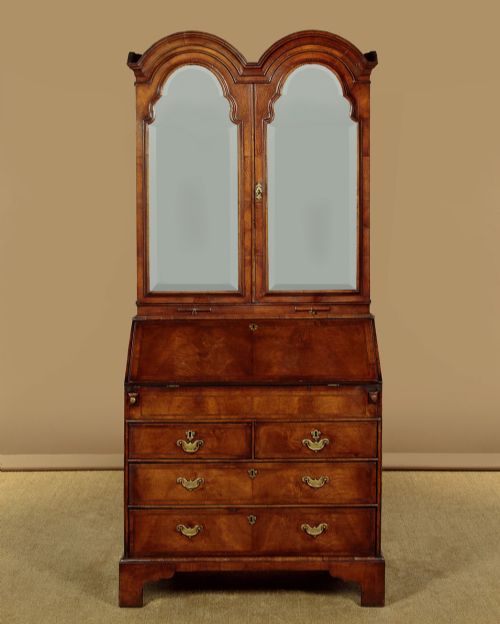
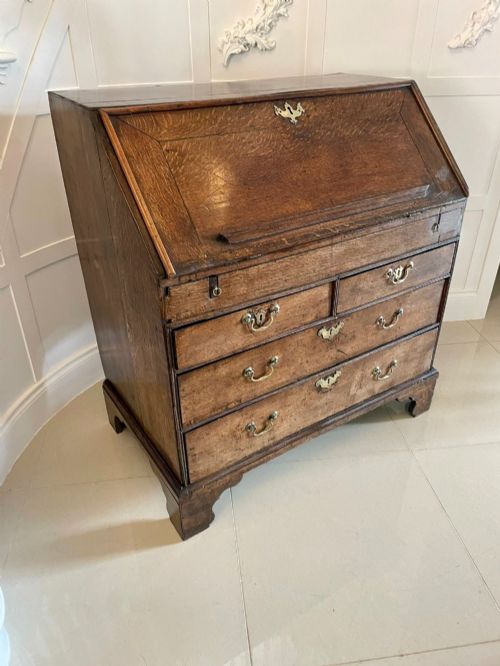
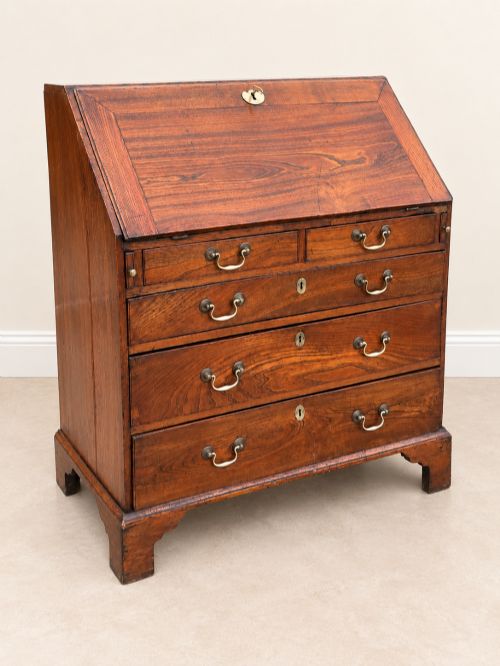
A brown antique bureau is a working writing cabinet with a fall-front slope, designed to conceal correspondence and organise papers within timber joinery.
Brown Bureau
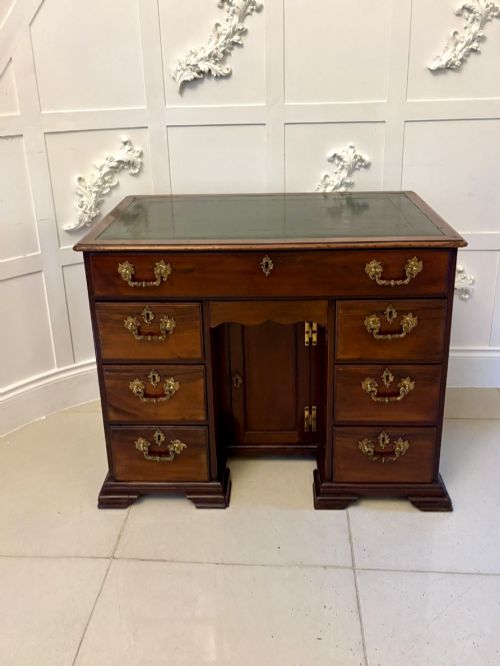
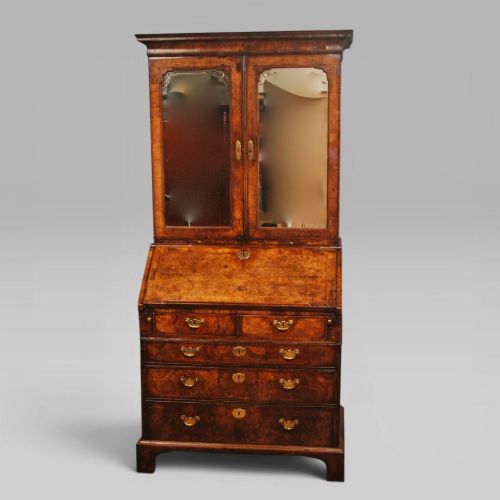
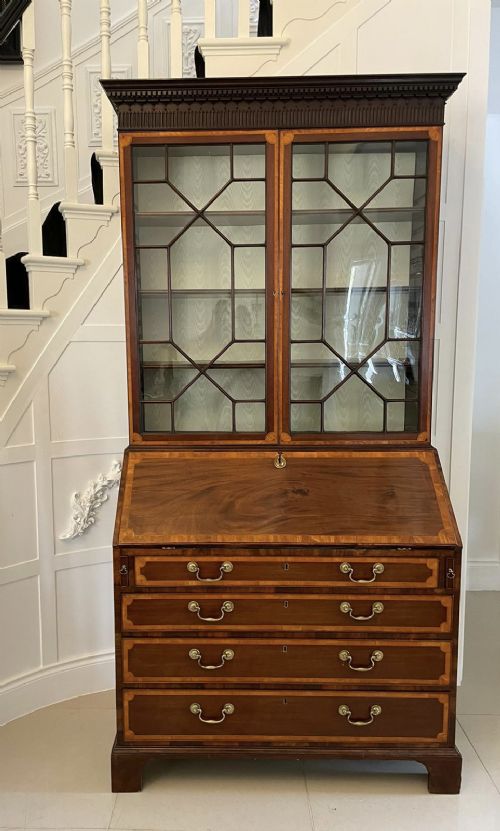
A brown antique bureau combines a fall-front writing surface with internal pigeonholes and drawers, evolving through the Georgian, Victorian, and Edwardian periods into distinct forms like bureau bookcases and slant-front desks. You will encounter these pieces in various regional timbers, alongside related writing furniture such as kneehole desks and davenports.
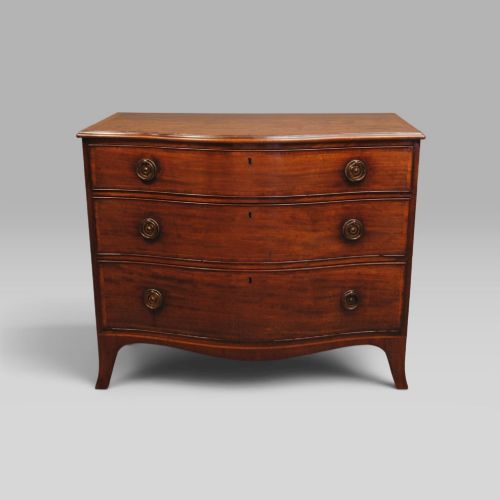
The selection ranges from early walnut and oak examples bearing herring-bone inlay and cross-banding to later mahogany and burr walnut iterations. Cabinets often sit on bracket feet or ball-and-claw supports, sometimes extending upward into glazed bookcase sections fitted with adjustable shelving.
What varies in quality
The standard of a brown antique bureau rests upon the choice of timber figure, such as highly burr walnut or figured mahogany, and the precision of the cabinetmaker's veneering. Grain matching across drawer fronts and fall-fronts indicates careful planning during construction.
Internal complexity dictates the upper tier of pieces, where fitted compartments, secret drawers, and shaped pigeonholes demonstrate superior craftsmanship. Original brass hardware, intact patination, and uncompromised structural joinery separate standard domestic items from exceptional examples.
Materials recorded across the inventory include oak, mahogany, walnut, burr walnut, kingwood, yew wood, teak, brass, leather, and glass.
Edwards and Roberts
The Brown Bureau Glossary
- Bureau
- A writing desk featuring a sloping hinged lid that opens to reveal a fitted interior of small drawers and pigeonholes. It serves both as a writing surface and a storage chest.
- Bureau bookcase
- A tall two-part piece comprising a lower bureau desk section surmounted by a glazed or panelled bookcase cabinet. The upper doors enclose adjustable shelving for book storage.
- Fall-front
- The hinged writing flap on a bureau or secretaire that drops down to a horizontal position for writing. It is supported by lopers or side arms when opened.
- Davenport
- A compact Victorian writing desk featuring a sloping top, a side-hinged stationery compartment, and a bank of small drawers accessed from the side. It stands on a pedestal base.
- Marquetry
- Decorative veneer work formed by fitting together thin pieces of various coloured woods and other materials to create pictorial or geometric patterns. It adorns the exterior surfaces of finer cabinets.
- Parquetry
- A geometric mosaic of wood pieces used for decorative floors and cabinet surfaces. It creates repeating patterns such as cubes, chequers, or basket weaves.
Brown Bureau: Frequently Asked Questions
What is a brown antique bureau?
A brown antique bureau is a traditional wooden writing desk featuring a sloping fall-front lid that opens to reveal an internal arrangement of small drawers and pigeonholes. These pieces were built primarily during the 17th, 18th, 19th, and early 20th centuries across British and continental workshops.
They combine practical document storage with a compact writing surface, often sitting above a bank of graduated drawers for household paperwork and correspondence.
How do I tell an 18th-century bureau from a Victorian one?
Eighteenth-century bureaux typically utilise oak, walnut, or early mahogany, featuring hand-cut dovetails, secondary wood linings like deal or pine, and subtle timber patination. The construction of the internal fitments and bracket feet reflects earlier cabinetmaking traditions.
Victorian and Edwardian examples often employ burr walnut, heavier mahogany, or oak, sometimes incorporating machine-sawn elements, glazed bookcase tops, or revival decorative motifs such as claw-and-ball feet.
Where were antique bureaux placed in a home?
These pieces sat in studies, drawing rooms, and master bedrooms where estate management and personal correspondence took place. The fall-front provided a private writing space that could be locked shut when not in use.
In larger houses, taller bureau bookcases stood in libraries alongside matching bookcases to house reference volumes and personal papers together.
How do I care for a wood bureau surface?
Maintain the timber by keeping the piece away from direct heat sources, strong sunlight, and fluctuating humidity levels to prevent the veneer from lifting or wood from splitting. Regular dusting with a soft cloth preserves the historic wax polish and finish.
Apply a traditional beeswax polish occasionally to nourish the grain, rubbing it in thoroughly to maintain the natural lustre without building up heavy layers.