

Bronzed Brass Lantern
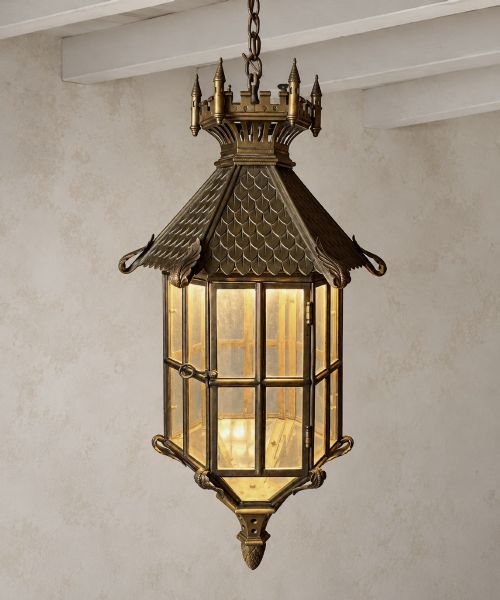
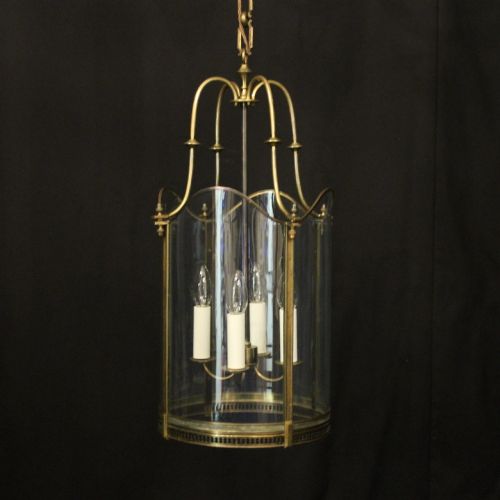
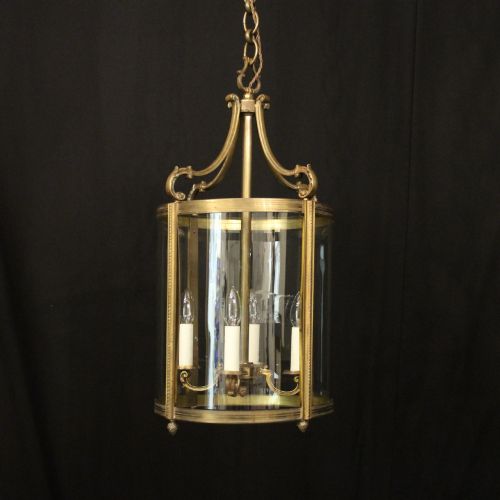
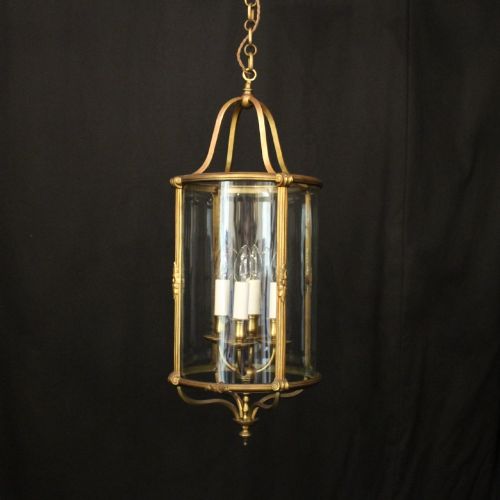
A bronzed brass lantern brings period illumination to a hallway, utilising warm metal and glass to cast patterned light across an entryway.
Bronzed Brass Lantern
A bronzed brass lantern combines sturdy metallic frames with glass panels to serve as functional overhead lighting in entrance halls and stairwells. These fixtures originate primarily from the nineteenth century through the early decades of the twentieth century, reflecting enduring domestic utility.
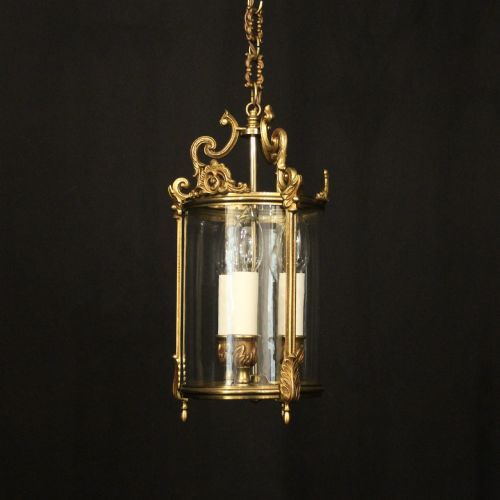
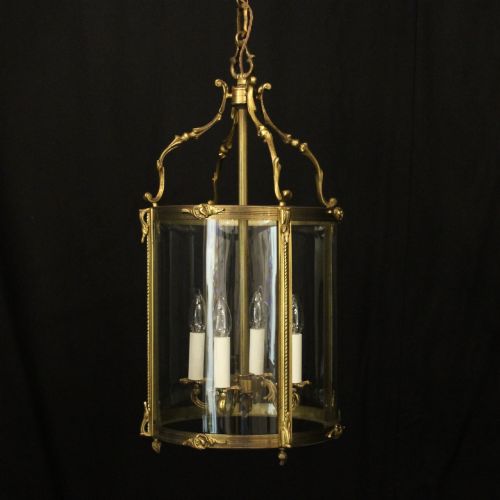
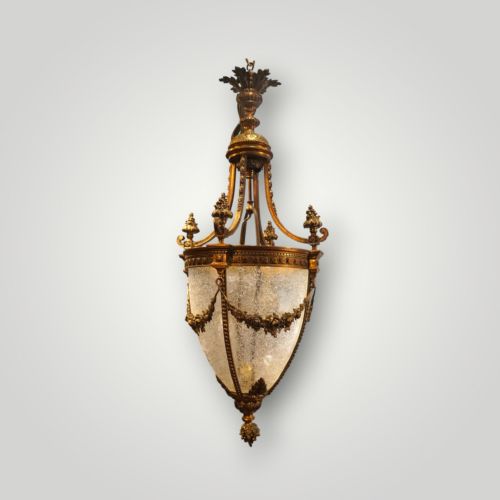
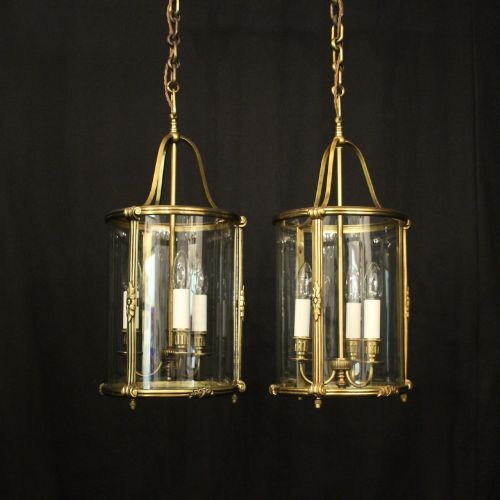
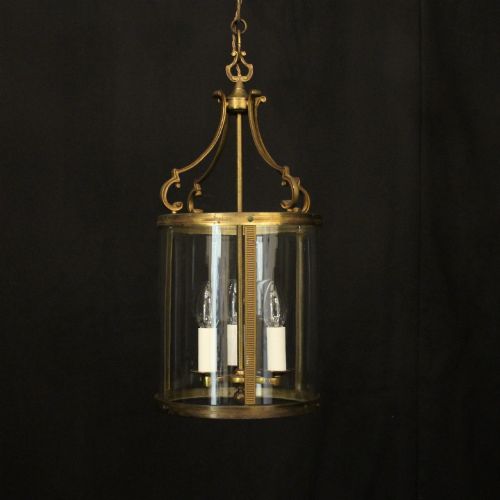
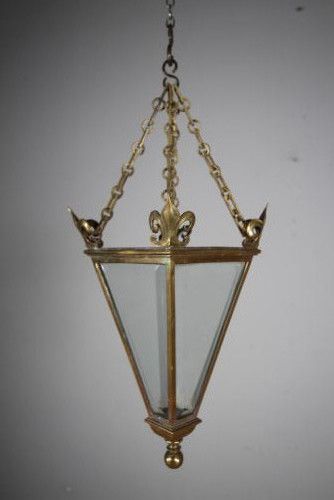
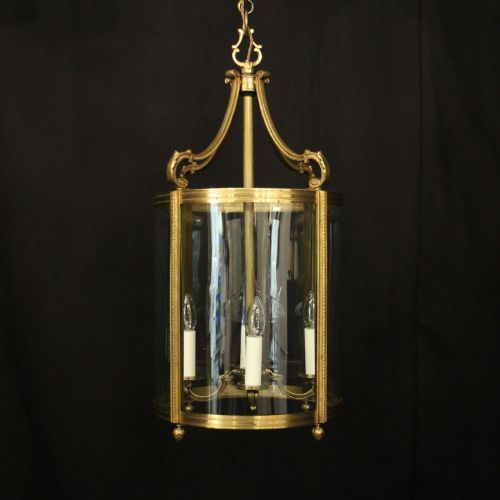
The version most commonly encountered on this page is the French hall lantern, typically styled in the French Louis XVI or Rococo manner and suspended by chains from a ceiling rose. Such pieces frequently incorporate gilded bronze, brass, or copper tones paired with convex, bevelled, or etched glass panes.
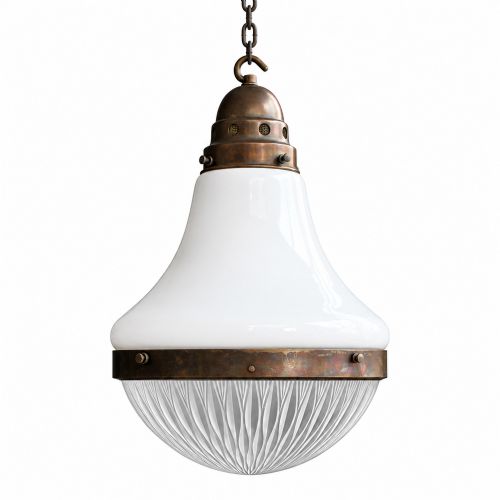
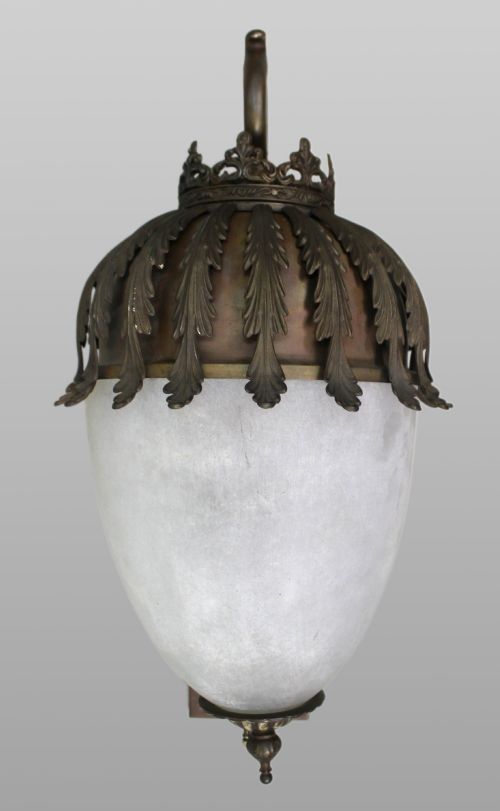
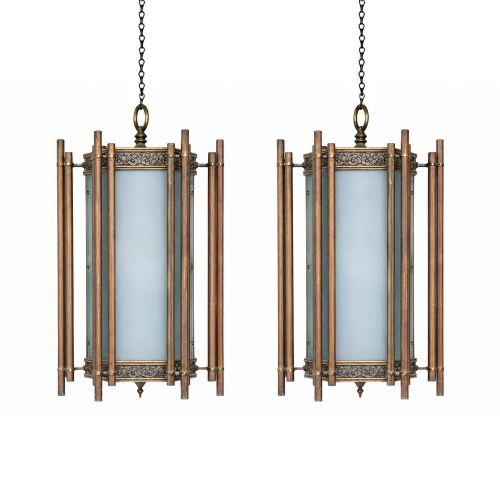
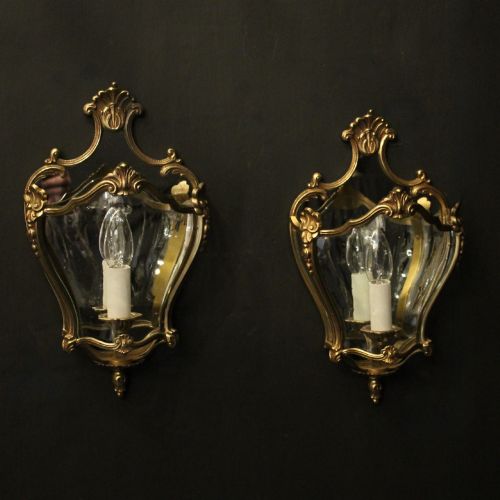
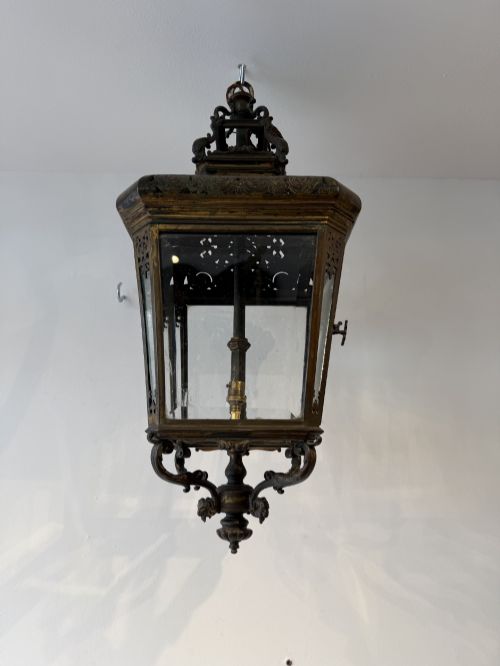
Other variations include wall-mounted sconces and larger hanging fixtures produced in England and America during the late Victorian and Art Deco periods. These diverse forms share a reliance on metalwork and glass to diffuse interior illumination effectively.
Materials and construction
Makers constructed these lanterns using cast brass, bronze, and gilt metal frameworks joined to support various configurations of glass panels. Metal components were often gilded, bronzed, or left in their natural polished state to achieve distinct surface finishes.
Glazing techniques varied widely, employing frosted, etched, opaline, cut, or bevelled glass to soften the light emitted by internal bulbs or candles. Frames frequently featured decorative neoclassical motifs, ornate cresting, and hinged doors for internal access.
Bronzed Brass Lantern Retail Price Guide 2026
Typical asking prices for bronzed brass lantern among the pieces listed under this phrase on Sellingantiques today, from the lower quarter to the upper quarter. They describe what is for sale here now, not the wider market.
Listings feature items spanning the late Victorian era, Edwardian period, and the 1920s and 1930s, utilising brass, bronze, and glass.
Assessing quality and craftsmanship
Quality in a bronzed brass lantern rests upon the crispness of the metal casting and the weight of the frame. Finer examples display deeply chased ornamentation and substantial gauge metal rather than thin, pressed sheet construction.
The selection and treatment of the glass panels further distinguish higher tiers of production. Bevelled, cut, or heavily convex glass requires skilled labour and adds considerable visual depth compared to flat, plain panes.
Perry & Co
The Bronzed Brass Lantern Glossary
- Ormolu
- A technique of applying finely ground high-carat gold to bronze or brass objects, creating a rich golden surface finish. This finish is frequently found on nineteenth-century French lighting fixtures.
- Convex glass
- Curved glass panels that project outward, designed to catch and refract light from multiple angles within a room. They add substantial dimension to the profile of a hanging lantern.
- Bevelled glass
- Glass panes featuring angled edges ground and polished to a specific slope, which produces prism-like light reflections. This detail indicates finer domestic manufacture.
- Gilt bronze
- Bronze metal that has received a thin layer of gold leaf or gilt wash for decorative effect. It provides a durable and opulent metallic sheen.
- Hall lantern
- A ceiling-suspended lighting fixture specifically designed for narrow entrance spaces, corridors, and vestibules. These pieces typically feature enclosed glass sides to protect the flame or bulb from drafts.
Bronzed Brass Lantern: Frequently Asked Questions
How do I hang a bronzed brass lantern?
Suspension typically relies on a matching chain and ceiling canopy fixed securely to a ceiling joist. The weight of the metal frame and glass panels requires proper structural support.
Professional installation ensures the electrical components and hanging weight comply with safety standards for overhead lighting fixtures.
Where should I place a hall lantern?
These fixtures suit entrance halls, stairwells, and high-ceilinged corridors where their vertical proportions draw the eye upward. They provide welcoming illumination for guests entering the home.
Positioning them centrally allows the glass panels to distribute light evenly across surrounding architectural details.
How do I clean a brass and glass lantern?
Dust the metal framework gently with a soft, dry cloth to prevent the accumulation of grime on decorative castings. Avoid abrasive polishes that might strip historic gilding or patination.
Glass panels can be removed carefully or wiped in place using a mild glass cleaner applied to a cloth rather than sprayed directly onto the metal.
How do I date an antique lantern?
Dating relies upon stylistic markers such as neoclassical garlands, Art Deco geometric lines, or Victorian brass casting techniques. Fastening methods and wiring channels also offer clues to the period of manufacture.
Comparing the glass type, whether bevelled, opaline, or cut, helps narrow the decade of production alongside any maker stamps present on the metal frame.