






Bronze Venus Statue
These bronze venus statue examples range from small Grand Tour souvenirs to substantial foundry reductions, bringing classical mythology into domestic interiors.
Bronze Venus Statue
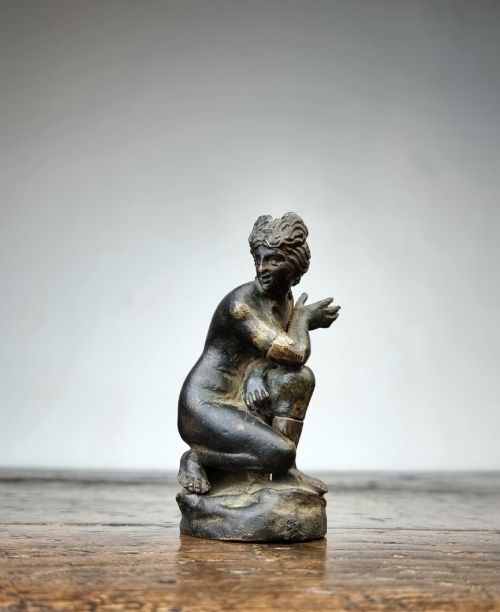
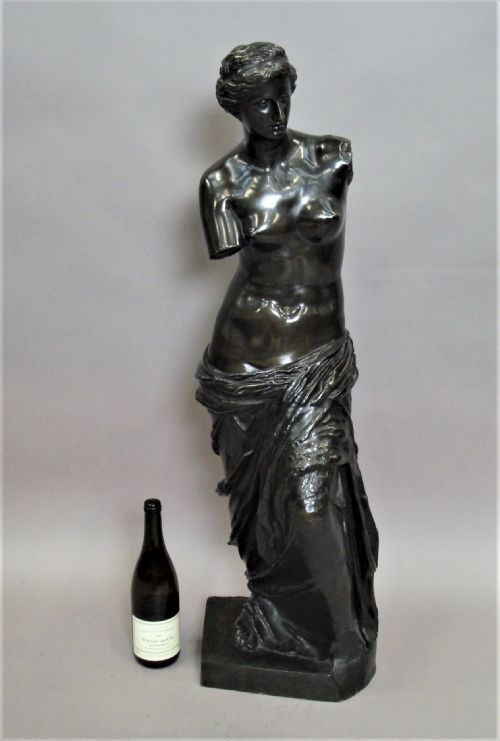
A bronze venus statue represents the ancient goddess of love and beauty, typically modelled after renowned classical sculptures such as the Venus de Milo, the Crouching Venus, or Falconnet's Venus au Bain. These pieces emerge predominantly from the nineteenth century, including specific dates such as 1860, 1880, and broader references to the seventeenth century.
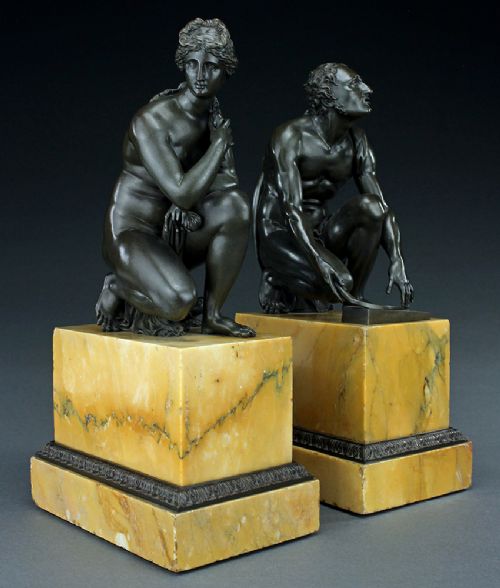
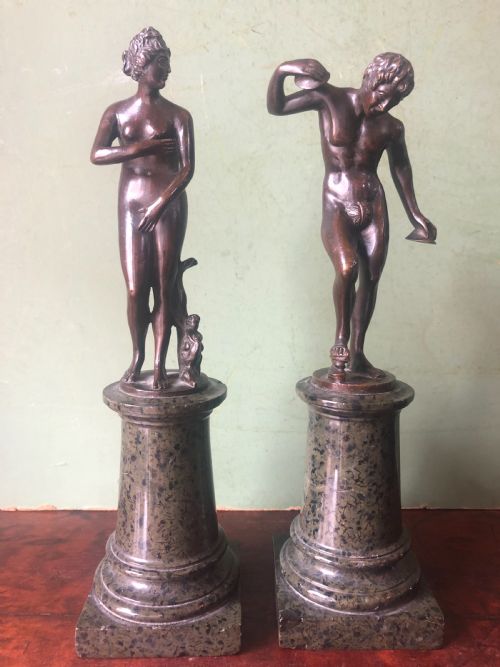
The objects take various forms, from small statuettes and souvenir reductions intended for travellers on the Grand Tour to very large sculptures and pairs mounted on marble bases, including Siena marble. They reflect revivals of neoclassical and baroque styles, drawing directly from antique precedents.
Visitors browsing this selection encounter figures cast in France and Italy, capturing the enduring appeal of mythological sculpture across different centuries and decorative contexts.
Materials and methods
These figures utilise cast bronze and brass, often enhanced with deliberate patination to accentuate the modelling of the form and simulate the appearance of ancient metalwork. Foundries employed reduction techniques to scale down monumental ancient marbles into cabinet-sized statuettes.
Many examples are mounted upon heavy stone plinths, particularly Siena marble, which provides stability and a distinct contrasting colour beneath the dark metallic finish of the sculpture.
Bronze Venus Statue Retail Price Guide 2026
Typical asking prices for bronze venus statue among the pieces listed under this phrase on Sellingantiques today, from the lower quarter to the upper quarter. They describe what is for sale here now, not the wider market.
Listings feature periods from the seventeenth to the twentieth century, with a strong concentration of nineteenth-century French and Italian foundry work.
Distinctions in quality
Quality in these figures rests upon the crispness of the chasing and the fidelity of the reduction to the original antique source, distinguishing fine foundry work from simpler souvenir castings. The depth, nuance, and preservation of the patination also play a significant role in the visual impact of the metal.
The integration between the bronze casting and its stone base, such as fitted Siena marble plinths, demonstrates the care taken during assembly by makers and workshops.
Ferdinand Barbedienne·Ferdinando de Luca·Falconnet
The Bronze Venus Statue Glossary
- Grand Tour
- A traditional trip of Europe undertaken by upper-class European young men of sufficient means, resulting in the acquisition of souvenirs such as bronze reductions after the antique.
- Patinated Bronze
- Bronze that has been treated with chemical solutions to produce a specific surface colour and finish, ranging from deep brown to greenish tones.
- Reduction
- A smaller copy of a larger sculpture, often produced mechanically in the nineteenth century to allow monumental classical works to fit into domestic rooms.
- Siena Marble
- A yellow decorative marble with dark grey or purple veins, frequently utilised for the bases of nineteenth-century decorative bronzes.
Bronze Venus Statue: Frequently Asked Questions
What is a Grand Tour bronze?
A Grand Tour bronze is a souvenir sculpture purchased by travellers visiting cultural sites in Italy and France during the eighteenth and nineteenth centuries. These pieces were usually small reductions of famous classical statues.
They served as portable reminders of classical antiquity and decorated studies and drawing rooms across Europe.
How do I identify a Venus de Milo casting?
A Venus de Milo casting depicts the goddess with her characteristic drapery gathered around her lower limbs and missing arms, following the famous Hellenistic marble in the Louvre. Nineteenth-century founders reproduced this specific pose frequently.
These versions range from modest cabinet statuettes to very large gallery bronzes.
Why are some bronzes mounted on marble?
Marble bases provide a solid foundation and a neoclassical aesthetic that complements the dark patination of the metal figure. Siena marble and other decorative stones were standard choices for nineteenth-century sculpture.
This mounting also elevates the statuette, separating the metal visually from the surface of the furniture.
What periods do these sculptures date from?
The selection here spans several centuries, with the majority originating in the nineteenth century around 1860 and 1880, alongside earlier seventeenth-century examples and twentieth-century pieces.
Foundries of the later nineteenth century were particularly active in producing high-quality casts after ancient models.