


Bronze Twin Light
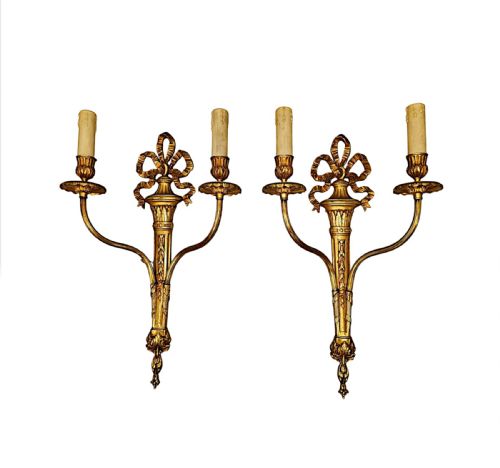
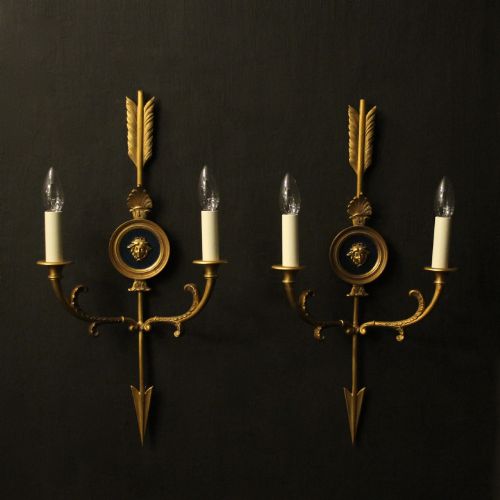
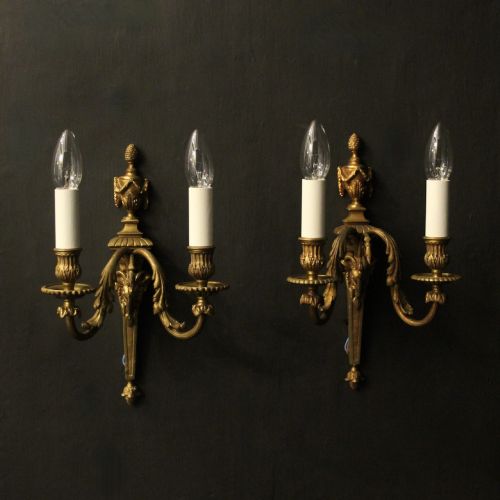
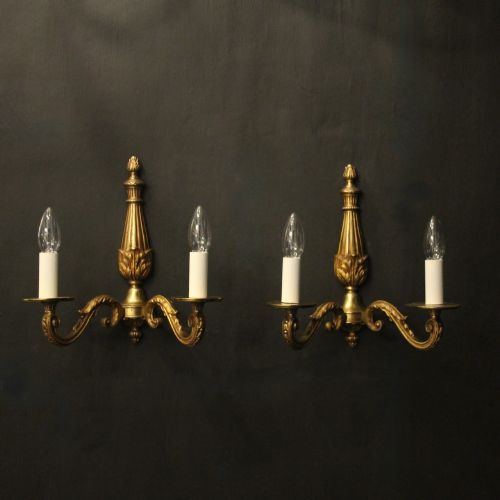
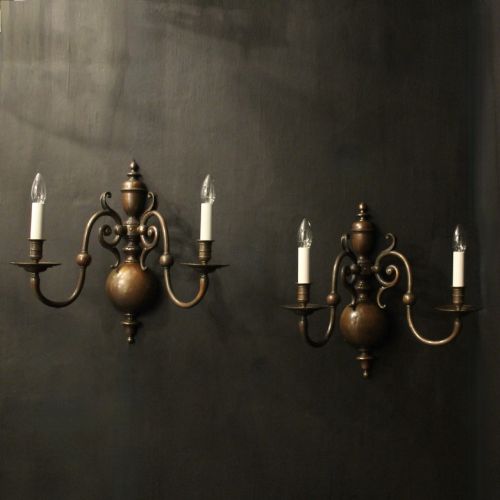
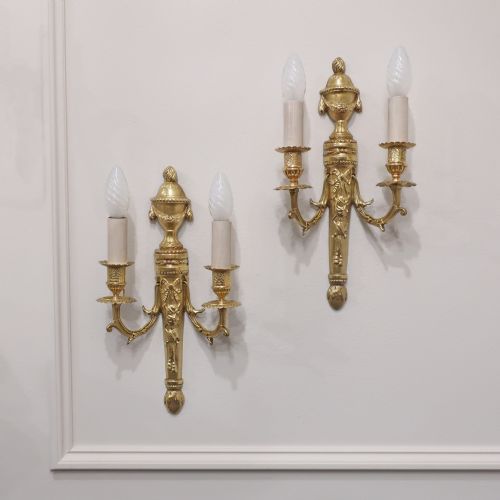
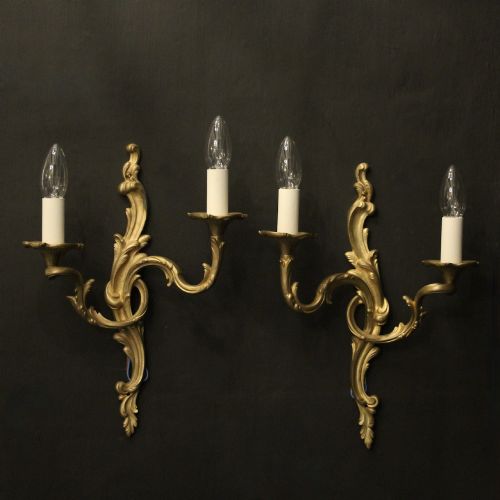
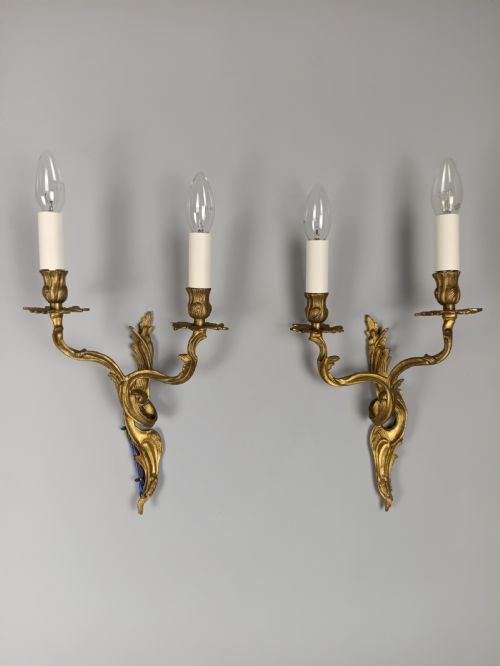
A bronze twin light brings paired illumination and sculptural presence to a wall, taking the form of gilt metal sconces and candelabra.
Bronze Twin Light
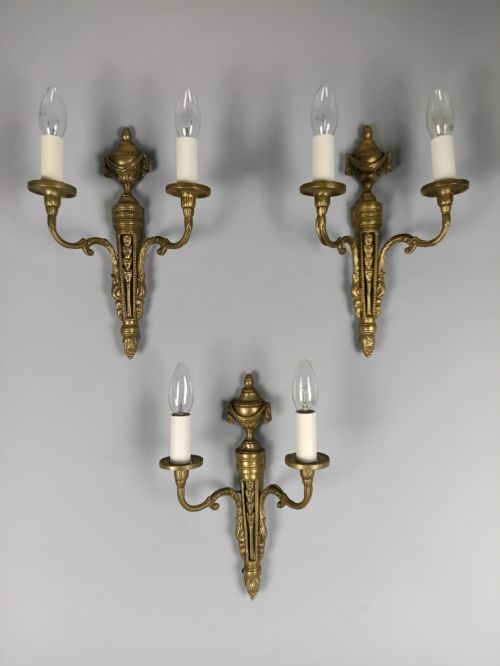
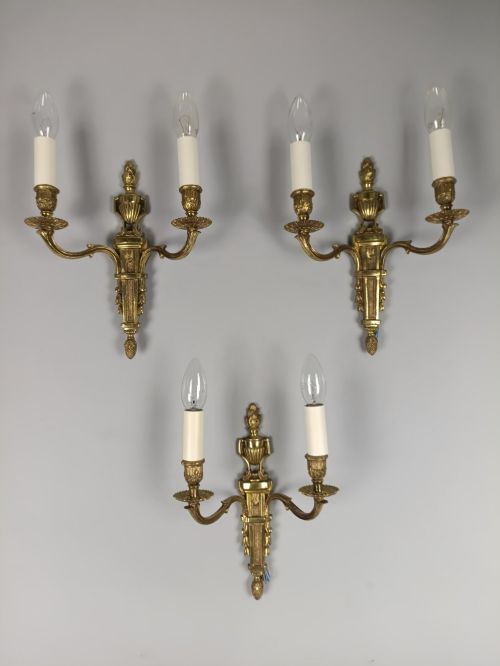
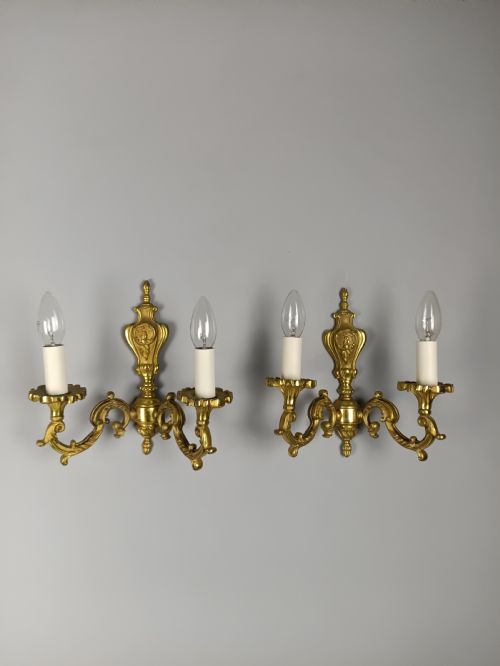
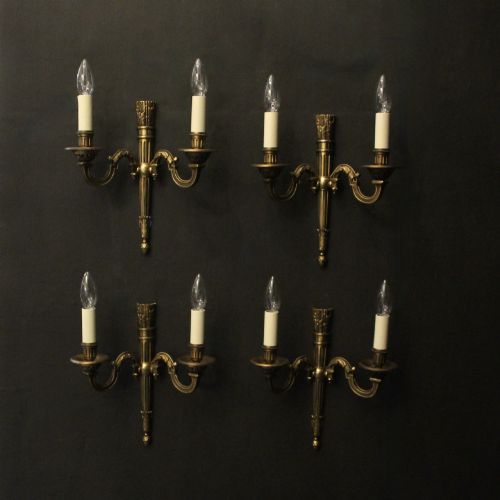
A bronze twin light typically appears as a pair of wall-mounted sconces featuring two branching arms designed to hold candles or electrical fittings. These pieces emerge predominantly in French and English workshops spanning from the nineteenth century into the 1930s.
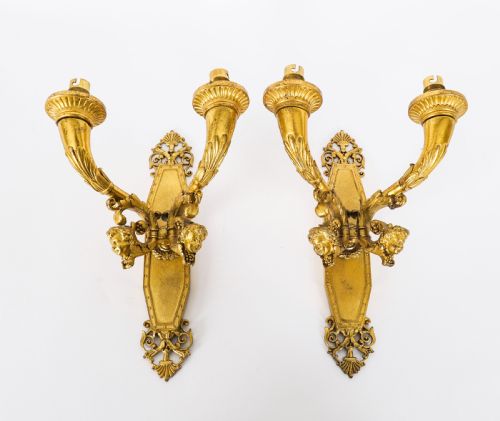
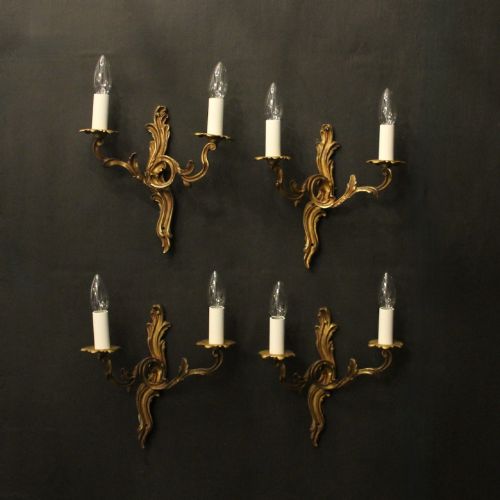
The most common formats found in this selection are French wall lights and sconces adopting historicist vocabulary such as Rococo, Louis XVI, and Empire styles. Buyers encounter both two-branch configurations and larger sets sharing matching decorative schemes.
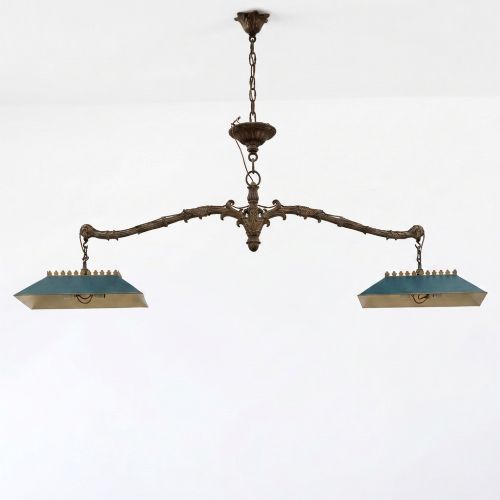
Beyond standard wall lights, the category encompasses related forms like candelabras and billiard lights executed in cast metal. These objects serve both functional illumination and decorative symmetry within period interiors.
Materials and construction methods
Foundries produced these light fixtures primarily through metal casting, utilising bronze, brass, and ormolu. Artisans then applied surface gilding to create rich tonal finishes across the metalwork.
Many examples incorporate decorative details such as ribbons, cherubs, or crystal elements fixed to the main bronze armature. Construction often involves modular assembly where individual arms and backplates join securely via threaded components or pins.
Bronze Twin Light Retail Price Guide 2026
Typical asking prices for bronze twin light among the pieces listed under this phrase on Sellingantiques today, from the lower quarter to the upper quarter. They describe what is for sale here now, not the wider market.
The selection spans items dated from the Victorian era and the 1880s through to the 1930s, executed in gilt bronze, brass, and ormolu.
Assessing quality in metal light fittings
Quality rests upon the crispness of the chased detail in the cast bronze or ormolu, distinguishing sharply rendered scrollwork and figures from softer, worn castings. The depth and integrity of the original gilding further separate superior examples from plainer brass alternatives.
Structural heft and the precision with which twin arms align indicate the care taken during manufacture. Pieces retaining harmonious proportions across the backplates and sconce pans demonstrate higher workshop standards.
Casier
The Bronze Twin Light Glossary
- Ormolu
- Gilded bronze produced by applying a mercury-gilding amalgam to a cast bronze base. This technique creates a durable, warm metallic lustre characteristic of fine decorative hardware.
- Sconce
- A wall-mounted light fixture designed to project illumination into a room. These fixtures often employ branching arms to support multiple candle holders or lamp bulbs.
- Rococo
- An ornate artistic style marked by asymmetrical scrollwork, C-scrolls, and naturalistic plant motifs. It heavily influences many nineteenth and early twentieth-century French metal light fittings.
- Empire
- A neoclassical design style inspired by ancient Roman and Greek forms, favouring symmetry, military motifs, and classical proportions. Items in this taste often display clean architectural lines.
- Candelabra
- A branched candlestick holder designed to support more than one candle simultaneously. In wall-mounted formats, these items function as permanent architectural fixtures.
Bronze Twin Light: Frequently Asked Questions
How were bronze twin lights originally mounted?
These fixtures attached directly to wall surfaces using screws through the backplate to support the weight of the metal arms.
They positioned at standard eye or mantel height to distribute ambient illumination evenly across a room.
Are these lights wired for electricity?
Many surviving examples undergo professional rewiring to accommodate modern electrical standards while preserving the antique metal body.
Buyers should inspect the backplates and internal channels to understand how wiring integrates with the original sconce structure.
How do I distinguish Louis XIV revival from Empire style?
Louis XIV revival pieces showcase exuberant asymmetry, shell motifs, and elaborate C-scrolls typical of Rococo tastes.
Empire designs rely on strict symmetry, classical drapery, and formal geometric proportions derived from antiquity.
Can single wall lights be matched with pairs?
Most surviving pieces appear in matched pairs or larger sets intended to flank mirrors, doorways, or fireplaces.
Sourcing exact matches for single lights proves challenging due to the distinct hand-chased variations in nineteenth-century foundry work.