





Bronze Table Cabinet
A bronze table cabinet brings heavy metal mounts and polished timber to a desk top.
Bronze Table Cabinet
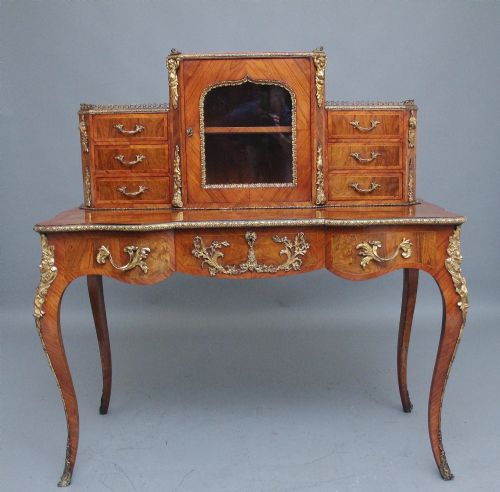
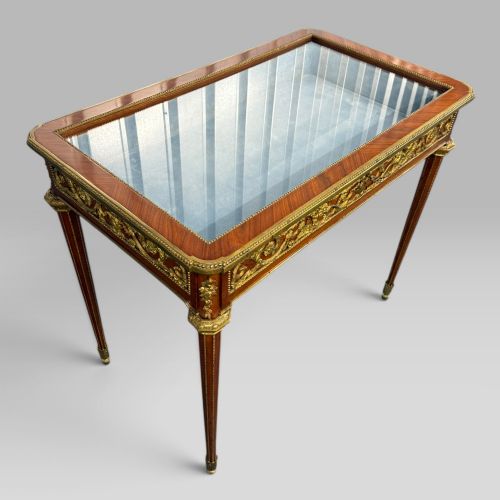
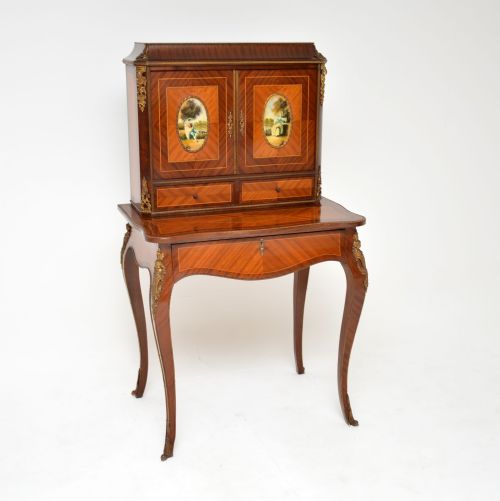
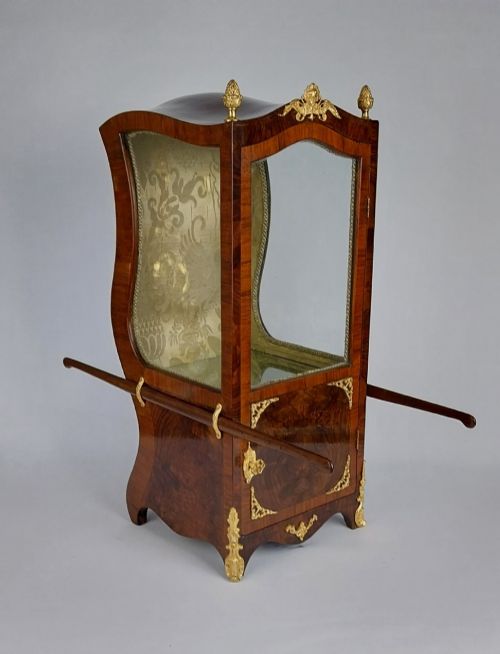
A bronze table cabinet brings miniature architectural presence to a desk or surface, housing letters, jewellery or small curiosities. These pieces combine compact storage with elaborate surface decoration, frequently taking the form of a small escritoire, vitrine, or bon-heur du jour adapted for tabletop placement.
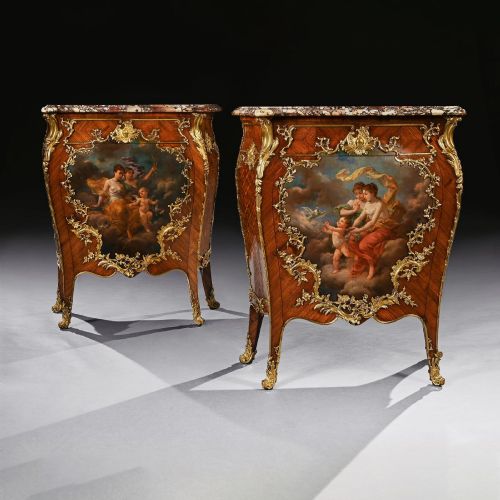
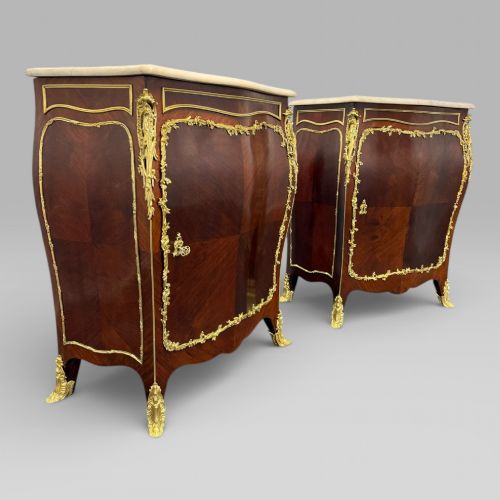
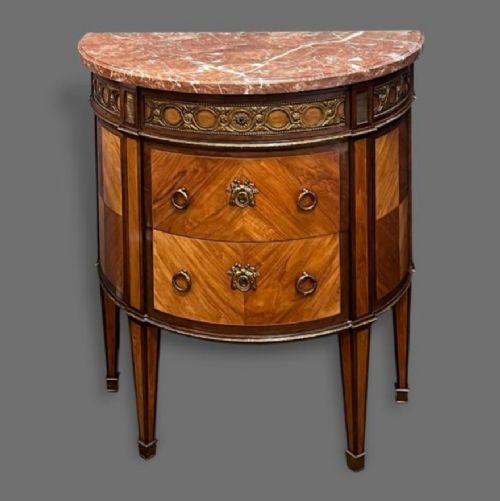
The selections here span the nineteenth century and subsequent revival periods, heavily influenced by French design traditions such as Louis XV and Louis XVI styles. Buyers encounter pieces framed in kingwood, walnut, or satinwood, underscored by gilt bronze or ormolu fittings that mimic larger commodes and display furniture on a reduced scale.
Materials and Construction
Makers built the core carcase from dense timbers like mahogany, walnut, or kingwood, often applying intricate parquetry or marquetry veneer patterns across the exterior surfaces. Panels of Vernis Martin, porcelain plaques, or hand-painted panels frequently decorate the doors and fall-fronts of these compact pieces.
Casting and fire-gilding or plating bronze produced the ormolu mounts, handles, and sabots that frame the timber carcase. These metal elements were hand-chiselled after casting to sharpen the foliage and scrollwork before being secured to the wood with threaded pins or screws.
Bronze Table Cabinet Retail Price Guide 2026
Typical asking prices for bronze table cabinet among the pieces listed under this phrase on Sellingantiques today, from the lower quarter to the upper quarter. They describe what is for sale here now, not the wider market.
Some miniature cabinets include secret compartments hidden behind dummy book spines or sliding panels for truly tiny secrets.
Judging Quality and Execution
The weight, crispness, and depth of the bronze mounts separate standard production from superior work. Finely chased ormolu shows clean relief without soft edges or casting pits, sitting flush against the timber substrate.
Timber selection and veneer alignment dictate the visual balance of the piece. Superior examples display continuous grain matching across drawers and doors, alongside precise marquetry or parquetry that tolerates atmospheric movement without splitting.
Gillows·François Linke·E. Kahn·Gabriel Viardot
The Bronze Table Cabinet Glossary
- Ormolu
- Gilt bronze mounts applied to furniture. The technique involves applying a mercury and gold amalgam to cast bronze before heating.
- Bonheur du Jour
- A light desk with a small cabinet or shelving superstructure on top. The form gained popularity in eighteenth-century France and reappeared in nineteenth-century revivals.
- Vernis Martin
- A type of decorative lacquer finish developed in France. It mimics Asian lacquer work using successive layers of varnish.
Bronze Table Cabinet: Frequently Asked Questions
What fits inside a bronze table cabinet?
These small cabinets traditionally house correspondence, writing implements, or valuable personal items like jewellery and watches.
Interior layouts often include tiny drawers, pigeonholes, or velvet-lined display compartments suited for miniature treasures.
Where should a table cabinet be placed?
A bronze table cabinet sits comfortably on a sturdy desk, large chest of drawers, or a dedicated occasional table where its details remain visible.
Because of the weight of the timber and metal mounts, a stable surface away from direct sunlight protects the veneers and mounts.
How do I identify French revival styles?
Revival pieces draw on the curves of Louis XV design or the straighter, neoclassical lines of Louis XVI furniture.
Look for symmetrical ormolu mounts, floral marquetry, and specific forms like bombe curves or demi-lune shapes that echo eighteenth-century models.
Are these cabinets purely decorative?
While highly ornamental, these pieces offer genuine storage capacity through small drawers, drop-front writing surfaces, or locking compartments.
Their dual function as miniature furniture and storage made them popular in nineteenth-century drawing rooms and boudoirs.