



Bronze Sports Figurines
Bronze sports figurines capture athletes and sporting animals in dynamic movement, offering collectors a striking snapshot of athletic history.
Bronze Sports Figurines
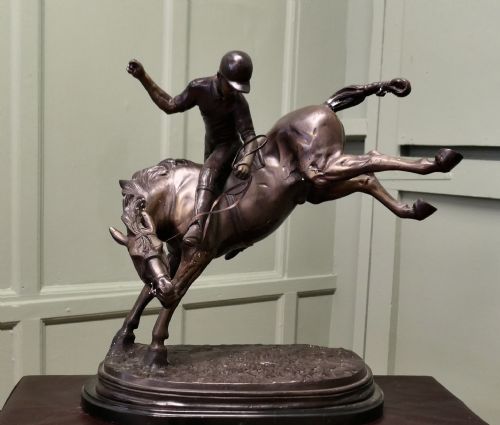
Bronze sports figurines encompass a range of sculptural forms depicting human athletes and sporting animals, reflecting athletic pursuits from the nineteenth and early twentieth centuries. These pieces appear in various styles including Victorian animalier, French school, and Art Deco, portraying subjects from golf and cycling to hunting dogs and rugby players.
The most common examples on this page are nineteenth-century animalier hunting dogs and early twentieth-century depictions of human sports figures, often mounted on stone bases. Buyers frequently encounter subjects like Setters, polo players, and cyclists rendered in bronze, cast iron, or spelter.
Objects span several periods from the Victorian and Edwardian eras through to the 1930s, reflecting shifts in both sculptural tastes and sporting popularity. Formats range from standalone cabinet sculptures and companion sets to table lamps.
Materials and production methods
Makers utilised traditional casting methods for these sculptures, predominantly working with bronze, gilt bronze, and cast iron. Some pieces incorporate alternative metals like spelter, often combined with cold-painted finishes to add colour and detail to the surface.
Figures are frequently mounted upon heavy plinths made of marble or onyx, providing stability and a contrasting visual texture to the metalwork. Wood also appears as a base material in certain domestic and fireside pieces.
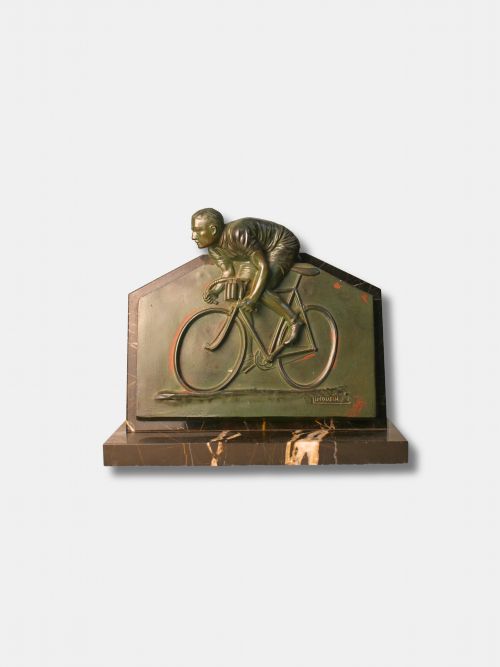
Tour de France cycling enthusiasts can acquire a spelter cyclist named Limousin, proving that even nineteenth-century desk ornaments needed two wheels.
Evaluating craftsmanship and detail
The precision of the casting and the fidelity of the musculature and movement separate standard castings from finer works. Superior pieces display crisp chiselling after casting, capturing realistic textures in fur, fabric, and athletic equipment without obscuring finer anatomical details.
The quality of the base material and its integration with the sculpture also influence the overall standard. Fine mountings of genuine marble or onyx complement the weight and balance of the metal figure above.
Jules Moigniez·Auguste Nicholas Cain·Rudolf Küchler·John Willis Good·Charlotte Monginot
The Bronze Sports Figurines Glossary
- Animalier
- A nineteenth-century sculptural movement focused on the realistic portrayal of animals, particularly dogs, horses, and wildlife in naturalistic poses.
- Spelter
- A zinc alloy commonly utilised as a less expensive alternative to bronze, often given a bronze-like patina to simulate higher-end metalwork.
- Cold-painted
- A technique where paint is applied to a metal sculpture without subsequent firing, common in decorative bronzes of the late nineteenth and early twentieth centuries.
- Gilt bronze
- Bronze that has been treated with a thin layer of gold or gold-coloured gilding to enhance its decorative surface and sheen.
Bronze Sports Figurines: Frequently Asked Questions
What periods do these figurines date from?
The listings span from the Victorian and Edwardian eras through to the 1930s. This timeframe includes nineteenth-century animalier works and later Art Deco interpretations.
Buyers will find that stylistic changes across these decades heavily influence the clothing, posture, and subject matter of the athletes and animals portrayed.
How were these bronze figures displayed?
Many of these pieces were designed as desk or mantel sculptures, mounted on heavy marble or onyx bases for stability. Some functional examples also double as companion sets or table lamps.
Their substantial weight allowed them to serve as decorative centrepieces in domestic studies, libraries, and drawing rooms.
Are all these pieces solid bronze?
While bronze and gilt bronze are common, the selection also includes items cast from iron or spelter. Spelter is a softer zinc alloy often finished with a metallic patina to resemble bronze.
Examining the weight, magnetism, and surface finish helps distinguish genuine bronze from alternative metal alloys.
How do I identify animalier subjects?
Animalier sculptures focus on anatomical accuracy and dynamic movement in animals, particularly gundogs, hounds, and horses. These pieces often capture dogs in sporting contexts such as retrieving game or tracking.
Signatures from notable French school sculptors frequently appear on the bases of these animal studies.